Understanding DIY vs. Professional Solar Battery Installations
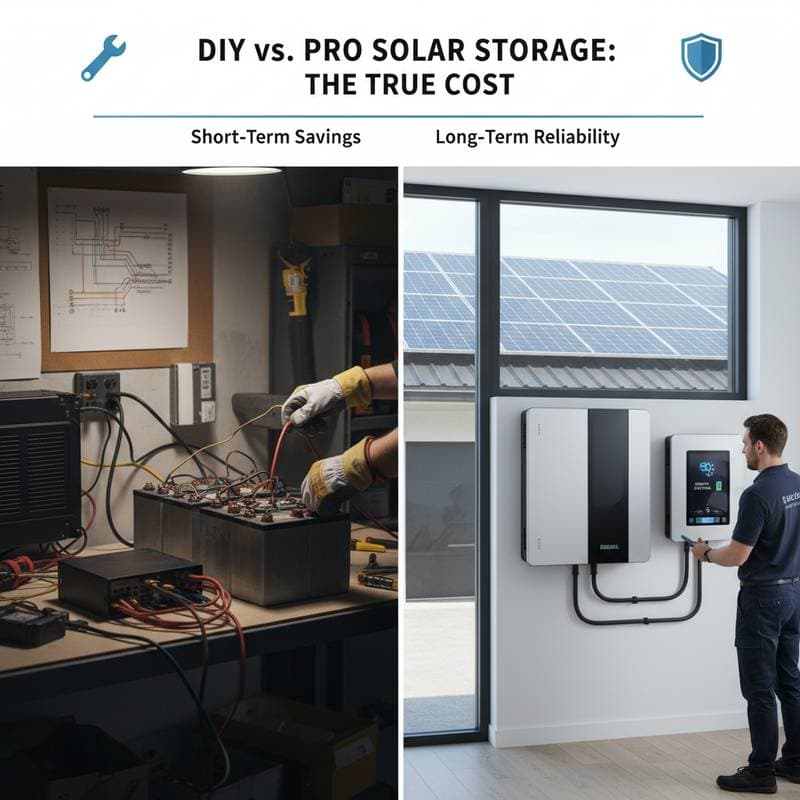
Homeowners often face a pivotal choice when adding solar battery storage: undertake a do-it-yourself assembly or hire professionals. The DIY route appeals through its promise of lower expenses, yet the actual financial picture hinges on factors such as component compatibility, safety measures, and sustained efficiency. A thorough examination of these elements equips individuals to select an approach that aligns with both budget constraints and technical needs.
Essential Technical Components
Solar batteries capture surplus electricitypanels for deployment during periods of low sunlight. Residential setups predominantly employ lithium-ion batteries for their reliability and extended cycle durations. Effective systems incorporate a battery management system to oversee charging and discharging, an inverter to convert direct current to alternating current, safety disconnects to prevent hazards, and monitoring tools to track performance.
Proper sizing ensures the storage capacity matches household energy demands, thereby minimizing reliance on the grid and enabling backup power amid outages. Key considerations include balancing usable energy capacity with overall system efficiency and adherence to safety standards. An improperly matched inverter or inadequate wiring can diminish efficiency by multiple percentage points and accelerate battery degradation.
Detailed Cost and Performance Breakdown
The following table outlines key differences between DIY and professional installations based on current market data:
| Installation Type | Upfront Cost (per kWh) | Round-Trip Efficiency | Labor Cost Share | Average Payback Period | Maintenance Complexity |
|---|---|---|---|---|---|
| DIY Assembly | $350 to $450 | 88 to 92% | None | 8 to 10 years | High |
| Professional Install | $700 to $950 | 94 to 96% | 25 to 30% of total | 6 to 8 years | Low |
At first glance, DIY options seem more affordable, but account for additional expenditures on specialized tools, protective equipment, and any necessary redesigns. Professional installations generally come with comprehensive warranties covering both hardware and workmanship, safeguarding against expensive repairs. Even a modest efficiency gap translates to substantial energy losses over years, potentially amounting to hundreds of kilowatt-hours.
Climate-Specific Performance Factors
Environmental conditions significantly affect solar battery output. In regions with high heat and humidity, effective thermal regulation proves essential. Lithium-ion cells experience reduced performance when temperatures surpass 95 degrees Fahrenheit, necessitating robust ventilation and protective enclosures.
Conversely, in colder climates, subzero temperatures impair charging efficiency, often requiring built-in heaters or thermal insulation. Professionals typically engineer climate-adapted solutions, such as dedicated cooling units or heated battery compartments. DIY enthusiasts must independently evaluate and implement these adaptations to avoid suboptimal operation.
Key Integration Elements
Solar batteries function within an interconnected ecosystem that encompasses solar panels, inverters, and the home's electrical panel. Seamless compatibility among these parts underpins system stability. Hybrid inverters, which support both grid-connected and standalone modes, demand precise setup for charge regulation and seamless power switching.
Many off-the-shelf DIY components lack integrated controls, resulting in suboptimal energy flow or breaches of building codes. Compliance with standards like National Electrical Code Article 706 mandates appropriate disconnect switches, conduit piping, and surge protection devices. Professionals ensure proper grounding and fault interruption, mitigating risks that could void insurance coverage or pose dangers.
Evaluating Long-Term Financial Implications
Initial savings from a DIY setup may erode over time due to elevated maintenance demands and premature replacements. Faulty charge management or poor airflow can curtail battery lifespan by years. In contrast, professional configurations leverage advanced battery management systems and balanced load distribution to sustain peak performance across the equipment's rated duration.
The enhanced efficiency and protective warranties in pro-installed systems frequently recoup the upfront premium through reduced operational costs and fewer interventions.
Steps to Implement Your Solar Battery System
For those pursuing a DIY installation, prioritize premium components backed by comprehensive technical documentation. Perform a detailed energy audit to determine precise system scale, and adhere rigorously to safety protocols during assembly.
Homeowners prioritizing assurance and regulatory alignment benefit from engaging certified solar specialists, who handle integration, provide ongoing support, and maximize output. Obtain quotes from several providers, verify interoperability of proposed equipment, and investigate regional incentives that can subsidize professional services. Precision in design and execution transforms a solar battery into a valuable investment that advances household energy autonomy.