AI Drones Revolutionize Spring Roof Inspections
Selecting an effective inspection approach for your roof in spring influences your home's resilience against upcoming weather challenges. Conventional manual methods demand ladders, safety harnesses, and extended exposure on the roof, which introduce dangers, inconsistencies, and constraints based on human perception. AI-powered drones alter this landscape by delivering inspections that prioritize speed, security, and data precision.
These technologies merge aerial photography, machine learning, and automated analysis to assess roof integrity swiftly. Homeowners seeking precise technical evaluations and proactive guidance find that drone inspections establish new benchmarks for maintenance productivity.
The Mechanics of AI Drone Roof Inspections
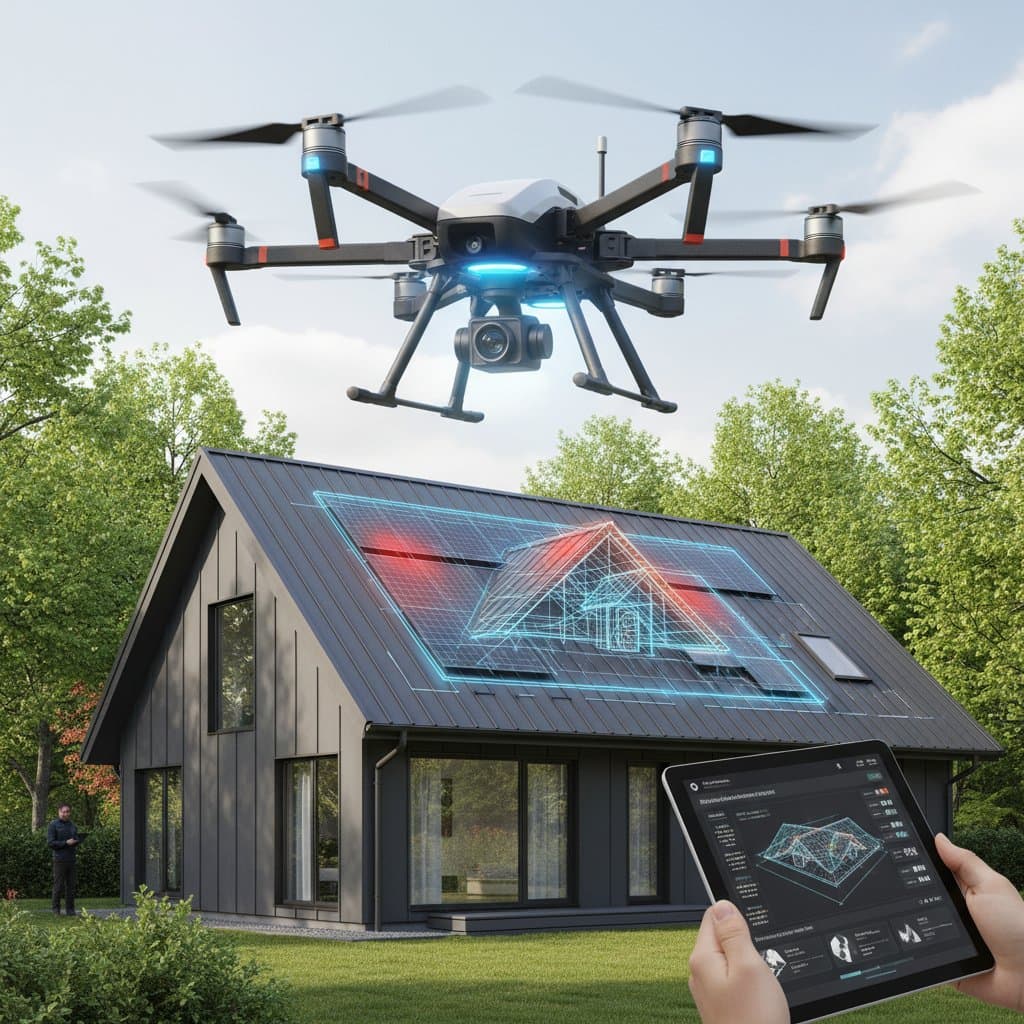
AI drones employ high-definition cameras, thermal detectors, and sophisticated navigation programs to examine every roof segment comprehensively. The photography setup records both standard visual and infrared imagery. Integrated AI analyzes this data to pinpoint surface anomalies, thermal leaks, and risks of water penetration.
Operators define a flight route that guarantees complete coverage of the roof area. After the drone finishes its scan, the AI applies specialized algorithms, developed to identify prevalent roof flaws such as absent shingles, degraded flashing, fissures in membranes, and obstructed drains.
In contrast to manual reviews dependent on direct observation, the drone's sensors quantify temperature variations and light reflection properties. Such measurements reveal roof behavior across different lighting and environmental factors. The resulting information compiles into a digital assessment report suitable for review by roofing professionals or structure analysts.
Categories of Systems and Key Specifications
| Drone Type | Imaging Features | Sensor Suite | Standard Flight Duration | Ideal Application |
|---|---|---|---|---|
| Basic Visual Drone | 4K resolution camera | Standard color sensors | 20 to 30 minutes | Roofs made of asphalt or metal showing surface damage |
| Thermal Detection Drone | Infrared combined with visual | Thermal and color sensors | 25 minutes | Identifying trapped moisture beneath coverings |
| Advanced AI Inspection Drone | Twin camera setup | AI-driven processing | 30 to 40 minutes | Extensive or intricate residential and commercial roofs |
Leading models like the DJI Matrice lineup or Parrot Anafi Thermal incorporate dual photography streams for detailed surface modeling at centimeter precision. When linked with AI platforms such as DroneDeploy or Pix4D Inspect, these setups autonomously flag issues and produce reports featuring location-specific markers.
Evaluating Costs and Advantages
Drone inspections carry a higher initial expense compared to basic manual examinations, yet they yield considerable savings over time. Traditional approaches frequently overlook subtle early deterioration, leading to costly structural fixes later. AI drones excel at spotting minute flaws, enabling timely interventions that avert escalation.
| Expense Area | Manual Examination | Drone Examination |
|---|---|---|
| Initial Expense | Low | Moderate |
| Duration of Process | 3 to 4 hours | 30 to 45 minutes |
| Precision Rate | 70 to 80 percent | 95 to 98 percent |
| Safety Concerns | Elevated | Negligible |
| Future Cost Reductions | Moderate | Substantial |
From a full lifecycle viewpoint, drone methods recoup their investment within one or two service periods. This approach prolongs roof longevity by resolving concerns prior to catastrophic breakdowns.
Leveraging Data for Proactive Roof Maintenance
AI drone inspections shine through their predictive analysis features. Each evaluation builds on prior scans to track progressive wear patterns. This forecasting enables property owners to arrange upkeep before damage becomes apparent.
Thermal scans reveal weakening in insulation layers, whereas visual algorithms detect color shifts in shingles indicative of ultraviolet exposure. Accumulated over multiple checks, this information forms a detailed upkeep history useful for validating warranties and property valuations during sales.
In areas susceptible to extreme conditions, drones facilitate rapid evaluations after storms to detect impacts from hail, wind forces, or accumulated water. Such prompt assessments halt minor issues from developing into significant claims under insurance policies.
Engaging Experts and Considering Regulations
Drones handle data gathering efficiently, but expert analysis proves essential for practical outcomes. Trained roofing specialists and certified evaluators interpret findings to develop targeted repair strategies or upkeep schedules.
Municipal codes mandate inspection frequencies for specific roof materials, particularly in zones with intense snowfall or storm risks. Drone procedures comply with these standards when performed by qualified personnel using verified tools.
Implementing Intelligent Roof Management Strategies
To optimize this technology effectively:
- Arrange inspections twice yearly, targeting spring and fall to monitor shifts across seasons.
- Select accredited service providers equipped with drones featuring thermal and visual imaging.
- Link scan results to residential energy oversight platforms for comprehensive performance monitoring.
- Consult qualified roofing experts to evaluate reports and sequence necessary interventions.
- Maintain electronic archives of inspections to bolster property market value and warranty support.