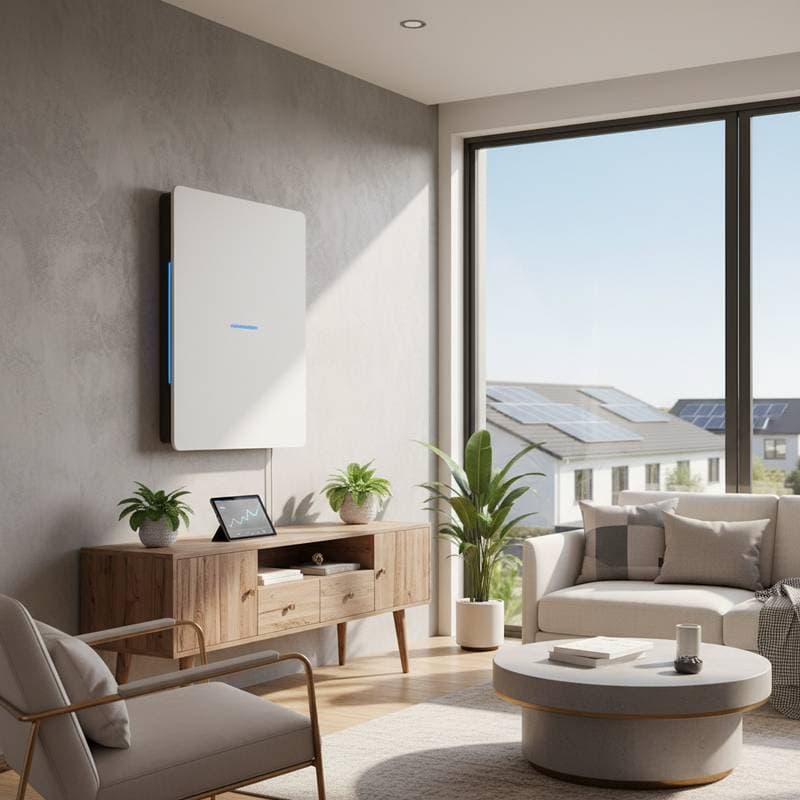
The Rising ROI for Home Battery Storage by 2026
Homeowners increasingly seek ways to manage electricity more effectively. Frequent power outages and escalating energy prices have transformed home battery systems from optional features into essential investments. Analysts project that by 2026, the return on investment for these systems will reach 15 percent, fueled by technological advancements, reduced costs, and enhanced incentives.
This guide details the factors driving this ROI growth, outlines typical expenses and savings, and provides practical steps for selecting a system that delivers strong returns.
Factors Driving Increased Value in Battery Storage
Home battery systems capture surplus electricity from solar panels or the grid for later use. During outages or peak pricing periods, stored energy powers the home, avoiding high costs or disruptions. As utilities adopt time-of-use rates and storage technology advances, these systems deliver dual benefits: outage protection and bill reductions.
Three key developments accelerate ROI:
- Declining Equipment Costs. Advanced chemistries like lithium iron phosphate have lowered prices significantly, with per-kilowatt-hour costs dropping below $200 in recent models.
- Enhanced Efficiency. Modern batteries achieve over 95 percent round-trip efficiency, minimizing energy loss during charge and discharge cycles.
- Robust Incentives. Federal tax credits cover 30 percent of costs, while state rebates and utility programs add $1,000 to $5,000 in savings, depending on location.
These trends will compress payback periods to 7 to 9 years by 2026, down from 10 to 12 years today.
ROI Analysis by Power Setup
Return on investment varies based on how a home sources and consumes energy. Consider the primary configurations below to estimate potential gains.
Grid-Only Homes
In grid-reliant setups, batteries charge during off-peak hours when rates fall below 10 cents per kilowatt-hour and discharge during peaks exceeding 30 cents. Annual savings typically range from $300 to $600, based on utility tariffs and usage patterns of 10,000 to 15,000 kilowatt-hours yearly.
Solar-Integrated Homes
Pairing batteries with solar panels maximizes value by retaining excess daytime generation for evening use. Homeowners avoid low net metering credits, often under 5 cents per kilowatt-hour, and achieve savings of $800 to $1,500 annually, alongside outage resilience for 8 to 12 hours.
Hybrid Grid-Solar Systems
These configurations leverage both sources through intelligent controls that prioritize solar storage and grid arbitrage. With optimal software, annual ROI exceeds 10 percent, especially in regions with incentives covering 40 percent of installation costs.
Evaluating Battery Technologies
Select a battery type aligned with safety, space, and performance needs. Each option suits different priorities.
Lithium Iron Phosphate (LFP)
Advantages: Exceeds 6,000 cycles with thermal stability and negligible fire risk.
Drawbacks: Initial price around $300 per kilowatt-hour.
Ideal Use: Families prioritizing durability and safety in variable climates.
Nickel Manganese Cobalt (NMC)
Advantages: Delivers 250 watt-hours per liter for compact installations.
Drawbacks: Limited to 4,000 cycles and requires cooling in hot environments.
Ideal Use: Space-constrained homes needing rapid power delivery up to 10 kilowatts.
Lead-Acid Batteries
Advantages: Starts at $150 per kilowatt-hour for basic setups.
Drawbacks: Only 50 percent usable capacity and 500-cycle lifespan.
Ideal Use: Temporary backups for low-demand circuits like lights and fans.
LFP dominates residential markets for its superior balance of reliability and cost-effectiveness over time.
Installation Approaches: DIY Versus Professional
Battery integration involves wiring to electrical panels, securing permits, and ensuring grid compatibility. Proper execution prevents hazards and preserves warranties.
DIY Considerations:
- Suitable only for isolated, low-voltage systems under 5 kilowatt-hours.
- Demands proficiency in National Electrical Code standards.
- Risks include warranty invalidation and potential fire or shock dangers.
Professional Benefits:
- Guarantees adherence to local codes and seamless solar integration if present.
- Covers programming for automated operation and rebate documentation.
- Essential for accessing incentives that require certified workmanship.
Professionals complete most installations in 1 to 3 days, minimizing disruptions.
Planning Your Battery Installation
Follow these steps to build a tailored, high-ROI system.
-
Evaluate Essential Loads. List critical items like refrigerators (drawing 150 watts) or home offices (500 watts) to determine required capacity, typically 10 to 20 kilowatt-hours.
-
Analyze Utility Bills. Review peak rates and monthly consumption to project savings; tools like online calculators refine estimates.
-
Research Incentives. Visit energy.gov or state portals for the latest rebates; apply within program windows to secure funding.
-
Assess Coverage Options. Compare partial backups for key areas versus whole-home systems; request capacity-specific quotes.
-
Vet Installers. Confirm NABCEP certification, review past projects, and inquire about post-install support.
-
Coordinate Timeline. Submit permits 4 to 6 weeks ahead; expect a 4-hour power interruption during hookup.
-
Implement Monitoring. Track via manufacturer apps for usage insights; arrange yearly inspections to sustain 90 percent efficiency.
Key Advantages and Limitations
Advantages:
- Sustains power for 12 to 24 hours during blackouts.
- Optimizes bills by shifting 20 to 30 percent of usage to low-rate periods.
- Lowers carbon footprint by displacing fossil fuel generators.
- Boosts property value by 3 to 5 percent in solar-friendly markets.
- Requires little upkeep beyond visual checks.
Limitations:
- Outlay of $10,000 to $20,000 pre-incentives.
- Suited for homes under 3,000 square feet without expansion.
- Performance dips 10 to 15 percent below 32 degrees Fahrenheit.
- Replacements needed after 10 to 15 years.
Advancing technology tips the scale toward benefits for forward-thinking households.
Strategies to Enhance Returns
Optimize your system for peak performance and quicker recovery.
-
Integrate with Solar. Capture 70 percent more self-generated power, accelerating payback to under 7 years.
-
Adopt Intelligent Controls. Software forecasts weather and rates to automate 15 to 20 percent extra savings.
-
Time Purchases Wisely. Secure 10 to 20 percent labor discounts in winter months.
-
Secure Incentives Promptly. File for credits before annual caps, potentially saving $3,000 immediately.
-
Update Software Regularly. Patches enhance battery health, extending life by 500 cycles.
-
Control Environment. Maintain 50 to 77 degrees Fahrenheit with vents to preserve 98 percent capacity.
Projected Financial Landscape Through 2026
The residential storage sector anticipates 25 percent annual growth, driving costs below $150 per kilowatt-hour. Rising utility rates, projected at 4 percent yearly, amplify savings potential.
Additional revenue streams emerge from demand response, where utilities compensate $0.20 to $0.50 per kilowatt-hour for peak support. Virtual power plants in select areas yield $200 annually per system.
Early adopters gain eligibility for evolving programs, solidifying investments against future rate hikes.
Value Beyond Financial Metrics
ROI captures economics, yet batteries deliver intangible security. They safeguard remote work setups and preserve food during multi-day outages.
For electric vehicle owners, seamless charging continues uninterrupted. This control fosters resilience in an era of unreliable grids.
Preparing for Installation
Compile 12 months of bill data and solicit quotes from three certified providers. Request detailed ROI projections incorporating local rates and rebates.
Arrange a site visit to assess panel upgrades, often needed for systems over 10 kilowatt-hours. This preparation ensures a smooth rollout.
Investing today aligns with 2026 projections, where batteries emerge as premier home enhancements for efficiency and autonomy.