Introduction to Solar Panel Maintenance
Homeowners install solar panels to achieve cost savings and minimize environmental impact. Regular cleaning forms a vital component of preserving this investment. Accumulation of dust, pollen, bird droppings, and grime obstructs sunlight access to solar cells, thereby diminishing energy output. While many individuals initiate cleaning efforts independently, such approaches suit only minor maintenance. Eventually, circumstances arise where engaging professionals ensures greater safety and effectiveness.
Distinguishing adequate personal cleaning from situations demanding expert assistance averts potential damage, sustains system efficiency, and prioritizes personal safety.
Basic Maintenance Practices for Homeowners
Homeowners can perform several straightforward and secure tasks to care for their solar panels without advanced tools or training.
- Conduct visual checks: Inspect panels from the ground every two to four weeks. Identify visible streaks, accumulations of bird droppings, or layers of dust that obscure the surface.
- Apply gentle rinsing: Employ a garden hose set to low pressure. Direct water streams across the panels from a safe distance below, allowing natural drainage to remove loose debris.
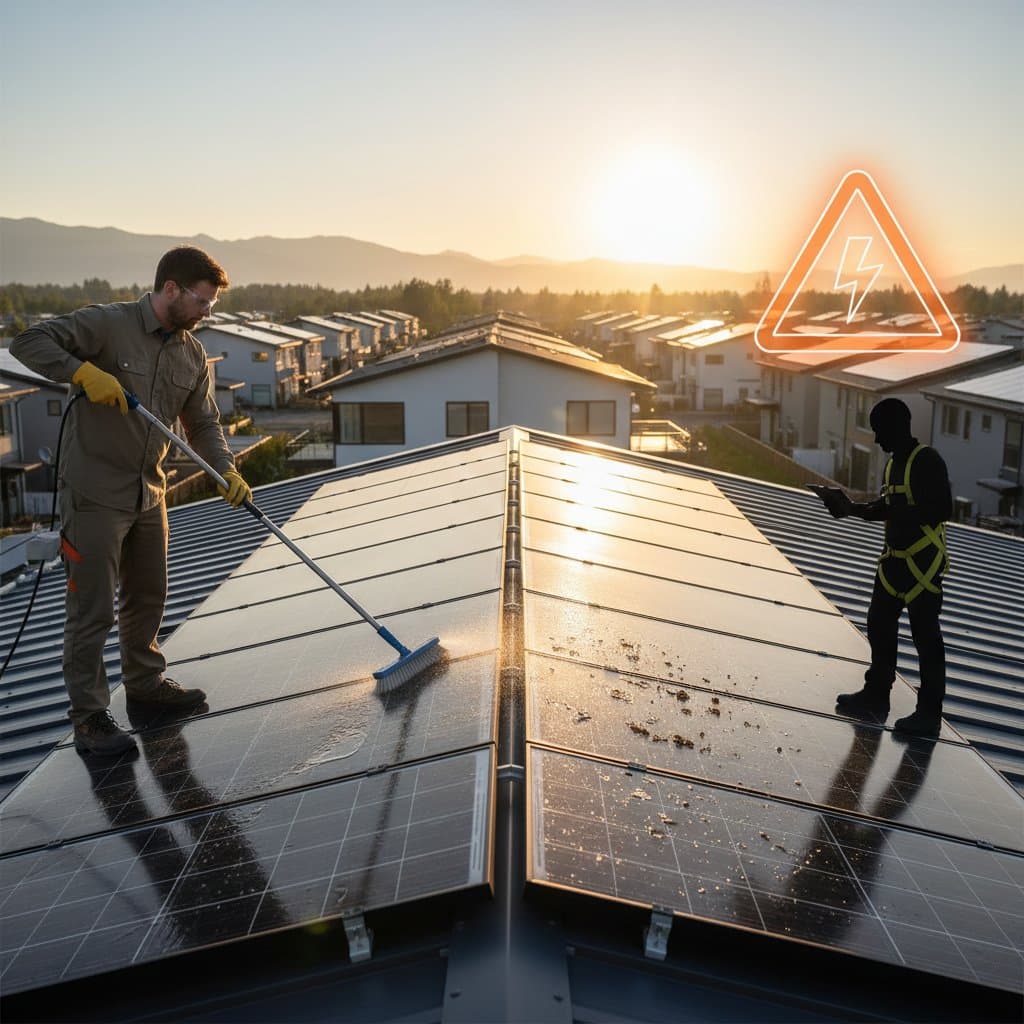
- Utilize soft cleaning implements: Select a sponge mop or soft-bristled brush attached to an extension pole for accessible panels. These tools minimize physical strain and risk.
- Steer clear of abrasive materials: Refrain from using rough sponges, potent chemical cleaners, or metallic scrapers. Such items may etch the panel glass, impairing light transmission and longevity.
- Address nearby obstructions: Regularly trim overhanging branches or encroaching vines. These prevent ongoing debris fallout onto the panels.
These procedures generally suffice for routine care when panels mount at accessible heights and on moderately sloped roofs. For panels on flat or low installations, such methods enhance performance without complicating access.
Key Factors in Choosing Between DIY and Professional Services
Determining the boundary between feasible self-maintenance and professional requirements demands careful evaluation. Consider these specific indicators to guide your decision.
- Panel accessibility: Proceed with DIY if panels remain reachable while standing firmly on the ground or a stable, low platform. Delegate to experts for installations on elevated or steeply pitched roofs, where falls present significant hazards.
- Nature of contaminants: Manage light dust or pollen layers through home rinsing. For hardened bird droppings, adhesive residues, or industrial pollutants, professionals apply targeted solutions that avoid surface harm.
- Panel condition and age: DIY suits newer, intact panels with clear surfaces. Older units exhibiting cracks, fading, or prior repairs require professional handling to prevent warranty invalidation or further degradation.
- Local environmental influences: In regions prone to dust storms, excessive pollen seasons, or urban pollution, establish a professional cleaning schedule every three to six months. This maintains consistent output amid challenging conditions.
By assessing these elements, homeowners align maintenance with both capability and system needs, reducing unnecessary risks.
Indicators Requiring Professional Intervention
Trained solar cleaning specialists deploy advanced equipment, including extendable poles, drones for inspection, and harness systems for elevated work. They also detect subtle issues like micro-cracks or connection faults during service. Engage professionals under these conditions:
- Panels position at heights exceeding safe ladder reach or on roofs with pitches greater than 30 degrees.
- Evidence of physical damage appears, such as chipped edges, or electrical anomalies like flickering inverter lights.
- Post-DIY cleaning, energy generation fails to recover to baseline levels, suggesting deeper blockages or faults.
- Proximity to wildlife habitats leads to nests, moss growth, or fungal buildup around frames and mounts.
- Manufacturer warranties stipulate periodic professional servicing to remain valid.
Experts typically employ deionized water systems that eliminate mineral deposits, ensuring streak-free results. During visits, they often examine inverters, cables, and anchors for proactive repairs, extending overall system reliability.
Strategies for Sustained Solar System Care
Effective cleaning integrates with broader maintenance to maximize return on investment. Implement these ongoing measures alongside cleaning routines.
- Track energy output: Review inverter screens or dedicated mobile applications weekly. Declines exceeding 10 percent from average production signal the need for immediate action, whether cleaning or diagnostics.
- Arrange yearly professional reviews: Solar technicians perform comprehensive checks, identifying corrosion on connectors, loose fasteners, or degradation in seals before minor issues escalate.
- Maintain detailed records: Log dates of cleanings, observations of panel conditions, and service invoices. Such documentation supports warranty claims and reveals patterns in performance trends.
- Manage environmental exposures: Monitor adjacent vegetation growth or nearby development activities that generate dust. Proactive landscaping or barriers mitigate debris accumulation over time.
Consistent application of these practices not only preserves efficiency but also anticipates challenges, ensuring the system delivers reliable power for decades.
Safety Precautions for DIY Cleaning Efforts
When opting for personal cleaning, adhere to these guidelines to protect both yourself and the equipment.
- Schedule tasks during early morning or late afternoon hours. Cooler temperatures prevent rapid water evaporation and subsequent spotting.
- Refrain from applying weight directly to panel surfaces. Even brief steps can fracture glass or disrupt internal connections.
- Eliminate high-pressure washers from use. Their force may dislodge protective seals or force water into vulnerable joints.
- Source soft or filtered water for rinsing. This reduces hard water stains that require additional effort to remove.
- Ensure ladder stability if elevation proves necessary. Position on level ground, secure the base, and enlist a spotter to monitor balance.
Prioritizing these steps minimizes accidents and preserves panel integrity during self-directed maintenance.
Securing Long-Term Performance and Safety
Investing in solar technology yields enduring benefits when paired with informed care. By mastering the distinction between DIY capabilities and professional necessities, homeowners avoid hazards while optimizing energy yields. Regular monitoring and timely interventions transform potential risks into opportunities for enhanced reliability. Ultimately, this approach safeguards financial returns and contributes to sustainable living without compromise.