How Battery Backup HVAC Systems Ensure Comfort During Power Outages
Selecting an appropriate backup solution for heating and cooling equipment determines whether a home remains comfortable or becomes unbearable during electrical failures. Advances in battery technology enable homeowners to sustain HVAC operations independently of the grid. This capability proves crucial in areas with severe weather, where brief disruptions to cooling can compromise air quality, resident well-being, and structural stability.
Battery-backed HVAC systems extend beyond mere convenience. They integrate energy storage, intelligent load handling, and performance enhancements. Homeowners benefit from grasping the operational mechanics, essential specifications, and regional climate impacts to guide their choices effectively.
Technical Overview
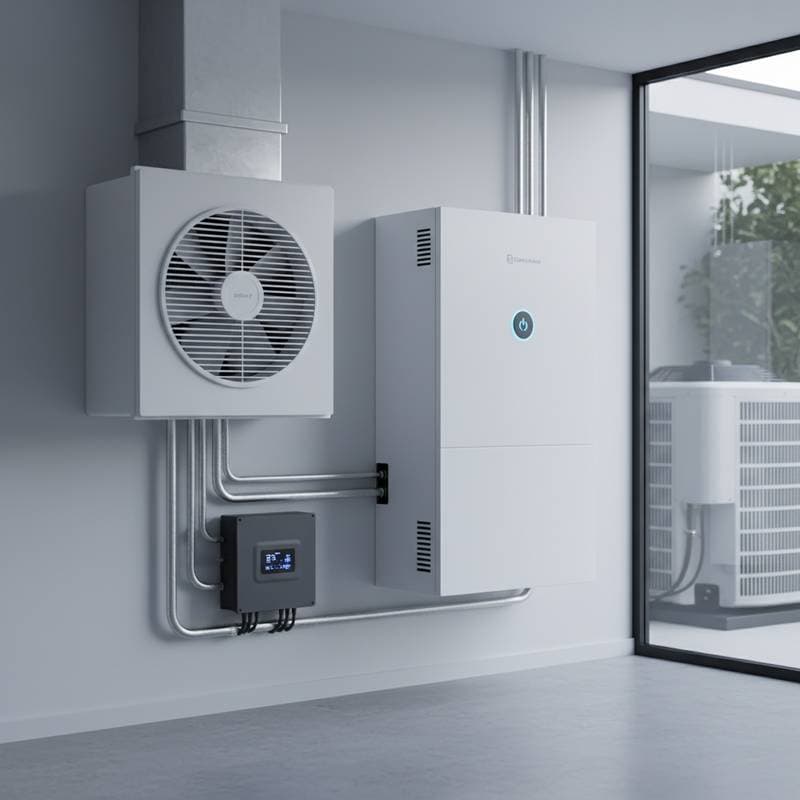
These systems pair conventional air conditioning or heat pump units with lithium-ion batteries for energy storage. The batteries charge from grid power or solar arrays. In the event of an outage, the inverter seamlessly redirects the HVAC circuit to battery supply.
Essential elements such as the compressor, air handler, and control systems continue to function. Partial setups may limit power to the blower and thermostat alone. Full configurations support the complete HVAC workload for multiple hours.
Popular options include the Tesla Powerwall, Enphase IQ Battery, and LG Chem RESU, offering 10 to 20 kilowatt-hours of capacity. The inverter converts direct current from the battery into usable alternating current.
System Types Breakdown
1. Variable-Speed Heat Pump with Battery Backup
- SEER/HSPF Range: 18 to 22 SEER, 10 to 12 HSPF
- Best Use: Mild to moderate climates
- Advantages: Superior efficiency, precise temperature regulation, minimized battery strain from surges
- Limitations: Reduced effectiveness in extreme cold
2. Ductless Mini-Split with Backup Battery
- SEER/HSPF Range: 20 to 30 SEER, 11 to 13 HSPF
- Best Use: Zoned residences or renovations
- Advantages: Minimal initial current draw, adaptable placement, exceptional energy savings
- Limitations: Coverage restricted to specific areas without additional batteries
3. Hybrid Furnace and Heat Pump System
- AFUE/SEER Range: 95 AFUE gas furnace paired with 16 to 18 SEER heat pump
- Best Use: Regions with diverse seasonal demands
- Advantages: Backup heating option, flexibility across power scenarios
- Limitations: Demands dual fuel sources and intricate controls
Integration Considerations
Merging a battery system with an established HVAC requires thorough load evaluation. Starting currents often surpass operational demands by twofold or more. Inverters rated at 7 to 10 kilowatts handle these surges without failure.
Outdated electrical panels might necessitate upgrades. Connect the HVAC to a dedicated subpanel that segregates critical loads like cooling, illumination, and appliances. Automated management prioritizes these during disruptions.
Ensure compatibility between components. Variable-speed compressors and advanced motors demand pure power. Opt for inverters producing pure sine waves to safeguard sensitive electronics.
Installation Process
Engage certified professionals for installation. Electricians and HVAC experts collaborate on wiring, grounding, and calibration. Configure the inverter firmware to align with the unit's voltage and frequency needs.
Local codes may mandate inspections for electrical and mechanical aspects. Verify soft-start features or variable-speed operation in condensers and handlers to curb initial power spikes. Such measures preserve battery life during use.
Expert Recommendations
Seek guidance from mechanical engineers or certified energy auditors for comprehensive designs. They conduct load assessments to specify battery capacity, inverter power, and unit compatibility. Address air quality and ventilation if prolonged isolated operation occurs.
For solar pairings, professionals simulate outcomes using actual production figures and outage risks. This approach sizes the system precisely, balancing reliability with cost efficiency.
Maintenance Strategies
Sustain battery-backed HVAC through routine and proactive care. Keep batteries in optimal temperature conditions and monitor for voltage fluctuations. Manufacturer apps log cycles, efficiency, and diagnostics.
Perform annual HVAC servicing, including filter changes, coil maintenance, and refrigerant verification. Battery use can influence operational patterns, so recalibrate defrost cycles, staging, and controls as needed.
Apply firmware updates regularly to inverters and controllers. These enhancements refine power distribution and device synchronization, promoting safety and peak performance.
Steps to Implement Your System
Residents in outage-vulnerable or temperature-extreme areas gain comfort and autonomy from battery HVAC. Start with a load audit and insulation review. Enhanced sealing and insulation reduce energy needs, prolonging backup duration.
Contact experienced HVAC contractors specializing in storage integration. Demand specs on SEER, HSPF, and inverter capabilities. Evaluate batteries by efficiency, cycle life, and warranty terms for long-term value.