Understanding Ember-Resistant Vents in the 2026 Codes
In wildfire-prone areas, improper venting exposes homes to severe risks, regardless of other fire-resistant features. The 2026 building codes introduce stricter standards for vents, emphasizing designs that resist ember intrusion and heat exposure. Homeowners benefit from learning the mechanics of these vents and selecting options that align with updated requirements for enduring safety.
These regulations target the Wildland-Urban Interface, where urban development meets wildlands. Ember-resistant vents prevent small, glowing particles from entering attics or crawl spaces, where they ignite dry materials. Compliance ensures structures withstand wildfire threats without compromising ventilation needs.
How Ember-Resistant Vents Function
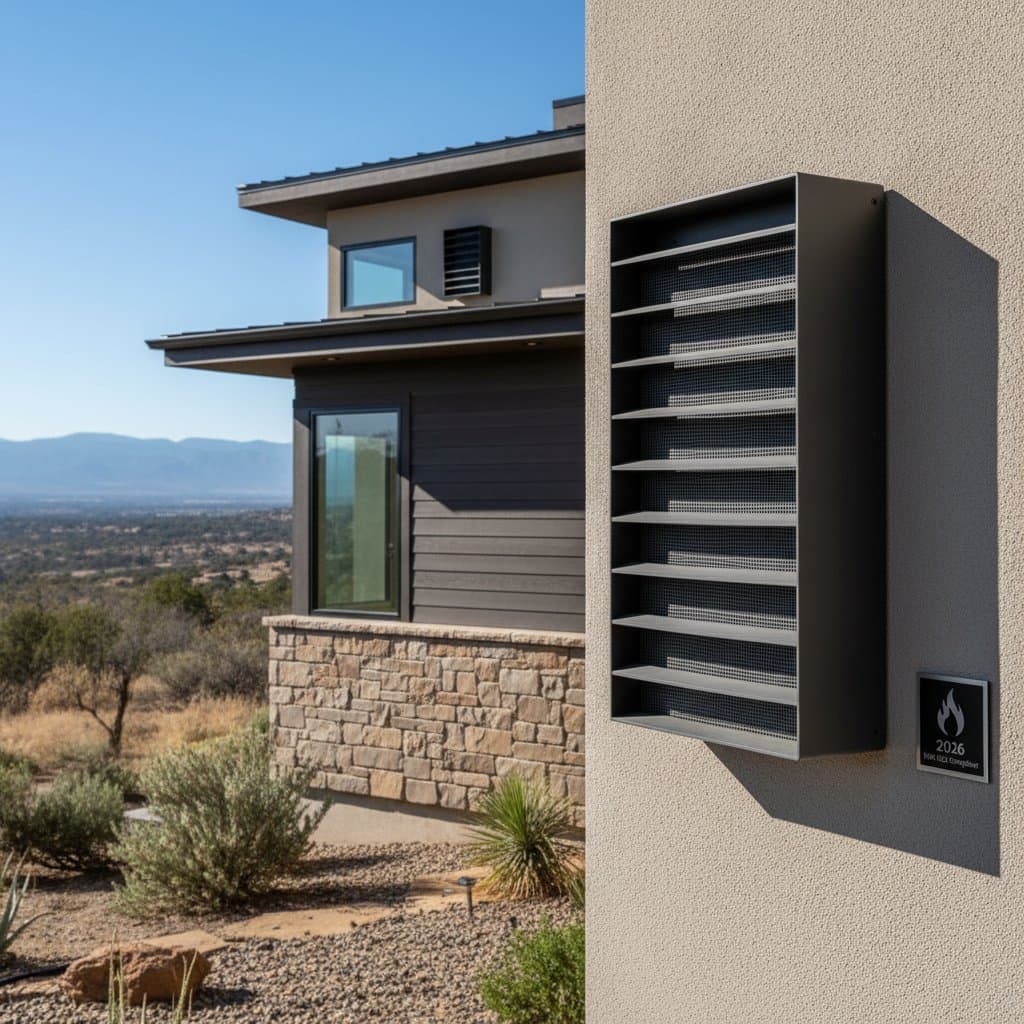
Ember-resistant vents balance airflow for attics and crawl spaces with barriers against wildfire embers. Engineers design them using stainless-steel mesh, strategic baffles, and heat-activated materials. Under routine conditions, air circulates freely to regulate temperature and moisture.
Advanced versions feature dual layers: an exterior metal screen paired with an intumescent coating that expands under heat to close openings. This action blocks embers and limits heat transmission. Testing under ASTM E2886 and ASTM E2912 standards verifies that approved vents endure ember assaults and flame contact for required periods without breaching.
Exploring Vent System Types
Homeowners select from several vent categories based on exposure levels and budget. Each type undergoes rigorous evaluation for ember deflection and airflow maintenance. The following breakdown highlights key specifications and applications.
Metal Mesh Vents
- Key Features: Stainless-steel mesh with openings limited to 1/8 inch.
- Strengths: Provides solid ember resistance with straightforward installation.
- Limitations: Offers basic radiant heat shielding and may accumulate debris.
- Ideal Scenarios: Retrofitting in areas with moderate flame risk.
- Airflow Measure: Coefficient of 0.04.
- Advantages: Resists corrosion effectively.
- Drawbacks: Requires regular cleaning to avoid blockages.
Baffled Vents
- Key Features: Multi-layer metal paths that alter airflow direction.
- Strengths: Redirects embers while minimizing heat ingress.
- Limitations: Reduces airflow marginally compared to open designs.
- Ideal Scenarios: Regions with strong winds and dense embers.
- Airflow Measure: Coefficient of 0.03.
- Advantages: Operates passively without mechanical elements.
- Drawbacks: Demands precise alignment during setup.
Intumescent-Coated Vents
- Key Features: Base of metal or composite with a heat-expanding layer.
- Strengths: Seals completely when temperatures rise, halting ember and flame passage.
- Limitations: Involves higher initial expense and occasional checks.
- Ideal Scenarios: Zones facing potential direct fire contact.
- Airflow Measure: Coefficient of 0.05 in standard use.
- Advantages: Demands little upkeep and excels in fire blocking.
- Drawbacks: Coating integrity needs monitoring over time.
Hybrid Smart Vents
- Key Features: Integrates dampers, intumescent components, and temperature sensors.
- Strengths: Activates closure upon detecting elevated heat levels.
- Limitations: Relies on power and involves intricate wiring.
- Ideal Scenarios: High-end residences linked to smart home networks.
- Airflow Measure: Varies by setup and sensor input.
- Advantages: Enables remote oversight and adaptive control.
- Drawbacks: Installation complexity increases labor costs.
Evaluating Costs and Long-Term Value
Investing in ember-resistant vents yields savings through durability and risk reduction. Initial expenses vary by type, but insurance incentives for compliant features lower net costs. For a typical home, full upgrades range from $1,500 to $3,000, far below potential fire damage expenses.
The table below compares options across key metrics.
| System Type | Installed Cost per Vent | Maintenance Frequency | Lifespan (Years) | Airflow Effect | Protection Level |
|---|---|---|---|---|---|
| Metal Mesh | $75 | Annual | 25 | Neutral | Moderate |
| Baffled | $100 | Biennial | 30 | Minor reduction | High |
| Intumescent-Coated | $150 | Triennial | 35 | Slight restriction | Very High |
| Hybrid Smart | $250 | Annual testing | 40 | Configurable | Very High |
Premium systems like intumescent and hybrid options justify their price with extended service and superior safeguards. Reduced repair needs and policy discounts enhance financial returns.
Ensuring Proper Installation and Compliance
The 2026 codes demand ember-resistant vents for all attic, subfloor, and gable vents in designated zones. Products must certify under ASTM E2886 for wind-driven ember simulations and include clear labeling for verification. Inspectors confirm both fire resistance and ventilation adequacy.
Install vents flush to surfaces, sealing edges within 1/16 inch using fire-rated materials. In wet or snowy climates, incorporate anti-clog designs without weakening ember barriers. For larger buildings, engineers calculate total airflow to meet code thresholds.
Professional contractors handle precise placement to avoid vulnerabilities. Post-installation checks validate performance and integration with surrounding structures.
Balancing Energy Use and Environmental Impact
Effective vents support energy goals by promoting consistent attic airflow. This prevents summer overheating and winter dampness, preserving insulation efficacy. Low-resistance models maintain efficiency alongside fire defense.
Environmentally, durable vents cut waste through recyclability of steel and aluminum. Low-VOC coatings minimize emissions during production. Selecting long-life products aligns with sustainable building practices and wildfire readiness.
Implementing Maintenance Routines
Regular care sustains vent effectiveness against both fire and daily wear. Examine units biannually to remove debris, leaves, or nests that impede flow. For intumescent types, inspect coatings for damage and address metal corrosion promptly with suitable sealants.
In elevated-risk areas, schedule expert reviews every few years. Technicians conduct airflow and integrity tests to detect issues early. Hybrid systems require sensor calibration per manufacturer guidelines to ensure reliable operation.
Consistent upkeep extends vent longevity and upholds code compliance. Homeowners track changes in local conditions to adjust practices accordingly.
Preparing for Evolving Wildfire Risks
Climate shifts intensify wildfires through drier landscapes and expanded interfaces. Future vents may feature adaptive sensors and self-cleaning materials to counter these trends. Current innovations already exceed standards for proactive protection.
For new builds or renovations, choose vents tested beyond ASTM requirements. This approach secures compliance amid tightening regulations and builds lasting resilience. Consult certified professionals to integrate these systems seamlessly into your home design.