2026 Mini-Split Costs: DIY Savings or Pro Value?
Home renovation projects throughout the United States face increasing expenses, driven by more than inflation. Tariffs on imported heating, ventilation, and air conditioning components, combined with ongoing supply chain disruptions, cause mini-split system prices to fluctuate rapidly. Individuals who have installed two ductless systems in older residences understand the challenge of choosing between self-installation and professional services. This decision extends beyond initial expenses to encompass comfort levels, system performance, and durability over time.
Understanding Current Mini-Split Costs
Material cost instability represents the primary driver of escalating mini-split prices. Copper and aluminum, essential for refrigerant lines and coils, experience consistent upward pricing trends. For a basic single-zone system, homeowners with technical background pay approximately $3,200 to $4,500 for the unit alone, excluding installation tools or potential errors.
Multi-zone configurations, suitable for expansive homes or room additions, range from $6,000 to $8,500 when professionals handle setup. Freight charges and distributor margins further strain household budgets. Although some individuals order units from international online vendors to reduce costs, such purchases frequently invalidate manufacturer warranties or create mismatches with United States electrical standards. One practical example involves an imported condenser that failed local inspection due to non-compliance with Underwriters Laboratories listing requirements.
To navigate these costs effectively, research multiple suppliers and verify compatibility with regional building codes before purchase. Factor in additional expenses such as mounting brackets, line sets, and electrical upgrades, which can add 10 to 20 percent to the total outlay.
Making the DIY vs. Professional Decision
Evaluating DIY Installation
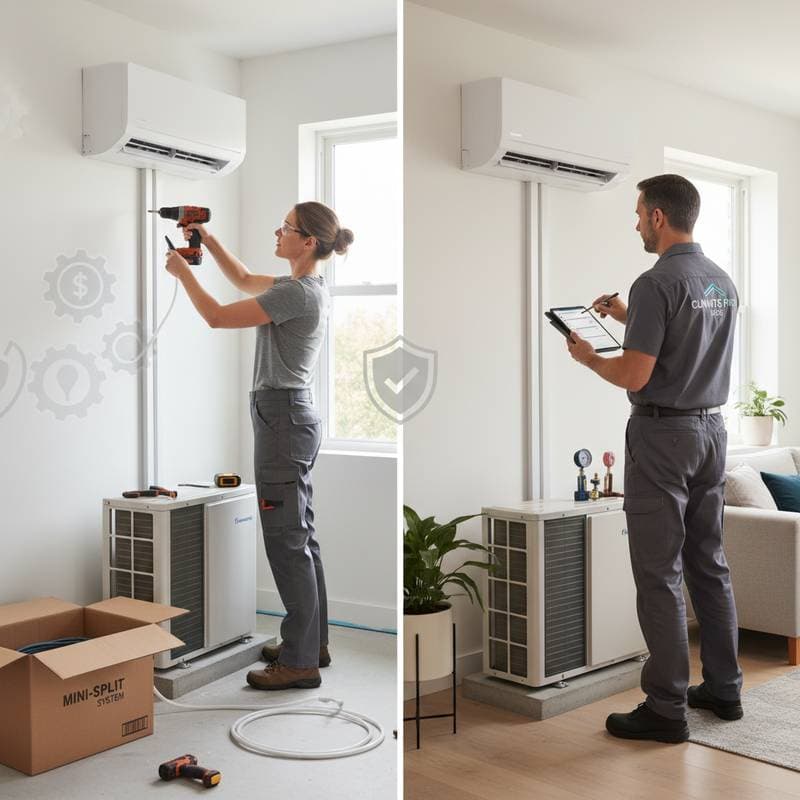
Self-installation appeals to those proficient in electrical wiring, wall penetration techniques, and refrigerant management. Modern systems often feature pre-charged lines with quick-connect fittings, which streamline assembly. However, individuals must perform vacuum testing and leak detection meticulously to avoid inefficiencies or early compressor breakdowns.
Prepare by acquiring necessary tools, including a manifold gauge set, vacuum pump, and torque wrench. Review manufacturer manuals thoroughly and consult online tutorials from reputable sources. Success requires adherence to safety protocols, such as wearing protective gear and ensuring proper ventilation during refrigerant handling.
Assessing Professional Installation
Expert setup guarantees precise refrigerant charging, sealing, and system balancing. Licensed contractors typically provide a one-year labor guarantee and manage required permits. With evolving local regulations mandating specific refrigerant recovery methods, engaging a certified technician minimizes legal and safety risks.
Professionally installed units enhance property appeal during resale, as potential buyers value certified documentation of quality work. Contractors also optimize system placement for maximum airflow and energy efficiency, often identifying issues like inadequate insulation that DIY efforts might overlook.
Key Safety Considerations
- Handling refrigerants without proper certification violates federal laws and poses health hazards, including exposure to toxic fumes.
- Always consult a licensed professional if you do not possess Environmental Protection Agency Section 608 certification.
- Verify that all electrical connections comply with National Electrical Code standards to prevent fire risks.
Timing Your Project Wisely
Schedule installations during spring or fall seasons for optimal results. Professionals maintain greater availability, and vendors frequently offer reductions on prior inventory. Steer clear of summer peaks, when labor rates and component prices surge due to high demand.
For DIY projects, allocate sufficient time to finish before seasonal temperature extremes arrive. This approach prevents rushed work that could compromise system integrity.
Obtain at least three quotes from nearby contractors prior to equipment acquisition. These estimates reveal variations in labor charges and confirm that selected models align with your residence's heating and cooling demands. Use load calculation tools, such as Manual J software, to determine precise sizing requirements.
Long-Term Value and ROI
Premium mini-split systems reduce energy consumption by 25 to 40 percent relative to conventional ducted HVAC options. Over ten years, this efficiency translates to savings of $3,000 to $5,000, based on regional utility rates and usage patterns.
Units installed by certified experts preserve performance longer through accurate initial calibration. Regular maintenance, such as annual filter cleaning and coil inspections, extends lifespan and sustains return on investment.
Consider incentives like federal tax credits under the Inflation Reduction Act, which can offset up to 30 percent of costs for qualifying energy-efficient models. Pairing a mini-split with smart thermostats further amplifies savings by enabling precise temperature control.
Steps to Secure Reliable Installation
Assess your skill level honestly before proceeding with DIY efforts. If uncertainty exists, prioritize professional involvement to safeguard warranty coverage and operational safety.
Select equipment from established brands like Mitsubishi or Daikin, known for robust support and parts availability. Document every step, from site preparation to final testing, to build a maintenance record that supports future troubleshooting.
Ultimately, a well-executed mini-split installation delivers consistent comfort and substantial financial benefits. Invest time in planning to ensure your 2026 upgrade enhances home efficiency without unnecessary complications.