2026 Flood Insurance Requirements for Basements
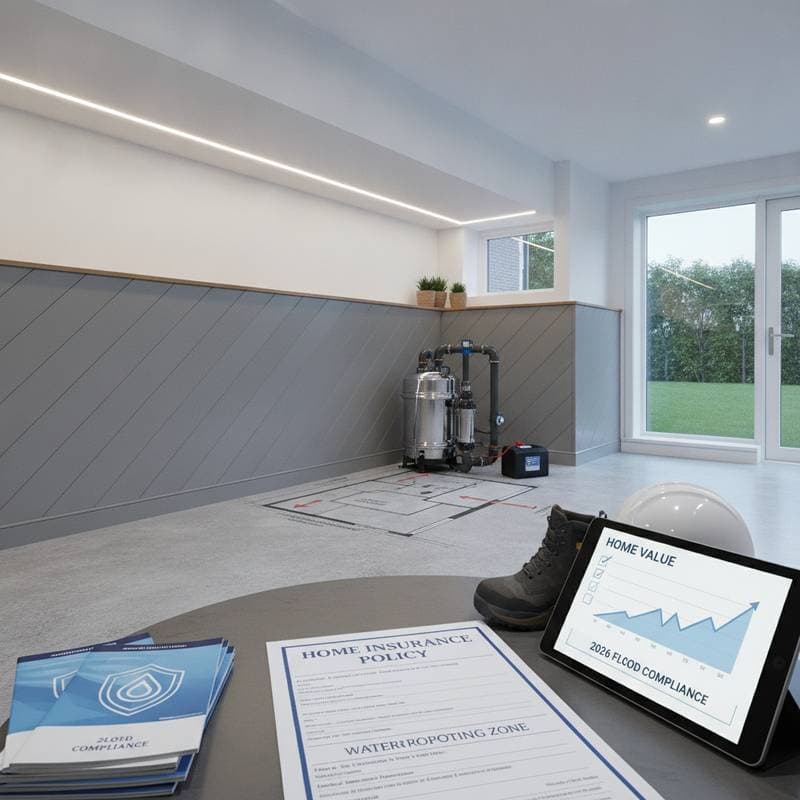
Homeowners in flood prone zones face stricter insurer expectations starting in 2026. Policies covering below grade spaces now require documented flood proofing measures before renewal or issuance. These standards address repeated claims from water intrusion and encourage proactive upgrades that protect both property and coverage.
Properties located near designated floodplains need immediate attention to avoid lapses. Understanding the specific upgrades, associated expenses, and compliance process helps owners act efficiently.
Reasons Insurers Now Mandate Flood Proofing
Recent policy changes stem from patterns in basement flood claims. Many incidents trace to foundation cracks, inadequate sump performance, or exterior drainage failures that could have been prevented. Insurers reserve the right to deny claims or increase rates when properties lack approved protections.
Beyond policy compliance, flood proofing maintains structural stability. It reduces mold risk and improves air quality while adding usable space that supports higher resale values.
Elements That Affect Project Costs
Project expenses vary based on several site specific conditions.
- Soil composition influences water retention. Clay soils exert greater pressure on foundations than sandy or loamy soils.
- Basement depth and configuration affect access. Deeper foundations or those extending beneath additions require more labor.
- Wall material determines sealing needs. Concrete block allows more seepage than poured concrete and often needs dual interior and exterior treatment.
- Surrounding hardscape raises excavation costs. Patios, decks, and mature landscaping must be removed and restored.
- Regional labor rates fluctuate. Urban markets and areas with repeated flooding history carry higher service fees.
Flood Proofing Options and Their Tradeoffs
| Method | Advantages | Limitations |
|---|---|---|
| Interior drain tile | Minimally invasive, manages hydrostatic pressure effectively | Does not address wall seepage |
| Exterior membrane | Prevents water contact at the source, offers extended durability | Involves excavation and higher expense |
| Sump pump with backup | Handles high volume groundwater reliably | Requires ongoing power supply and maintenance |
| Backwater valve | Blocks sewer line backups | Demands professional installation and periodic testing |
| Crack injection | Provides quick repair for isolated leaks | Ineffective for widespread or structural issues |
A combined system typically satisfies insurer criteria more thoroughly than any single approach.
Strategies to Manage Expenses
Owners can control costs through careful planning.
- Align waterproofing with other basement work. Completing the upgrade before finishing or flooring installation avoids later demolition.
- Inquire about local incentives. Certain municipalities and carriers provide rebates for approved systems.
- Time the work for slower periods. Contractors often reduce rates during drier months.
- Select efficient equipment. Energy rated pumps may qualify for utility rebates.
- Obtain multiple bids. Comparing three or more proposals reveals differences in materials, warranties, and pricing.
Proactive upgrades can also lead to improved policy terms at renewal.
Records Required for Renewal
Maintain complete documentation after installation. Retain permits, invoices, and inspection reports in one location. Insurers may request evidence of compliance during review, and organized files prevent processing delays.
Schedule annual checks of sump operation, backup power, and foundation condition. Early correction of minor issues protects both coverage and structural integrity.
Steps to Achieve Compliance
Begin with a professional site assessment to identify the most suitable methods. Select systems matched to soil, foundation, and layout conditions, then engage licensed contractors for installation. Quality work delivers lasting protection and satisfies current insurance standards.