Spot Winter Roof Damage Before Spring Arrives
Roofs endure significant stress during winter from freezing temperatures, heavy snow, and shifting humidity levels. These conditions often conceal problems that surface during the transition to warmer weather, particularly with spring rains. Early detection through targeted inspections safeguards the home's structure and prevents expensive repairs.
Homeowners benefit from understanding these seasonal challenges. A proactive approach involves assessing both visible and hidden vulnerabilities to maintain the roof's integrity and the home's overall envelope.
How Winter Affects Roof Components
Winter exposes roofing systems to multiple forces. Snow accumulation imposes substantial weight on the structure, while ice forms in vulnerable areas. Temperature swings cause materials to expand and contract, straining seals and connections.
In regions with harsh winters, freeze-thaw cycles prove especially damaging. Water infiltrates small gaps, freezes, and expands, gradually lifting shingles or compromising underlayment. Attic spaces suffer too, as inadequate ventilation leads to uneven snow melt and ice dams that redirect water toward the interior.
These processes weaken the roof over time. Addressing them early preserves the building's thermal performance and structural stability.
Key Indicators of Winter Roof Damage
Ice Dams and Water Penetration
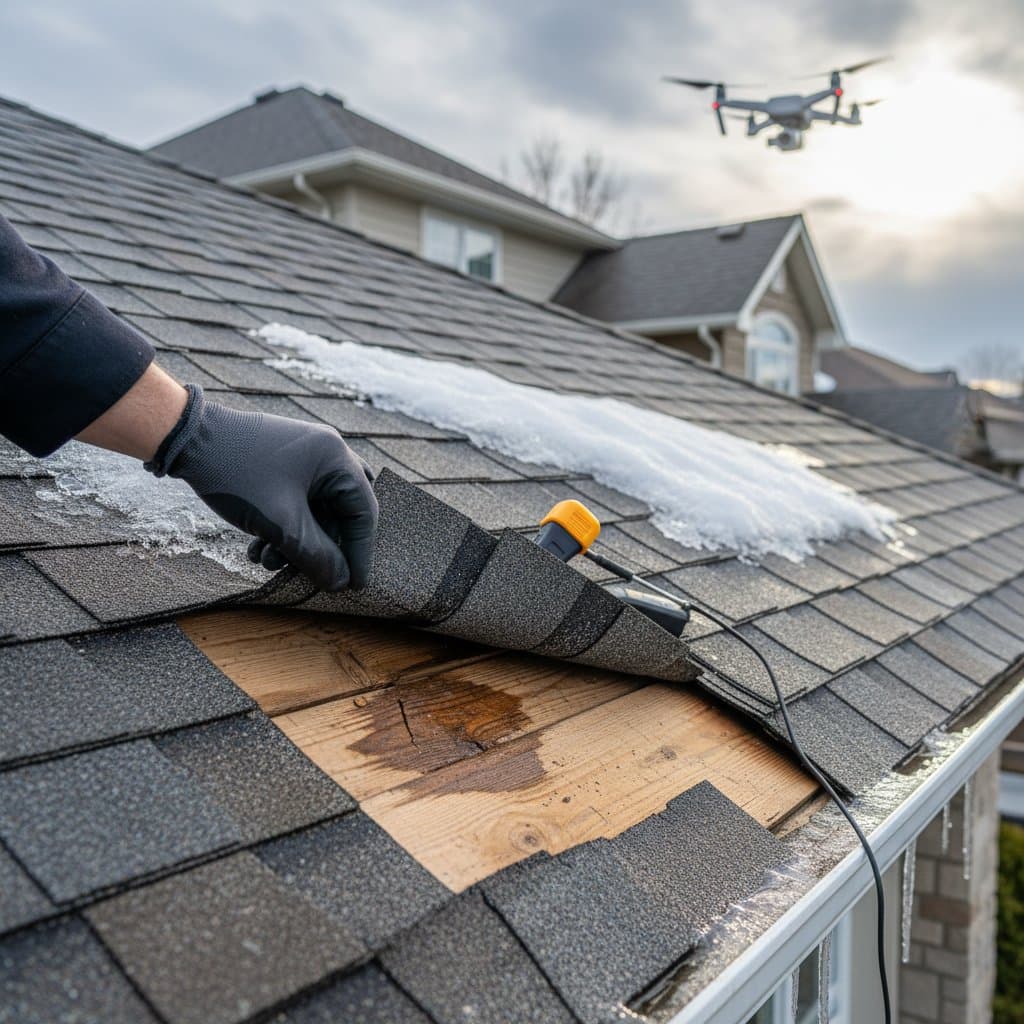
Ice dams occur when snow melts partially and refreezes at roof edges, blocking proper drainage. This setup forces water back under shingles and into the decking. Saturated insulation loses effectiveness, and unchecked moisture fosters mold within the attic.
Inspect eaves and valleys closely for signs of refreezing. Persistent dampness in the attic signals potential intrusion that requires immediate attention.
Shingle Wear and Granule Erosion
Shingles face assault from wind, thermal shifts, and debris. Edges curl or lift, exposing the underlying material. Granules, which shield against UV rays, shed during storms or melting events, hastening material degradation.
Examine the roof surface for bald patches or loose tabs. These early warnings indicate reduced protection and a shortened service life.
Flashing Separation and Seal Degradation
Flashing protects junctions around chimneys, vents, and skylights. Winter contractions create gaps in these metal pieces or surrounding sealants. Even slight separations invite water entry during subsequent rains.
Check for cracks in caulking or lifted flashing edges. Tightening or resealing these areas restores the barrier against elements.
Load Strain on Structural Elements
Heavy snow loads test the roof's trusses and rafters. Exceeding design limits causes sagging or deflection. Interior signs, such as ceiling cracks, reveal underlying fatigue.
Observe the roofline from below for unevenness. Professional measurement confirms if reinforcements become necessary.
Gutter Obstructions and Overflow
Gutters fill with leaves, ice, and granules during winter. Blockages prevent meltwater escape, leading to spills over fascia and soffits. Prolonged exposure rots these wooden components.
Clear debris promptly after thaws. Ensure downspouts direct water away from the foundation to avoid broader issues.
Connections to Home Systems
Roof condition influences more than the exterior. Moisture breaches affect attic insulation, reducing its ability to regulate temperature. This inefficiency burdens heating and cooling systems, increasing energy use.
Integrate roof maintenance with ventilation upgrades and gutter alignments. For homes with added features like solar arrays, verify secure flashing and conduit seals to withstand seasonal changes.
Proper coordination enhances the entire building envelope. It maintains humidity balance indoors and supports efficient operation of connected infrastructure.
Step-by-Step Inspection Process
Begin inspections from a safe distance on the ground. Scan for displaced shingles, bowed sections, or debris piles. Use binoculars to spot granule loss or curling edges without climbing.
Move to the gutters next. Remove any remaining ice or buildup, and test flow by running water through downspouts. Inside the attic, probe insulation for wet spots and inspect decking for light penetration or stains.
Advanced tools aid deeper analysis. Thermal cameras reveal concealed moisture, while meters quantify saturation levels. These methods pinpoint issues before they worsen.
Essential Inspection Steps:
- Review shingle alignment and granule retention across slopes.
- Test flashing adhesion and sealant integrity at all penetrations.
- Verify attic airflow through vents and insulation consistency.
- Flush gutters and downspouts to ensure unobstructed paths.
- Clear ridge and soffit vents of any blockages.
Adhering to Building Standards
Building codes dictate protections like ice barriers and ventilation minimums. In snowy climates, install self-adhering membranes at least 24 inches inside warm walls. Compliance strengthens insurance coverage for weather-related claims.
Select contractors experienced with local requirements. They ensure repairs meet material specifications, preserving warranties and safety.
When to Call in Experts
Homeowners handle basic checks, but complex systems demand professional input. Roofing specialists assess deck strength, truss alignment, and insulation permeability. Engineers evaluate loads for roofs bearing equipment or panels.
Schedule evaluations post-winter. Experts provide detailed reports that guide targeted fixes and future planning.
Steps to Fortify Against Spring Rains
Act before temperatures rise consistently. Clean surfaces to remove winter residue, then reseal vulnerable joints. Secure or replace compromised shingles and fasteners to block new water paths.
Optimize attic circulation by balancing intake and exhaust vents. This setup prevents summer heat traps and sustains efficiency.
These preparations minimize risks from spring downpours. They transform potential crises into manageable maintenance.
Sustaining Roof Performance Year-Round
Regular care upholds the roof's role in energy savings and structural protection. Annual post-winter reviews, paired with repair documentation, track progress and validate guarantees.
Homeowners gain peace of mind through vigilance. This strategy not only averts damage but also optimizes comfort and costs across seasons, ensuring the home remains resilient.