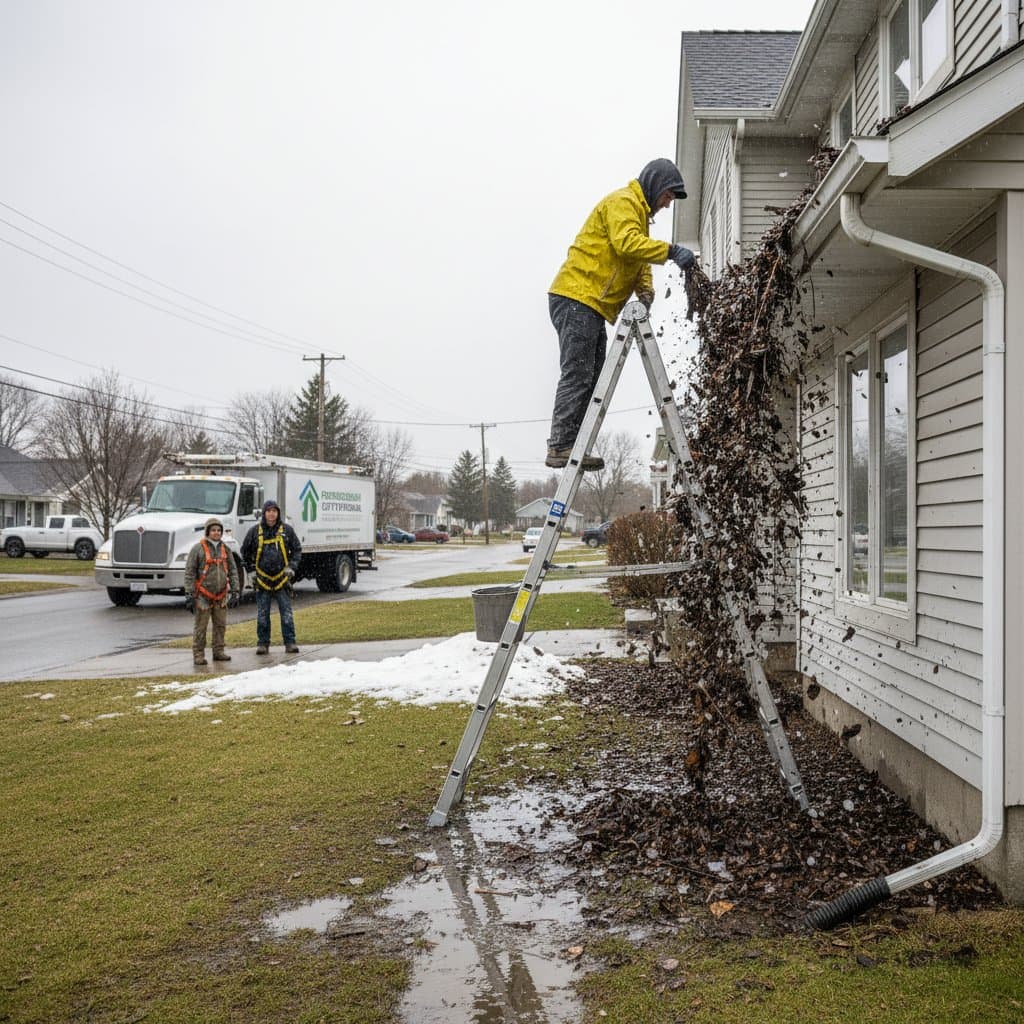
Why DIY Gutter Cleaning Becomes Risky in Spring
Homeowners often view spring gutter cleaning as a straightforward task to save money. However, seasonal changes introduce unique challenges that elevate the dangers. Thawing debris creates slippery conditions, unstable ladders pose fall risks, and sudden weather shifts complicate the job, all while affecting your home's drainage efficiency.
Understanding these elements from a systems viewpoint empowers you to decide between DIY efforts and professional help. This approach balances safety with long-term home protection.
How Gutters Manage Home Drainage
Your gutter system serves as a vital network for water control. It captures roof runoff, guides it through downspouts, and routes it away from the foundation to prevent damage. Optimal performance relies on a consistent slope of one-quarter inch per ten feet, ensuring smooth water flow.
Debris buildup disrupts this flow by creating resistance, which leads to overflows, rotting fascia boards, and erosion around the foundation. In spring, melting snow, pollen, and storm debris intensify these issues. Clogged gutters result in standing water that accelerates corrosion at seams and joints.
Comparing Gutter Systems and Maintenance Needs
Different gutter designs influence cleaning frequency, costs, and safety. Consider these metrics to evaluate your setup:
| System Type | Flow Efficiency (GPM per 50 ft) | Annual Maintenance Frequency | Average Cleaning Cost | Expected Service Life | Safety Risk Level for DIY |
|---|---|---|---|---|---|
| Standard Aluminum Gutter | 2,800 | Twice per year | Moderate | 25 years | High |
| Seamless Aluminum Gutter | 3,000 | Twice per year | Moderate | 30 years | Moderate |
| Gutter with Leaf Guard | 2,500 | Once per year | Higher upfront | 30–35 years | Low |
| Copper Gutter | 2,700 | Twice per year | High | 50 years | High |
| Vinyl Gutter | 2,200 | Twice per year | Low | 15–20 years | High |
Leaf guards lower maintenance demands but still require checks for fine debris that can reduce flow. Selecting the right system minimizes risks and extends durability.
Ladder Physics and Springtime Stability Challenges
Ladders function as levers, with stability hinging on your position, incline angle, and ground conditions. Position the base one foot from the wall for every four feet of height to achieve the ideal 75-degree angle. Spring's soft, wet soil reduces friction, while damp siding increases slip potential.
A minor shift in weight can push the ladder past its balance point, leading to tips or falls. Professionals use stabilizers and gripping footings to counter these variables. Without such tools, DIY attempts heighten the chance of accidents.
Weighing DIY Against Professional Cleaning
Evaluate the trade-offs to inform your choice:
| Factor | DIY Approach | Professional Service |
|---|---|---|
| Equipment Cost | Low to moderate | Included in service |
| Time Required | 2–4 hours | 1–2 hours |
| Safety Risk | High | Low |
| System Inspection | Rarely thorough | Standard inclusion |
| Long-term Savings | Variable, based on prevention | High, through expertise |
| Cleaning Quality | Inconsistent | Thorough and verified |
DIY might cut upfront costs, but a fall or improper handling often leads to repairs like fascia replacement, which exceed professional fees of a few hundred dollars.
Spring Impacts on Gutters and Home Structure
Spring conditions strain gutters in specific ways:
| Condition | Immediate Effect | Long-term Outcome |
|---|---|---|
| Blocked Downspout | Overflow near roofline | Siding stains and wet insulation |
| Standing Water | Faster seam corrosion | Reduced overall lifespan |
| Loose Brackets | Uneven slope and water pooling | Sagging and leaks |
| Partial Cleaning | Algae and pest buildup | Diminished drainage performance |
Addressing these promptly prevents escalating damage. Regular maintenance preserves your home's integrity and avoids costly fixes.
Core Gutter Specifications and When to Call a Pro
Key details guide effective care:
- Maintain a slope of 0.25 inch per 10 feet.
- Aim for 2,000–3,000 gallons per hour flow in standard 5-inch aluminum gutters.
- Inspect at least twice yearly.
- Budget low to moderate costs based on access and debris volume.
Use this framework for decisions:
- Low Risk: Single-story homes with firm ground and light debris suit cautious DIY.
- Moderate Risk: Two-story setups or sloped roofs benefit from pros.
- High Risk: Multi-story buildings, overhanging trees, or post-storm scenarios demand experts.
Steps to Secure Your Gutters This Spring
Take these measures for safe, effective maintenance:
- Evaluate height and ground firmness around ladder spots.
- Monitor weather to skip rainy or post-rain days.
- Scan for sags, loose parts, or visible wear first.
- Get bids from licensed pros offering inspections and tweaks.
- Set a routine for cleanings and track results.
Grasping spring's challenges to your gutters leads to smarter choices. Professional care delivers precision that safeguards your home, boosts efficiency, and protects your investment without the hazards of DIY missteps.