Optimal Placement for Grab Bars According to Safety Standards
Homeownership involves balancing comfort with precaution. Bathrooms pose unique risks due to slick floors and confined areas, contributing to a significant number of household falls each year. Grab bars offer a straightforward solution to enhance stability and reduce injury potential. For those preparing for family members with mobility challenges or simply prioritizing long-term safety, aligning installations with established codes ensures effectiveness and reliability.
Essential Guidelines for Grab Bar Installation
Grab bars extend beyond institutional settings; contemporary options integrate smoothly into residential designs. These fixtures deliver reliable assistance during transitions in moist environments, supporting users as they rise from seats or step into enclosures. Current accessibility regulations, drawing from the Americans with Disabilities Act (ADA), specify precise locations and specifications to optimize support.
Familiarity with these standards empowers homeowners to select appropriate positions and configurations. Even in private residences exempt from formal mandates, adopting these principles promotes a more intuitive and secure space.
Key Locations and Specifications
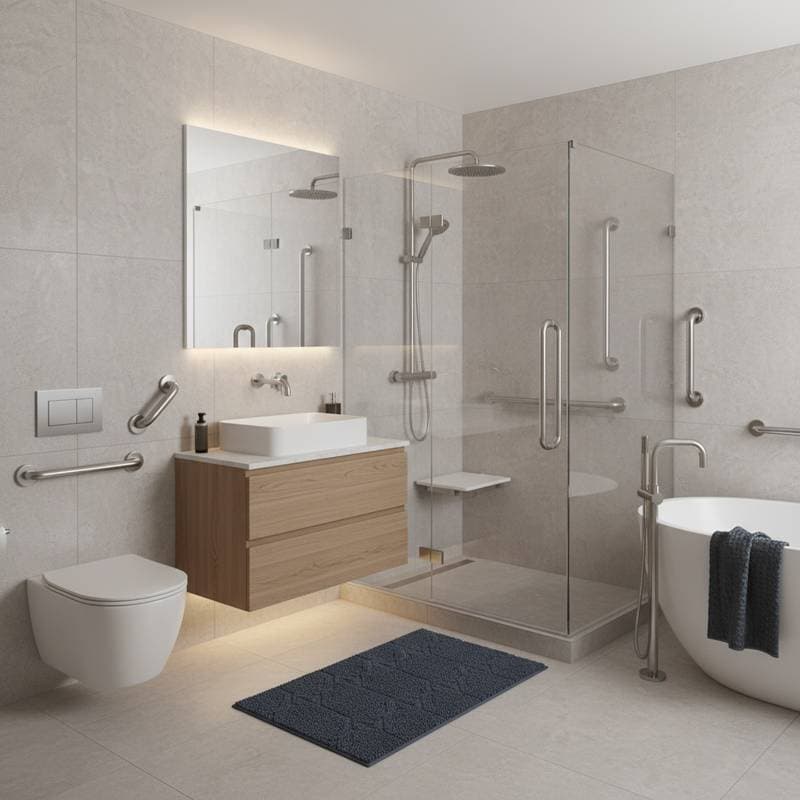
Safety codes emphasize strategic placement to cover high-risk zones. Install grab bars adjacent to toilets, within showers, alongside bathtubs, and near entry points. Each area requires tailored dimensions for optimal function.
-
Near Toilets: Position a horizontal bar on the rear wall, 36 inches long, centered behind the fixture at 33 to 36 inches above the floor. Add a vertical bar on the side wall, 42 inches in length, extending from 39 inches down to the floor for leverage during transfers.
-
In Showers: Mount one horizontal bar on the back wall, spanning 48 inches at 38 to 48 inches high, and another on the side wall, 24 inches long, starting 12 inches from the entry corner. For roll-in showers, ensure bars align with entry thresholds to aid balance.
-
Beside Bathtubs: Secure a 24- to 36-inch horizontal bar on the wall opposite the faucet, at 33 to 36 inches height. Include a vertical bar near the tub edge, 18 to 24 inches tall, positioned 12 inches from the outer rim to assist entry and exit.
-
At Entrances: For larger bathrooms, place vertical bars 42 inches high next to doors, ensuring a 60-inch clear turning radius inside.
These placements accommodate diverse user heights and reach ranges, minimizing strain. All bars must protrude at least 1.5 inches from the wall, with smooth, non-slip grips rated to withstand 250 pounds of dynamic force.
Selecting and Installing Grab Bars
Affordable choices abound without compromising quality. Stainless steel models resist rust and endure daily use, often available for under $50. Towel bar-style designs add aesthetic appeal while fulfilling support needs, blending into existing decor.
For temporary setups, suction-cup versions attach without tools, ideal for rentals, though they demand frequent checks for adhesion. Multifunctional units, such as those incorporating robe hooks or storage ledges, maximize utility in compact spaces.
Installation varies by skill level. For DIY approaches, measure precisely, use stud finders to locate secure anchors, and employ wall-blocking kits if studs are absent. Professionals recommend silicone caulk for waterproof seals and torque wrenches for firm fastening. Always verify local codes, as some regions update requirements annually; consult a certified contractor for compliance in 2025 standards.
Ongoing Care for Lasting Performance
Regular upkeep preserves grab bar integrity. Test for wobble monthly by applying firm pressure; secure any loose fittings immediately. Wipe surfaces with non-abrasive cleaners to prevent buildup that could slick grips.
Monitor hardware for wear, replacing corroded screws with corrosion-resistant alternatives. Maintain dry floors through prompt spill cleanup and non-slip mats, further bolstering overall safety.
Achieving a Secure Bathroom Environment
Implementing code-aligned grab bars transforms routine tasks into confident experiences. Assess your space to pinpoint priority zones, then choose installations that match your resources. This investment not only meets standards but also fosters independence and tranquility for all occupants.