Spring Wash to Paint for Lasting Curb Appeal
Selecting the optimal moment to renew your home's exterior determines whether the paint job endures for ten years or peels away within months. Spring delivers favorable conditions for this work, with moderate temperatures, reduced humidity, and longer daylight that support thorough cleaning, preparation, and application. However, achieving a durable result requires attention to the foundational steps before any paint touches the surface. This approach integrates washing, preparation, and coating selection to shield your home from weather elements, ultraviolet rays, and moisture, thereby boosting curb appeal and safeguarding your property.
The Role of Your Home's Exterior System
The outer layer of your home serves dual purposes: it acts as a barrier against environmental stresses and contributes to visual appeal. Paint performs more than decoration; it seals porous surfaces, deflects harmful radiation, and blocks water penetration. Accumulated grime, mold, and faded pigments weaken this defense, impairing new paint's grip and hastening wear. Washing eliminates these obstacles, while subsequent priming and painting rebuild the essential protective layers for sustained performance.
Effective exterior care follows a structured sequence of three phases:
- Cleaning and Decontamination
This step clears away biological residues, airborne particles, and surface oxidation that hinder bonding. - Repair and Conditioning
It targets fissures, deteriorated seals, and flaking sections to create an even base. - Priming and Final Coating
These restore resistance to sunlight and dampness through materials suited to the underlying structure.
Completing these phases in order ensures the entire system operates at peak efficiency.
Selecting the Right Cleaning and Coating Methods
Pressure Washing Techniques
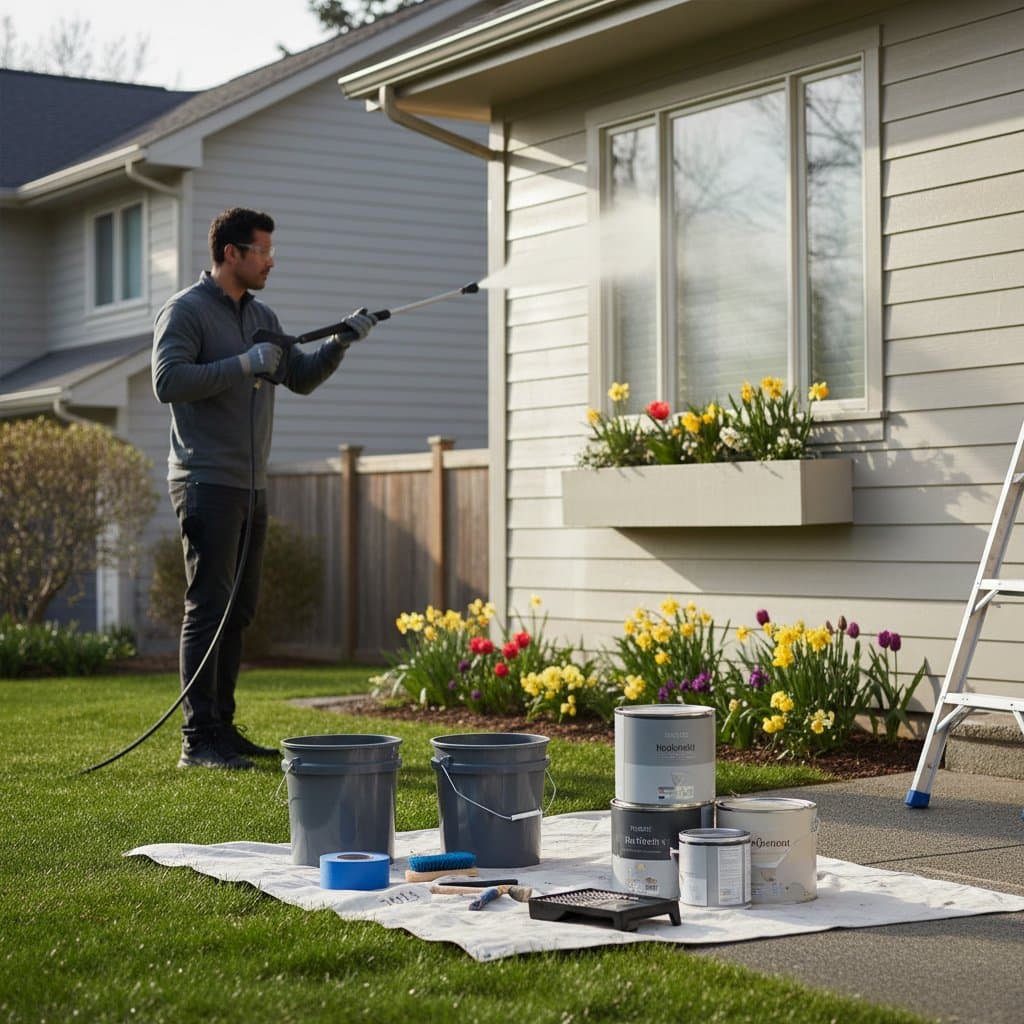
Pressure washers generate between 1,500 and 3,000 pounds per square inch, effectively stripping away loose coatings, fungal deposits, and powdery residues. Opt for gas-powered models when tackling robust materials like brick or weathered paint on hard surfaces; electric versions suit gentler applications on materials such as aluminum siding or cedar. Employ a 25-degree spray angle and hold the wand at least eight inches from the surface to avoid etching or splintering.
To apply: Start at the top and work downward in overlapping passes. Test on a small area first to gauge pressure suitability. After washing, allow the surface to dry fully, typically 24 to 48 hours, before proceeding.
Soft Washing Approaches
Soft washing applies gentle pressure below 500 pounds per square inch alongside chemical solutions rich in surfactants. This technique preserves integrity on vulnerable substrates like painted lumber, textured plaster, or fiber cement boards, where forceful streams might cause harm. Choose eco-friendly formulas containing sodium percarbonate or quaternary ammonium for dissolving algae and mildew without affecting nearby plants.
Procedure: Mix the cleaner according to label instructions and apply with a garden sprayer. Let it dwell for 10 to 15 minutes to penetrate growth, then rinse lightly from bottom to top. This method minimizes water usage while maximizing contaminant removal.
Advanced Paint and Primer Options
Contemporary exterior paints feature resilient polymers that enhance stretch and attachment. Acrylic latex formulations excel in accommodating structural shifts from heat and cold, minimizing splits over time. For aged structures, select a specialized adhesion primer that builds a 1.5- to 2-mil dry layer, bridging old and new finishes securely.
Application tips: Stir paint thoroughly and use a high-quality brush or roller for even coverage. Apply two coats, waiting four hours between them, in temperatures between 50 and 85 degrees Fahrenheit for optimal curing.
| System Type | Pressure/Performance | Best For | Prep Requirements | Maintenance Interval |
|---|---|---|---|---|
| Pressure Wash | 1,500–3,000 PSI | Masonry, heavy buildup | Masking delicate areas, controlled distance | 12 months |
| Soft Wash | Under 500 PSI | Wood, vinyl, stucco | Allow detergent dwell time | 12–18 months |
| Paint & Primer | N/A | All exteriors | Ensure clean, dry surface | 8–12 years |
Balancing Costs with Long-Term Savings
Refreshing your home's exterior demands investment in supplies and professional services. Homeowners typically allocate one to three dollars per square foot for combined washing and painting, influenced by the current state and accessibility challenges. Inadequate groundwork often leads to higher expenses through frequent touch-ups or damage repairs.
Breakdown of expenses:
| Component | Average Cost per Sq. Ft. | Service Life | Annualized Cost |
|---|---|---|---|
| Pressure Washing | $0.25–$0.45 | 1 year | $0.30 |
| Paint & Primer | $1.00–$2.50 | 8–12 years | $0.15 |
| Caulking & Trim Sealing | $0.50–$1.00 | 5–7 years | $0.20 |
Over a decade, this integrated process delivers strong value by elevating appearance and fortifying the building envelope against elemental wear.
Optimizing Durability Through Routine Care
After applying fresh paint, vigilance ensures its extended service. Conduct yearly assessments focusing on these areas:
- Visual Inspection: Look for signs of cracking, blistering, or powdery residue on horizontal surfaces.
- Gutter Maintenance: Clear debris quarterly to avoid runoff that etches paint.
- Landscaping Control: Keep shrubs at least 18 inches from walls to limit moisture and spore contact.
- Targeted Cleaning: Use a solution of mild soap and water for localized dirt, rinsing promptly.
In moisture-prone regions, incorporate a 1:10 bleach-to-water mix annually to suppress mold. Arid areas benefit from periodic hosing to dislodge abrasive dust particles that erode finishes.
Building a Sustainable Protection Plan
View the washing-to-painting routine as an ongoing framework rather than isolated tasks. Maintain records of completion dates to schedule interventions proactively, averting visible decline. Time major efforts within 50 to 90 degrees Fahrenheit for superior bonding and curing.
For future selections, explore paints with elastomeric properties or ceramic additives; these reflect heat, stabilize temperatures, and lessen expansion-contraction strain, thereby prolonging effectiveness.
Safeguarding Structure and Value
Regular upkeep preserves not only outward charm but also underlying integrity. A well-maintained, sealed facade wards off rot, curbs energy inefficiency, and upholds market worth. Recognize each component's role: decontamination renews the base, repairs secure continuity, and coatings deliver the frontline defense against nature's demands.