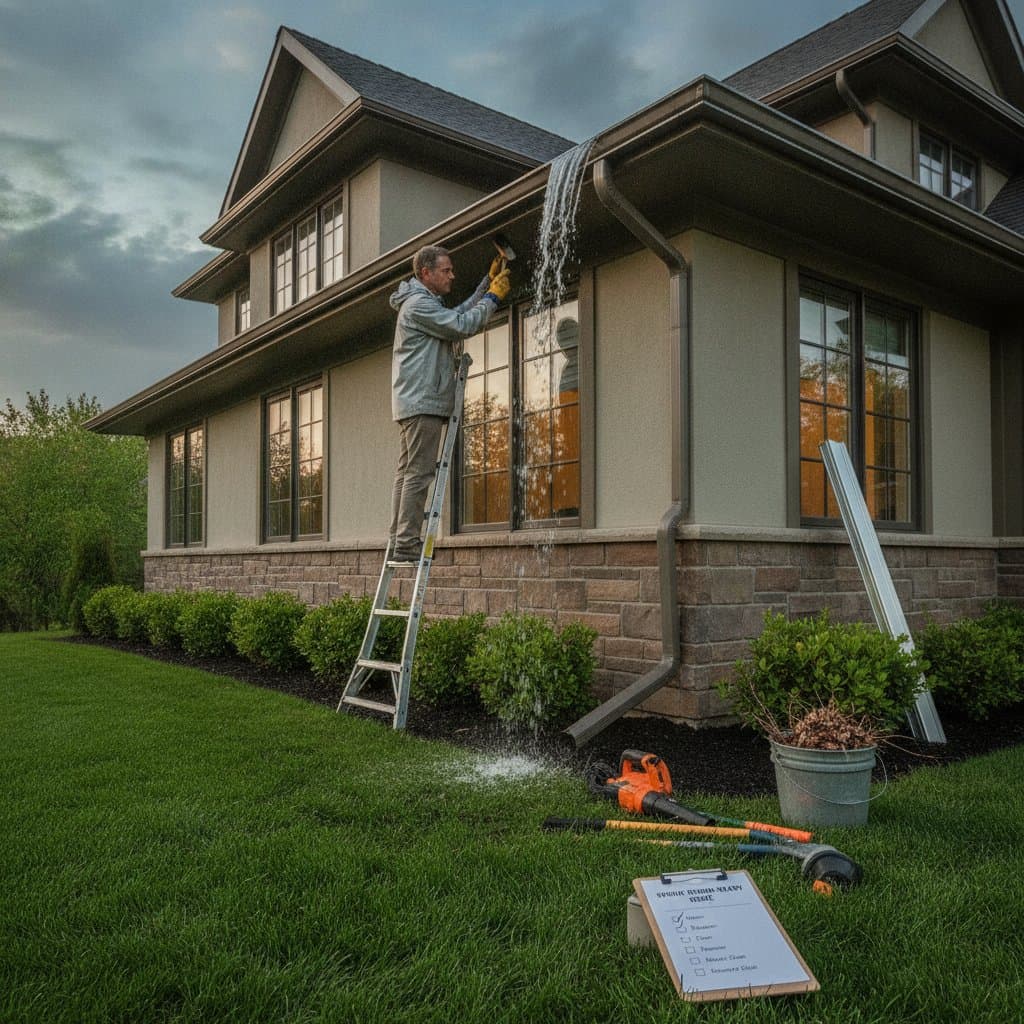
Spring Gutter Care Prevents Foundation Damage
Spring storms test every part of a home drainage system. Neglected gutters allow water to overflow and collect near the foundation, which leads to cracks, erosion, and interior moisture problems. Regular attention to gutters in early spring reduces these risks and keeps water moving away from the structure.
Perform a Complete Visual Inspection
Walk around the house and examine each section of gutter from the ground and, if safe, from a ladder. Look for sagging sections, separated joints, and debris buildup that blocks water flow. Note any rust spots, loose hangers, or damaged downspouts that could worsen during heavy rain.
Check fascia boards and soffits for water stains that indicate previous overflow. Measure the distance from downspout outlets to the foundation to confirm water is directed at least six feet away. Record findings so repairs can be prioritized by urgency.
Clean Gutters Using Safe and Effective Methods
Remove leaves, twigs, and sediment by hand or with a plastic scoop before flushing the line with a garden hose. Work in sections to avoid pushing debris into downspouts where it can create clogs. Wear gloves and eye protection throughout the process.
Flush each downspout from the top and watch for slow drainage that signals a blockage lower down. Install gutter guards after cleaning if falling debris remains a frequent issue. Schedule cleaning before spring rains arrive rather than after damage occurs.
Verify Gutter Size and Slope
Confirm that gutters are wide enough to handle the roof area they serve. Standard five inch gutters often prove insufficient on larger roof planes or in regions with intense rainfall. Increase to six inch gutters where calculations show current capacity is marginal.
Check that gutters slope toward downspouts at a minimum of one quarter inch per ten feet. Use a level during inspection to identify flat spots that allow standing water. Adjust hangers as needed to restore proper pitch without creating new low points.
Select Durable Materials for Long Term Performance
Aluminum and galvanized steel remain popular choices because they resist corrosion when properly finished. Copper and zinc offer extended service life in coastal or industrial environments where salt or pollution accelerates wear. Match material choices to local climate conditions and expected maintenance frequency.
Ensure all fasteners and sealants are compatible with the chosen material to prevent galvanic corrosion at joints. Request heavy gauge stock for areas that experience high wind or heavy snow loads.
Maintain Proper Drainage Away From the Foundation
Extend downspout extensions or add splash blocks so water exits well beyond the foundation perimeter. Grade soil to slope away from the house at a minimum of six inches over the first ten feet. Clear any landscaping features that trap water near the wall.
Test the entire system during the next rainfall by observing flow at each outlet. Adjust extensions or add buried drain lines if water still pools near the foundation after corrections.
Schedule Follow Up Checks Throughout the Season
Reinspect gutters after major storms to catch new debris or shifted components. Keep a simple log of cleaning dates and observed conditions to spot recurring problems early. Consistent attention prevents small issues from developing into foundation repairs.