Key Takeaways
- Outdoor kitchens rank among the top home improvements, blending lifestyle benefits with strong financial returns.
- Thoughtfully designed outdoor cooking areas achieve up to 70 percent return on investment, particularly when aligned with the home's style and local weather patterns.
- Selections in materials, configuration, and integrated technologies shape enduring worth alongside visual elements.
Assessing the Value Added by an Outdoor Kitchen
Short answer: Anticipate moderate to substantial returns based on construction quality, spatial arrangement, and market preferences in the area.
Returns on outdoor kitchen investments fluctuate, yet mid-level projects typically recover approximately two-thirds of expenses. Premium setups featuring high-quality appliances, stone elements, and shelter options generate higher yields, especially in regions with extended outdoor seasons.
| Feature | Average Cost Range | Potential ROI | Longevity |
|---|---|---|---|
| Basic grill island | $4,000 - $8,000 | 55% | 10 years |
| Midrange kitchen with storage | $9,000 - $15,000 | 65% | 15 years |
| High-end kitchen with built-ins | $20,000+ | 70% | 20+ years |
Value arises from both physical components and the lifestyle allure they evoke. Prospective buyers respond to the vision of enhanced daily living, often leading to elevated purchase prices. Optimal returns require design decisions that harmonize with the property's architecture and community norms.
Essential Features That Enhance Return on Investment
Short answer: Practical utility, robust materials, and shielding components determine sustained worth.
An attractive outdoor kitchen diminishes in appeal without resilience against environmental factors or heavy usage. Emphasis on durability and user comfort outweighs mere luxury in preserving value. The following aspects contribute to both immediate satisfaction and future marketability.
Primary Elements of Value
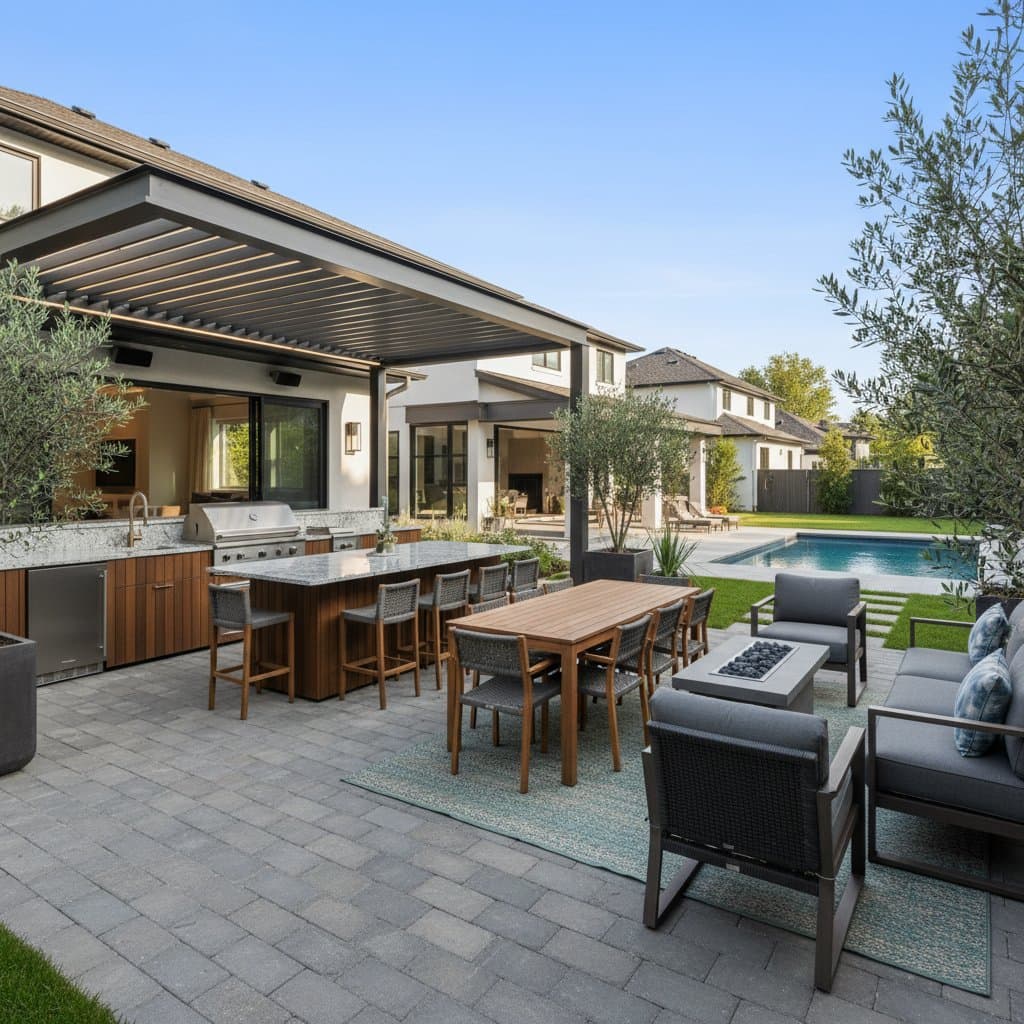
- Weather-resistant materials: Options such as stainless steel, porcelain tiles, and sealed granite withstand corrosion and discoloration.
- Sufficient workspace: Provide a minimum of 24 inches alongside the grill for effective food preparation.
- Ventilation systems and enclosures: Install pergolas or exhaust hoods to manage smoke and safeguard surfaces from precipitation.
- Illumination and power sources: Strategic lighting supports nighttime activities, while electrical outlets power devices and accessories.
- Seating arrangements: Incorporate fixed benches or counter-height stools to foster social interactions beyond cooking.
Home seekers prioritize unified designs that appear purposeful rather than assembled haphazardly. A compact setup gains a sense of luxury through even surfaces, concealed utilities, and materials that echo the home's facade.
Strategies for Ensuring Durability and Minimal Upkeep
Short answer: Select resilient surfaces, incorporate drainage solutions, and maintain straightforward configurations.
An outdoor kitchen must retain its initial appearance after five years of exposure. Prioritize surfaces that repel water, ultraviolet light, and cooking residues. Porcelain slabs emerge as a favored choice due to their tolerance for high temperatures and straightforward maintenance. Underfoot, composite materials or stone tiles avoid shifts in foundation and facilitate routine cleaning.
Practical Recommendations for Upkeep
- Steer clear of absorbent surfaces: Materials like untreated limestone or marble absorb stains in outdoor settings.
- Incorporate water management: Design subtle inclines or discreet conduits to eliminate pooled moisture.
- Protect equipment: Apply custom covers and ensure cabinetry allows airflow to prevent condensation.
- Streamline water systems: Install sinks with cold water access only to mitigate risks from low temperatures in cooler months.
- Opt for subdued color palettes: These adapt readily to evolving aesthetics or preparation for sale.
With sound construction, ongoing care remains light. Conduct seasonal inspections for corrosion, fuel line obstructions, and protective coatings to sustain peak condition.
Frequently Asked Questions
Will an outdoor kitchen raise my home's resale value?
Yes. Real estate professionals note increased buyer engagement for properties with developed outdoor areas. The uplift in value varies from moderate to significant, influenced by execution quality and local market dynamics.
What size suits an outdoor kitchen?
Effective designs often begin with 10 feet of countertop, including areas for grilling, washing, and preparation. Expansive yards support extras such as wood-fired ovens or drink stations.
Are permits necessary for outdoor kitchens?
Yes, in most cases. Connections involving water, fuel, or electricity typically require approval from local authorities. Verify regulations prior to commencing work.
How should I safeguard appliances during cold weather?
Shut off water supplies, enclose basins, and apply tailored protections to grills and cooling units. Isolate fuel lines and relocate detachable components inside to prolong service life.
Is construction on a deck feasible?
Yes, provided the platform bears the load and thermal output. Surfaces of composite or ceramic work well beneath cooking areas, with ventilation measures in place.
Extending Home Life Through Outdoor Kitchens
Building an outdoor kitchen shapes everyday home experiences beyond mere financial gain. Superior designs integrate seamlessly, promote hospitality, and demand little effort. They support impromptu meals with family or solitary breakfasts under the sun.
For sellers, emphasize balance and craftsmanship rather than excess. A neatly proportioned, detailed area often captivates more than an oversized installation that overshadows the landscape. Residents intending to remain select materials that resonate personally and arrangements suited to their culinary preferences.
Outdoor kitchens stand out as upgrades that balance delight with profitability. Executed with care, they broaden habitable zones, enrich property character, and deliver returns that transcend monetary figures. A unified, resilient setup preserves this advantage across changing seasons.