Understanding the Upcoming FEMA Map Changes and Why Flood Vents Matter More Than Ever
Homeownership near water bodies offers scenic appeal alongside inherent risks. Proximity to rivers or coastlines heightens concerns about flooding. Recent notifications about FEMA flood map updates affecting properties have left many homeowners uncertain about implications for insurance premiums, construction standards, and real estate values. Proactive measures, including the installation of flood vents, provide a pathway to mitigate these risks effectively.
These updates, set for implementation by 2026, refine flood zone designations based on advanced modeling and historical data. Properties previously classified as low-risk may shift into higher-risk categories, triggering mandatory compliance with National Flood Insurance Program requirements. Flood vents equalize hydrostatic pressure during inundation, preventing foundation failure and structural compromise. This guide outlines the changes, emphasizes the role of flood vents, and details preparation strategies to achieve compliance while reducing long-term costs.
Essential Preparation Tasks for Flood-Prone Properties
Preparation for flood events starts well in advance of any storm. Homeowners in designated zones should focus on foundational assessments to align with impending FEMA standards. The following tasks form the core of initial readiness.
-
Examine Foundation Vents
Inspect all openings in foundation walls for obstructions or deficiencies. Enclosed spaces below the base flood elevation require unobstructed pathways for water entry and exit. Blocked vents build excessive pressure, leading to wall cracks or collapse during floods. -
Update Elevation Certificates
Obtain or renew the elevation certificate, which documents your structure's height relative to the local base flood elevation. An accurate certificate influences insurance eligibility and premium calculations under the revised maps. -
Clear Drainage Systems
Ensure gutters, downspouts, and perimeter drains function without clogs. Effective drainage diverts excess water away from the foundation, minimizing saturation during moderate rainfall. -
Repair Foundation Imperfections
Identify and seal minor cracks using hydraulic cement or epoxy-based sealants. These repairs complement venting by addressing gradual water intrusion from soil moisture or light precipitation. -
Preserve Vent Accessibility
Maintain clear access to flood vents by removing nearby debris, vegetation, or storage items. Both air circulation and water flow depend on this unobstructed state for optimal performance.
Elevation Certificates: A Key Compliance Tool
An elevation certificate provides precise measurements of your home's lowest occupied floor above the base flood elevation. This documentation proves essential for flood insurance applications, permitting processes, and property transactions. Without it, insurers may apply conservative rate assumptions, inflating costs unnecessarily.
For existing homes, verify if a certificate exists from prior surveys. Engage a licensed surveyor or engineer for new or updated versions, particularly after renovations or in light of map revisions. Store copies in both digital and physical formats for quick reference during policy renewals or sales.
Post-installation of flood vents or other elevations, revisit the certificate to reflect modifications. This step ensures ongoing accuracy in risk assessment and regulatory adherence.
Installation Options: DIY Versus Professional Assistance
Flood vent installation requires precision to satisfy FEMA and local codes. Homeowners with relevant skills may undertake the work themselves, while others benefit from expert involvement. Evaluate your situation based on foundation type and regulatory demands.
Suitable Scenarios for DIY Installation
Consider self-installation when conditions align with these factors:
- The foundation features straightforward access, such as a uniform crawl space or slab perimeter.
- You possess familiarity with tools like circular saws for masonry and adhere strictly to product guidelines.
- Local ordinances permit homeowner-led projects without mandatory oversight.
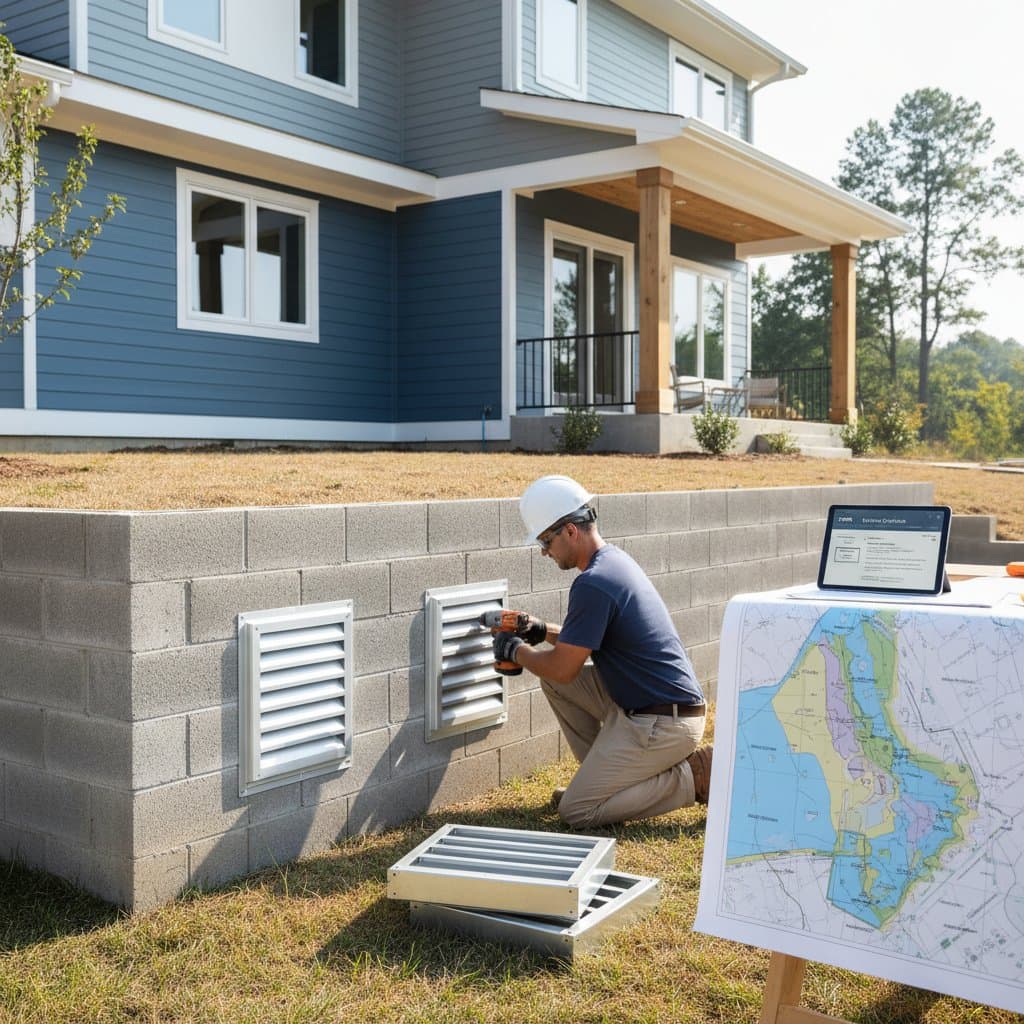
The procedure entails marking and cutting precise openings in the foundation, typically one square inch per square foot of enclosed area. Install engineered vent covers that permit water flow while deterring pests. Position vents no higher than 12 inches above grade and distribute them evenly across walls. Verify compliance with NFIP Technical Bulletin 1 for venting specifications.
Benefits of Professional Installation
Opt for certified contractors in these instances:
- Complex foundations, including those with irregular shapes or reinforced materials, demand specialized equipment.
- Uncertainty exists regarding the exact base flood elevation or integration with existing drainage.
- Jurisdictional rules mandate professional stamps for permitting and insurance validation.
Experts navigate code variations and perform load-bearing assessments to avoid compromising integrity. Certified installations often qualify for substantial insurance reductions, sometimes up to 30 percent on premiums, through programs like the Community Rating System.
Professionals also handle ancillary tasks, such as obtaining elevation certificates or conducting structural inspections for cracks and settling. These comprehensive services streamline compliance and enhance overall flood resilience.
Pitfalls to Sidestep in Flood Protection Efforts
Well-intentioned actions can inadvertently undermine effectiveness if common errors occur. Awareness of these issues guides safer implementation.
- Position vents excessively above ground level, which delays pressure equalization and heightens damage risk.
- Select standard air vents instead of engineered flood vents certified for hydrostatic relief.
- Obstruct vents with landscaping features, sediment buildup, or household items, impeding functionality.
- Distribute vents unevenly, concentrating pressure on unvented sections of the foundation.
- Overlook certificate updates following modifications, resulting in mismatched insurance evaluations.
Addressing these avoids costly rework and ensures vents perform as intended during events.
Sustaining Flood Defenses Over Time
Effective flood mitigation demands ongoing vigilance beyond initial setup. Regular upkeep preserves system reliability and adapts to environmental shifts.
- Conduct yearly inspections of vents for rust, debris accumulation, or mechanical failures; clean as needed with mild detergents.
- Monitor and unclog drainage routes seasonally to prevent water pooling near the structure.
- Reassess site grading post-storm, as erosion may redirect flows toward vulnerable areas.
- Maintain detailed records of all interventions, including photographs and invoices, for claims processing and resale documentation.
These practices extend the lifespan of protective measures and reinforce homeowner confidence in variable weather patterns.
Steps to Secure Your Property Against Revised Flood Standards
Navigating FEMA's 2026 updates involves targeted actions: confirm your zone status, secure an elevation certificate, and integrate compliant flood vents. These elements collectively lower vulnerability and stabilize insurance expenses. Implementation now positions your home for enduring protection and regulatory alignment.