DIY Versus Professional Insulation: A 2026 Savings Analysis
Drafty rooms, inconsistent temperatures, and elevated energy bills signal inadequate insulation performance. Insulation upgrades influence both daily comfort and ongoing expenses, regardless of whether homeowners handle the task independently or engage specialists. The decision to pursue DIY or professional services hinges on financial constraints, personal expertise, and future objectives. This resource examines authentic expenses for each path, potential savings, and scenarios where expert involvement justifies the added expenditure.
The Actual Expenses of Insulation
Insulation costs fluctuate based on material variety, geographic location, and property dimensions. Homeowners generally allocate between $1.50 and $5.00 per square foot for combined materials and labor. Projects in attics, basements, and outer walls demand tailored methods. Attics represent the primary focus area, as upward heat escape accounts for the largest portion of energy loss.
Standard Cost Summary
| Insulation Type | DIY Material Cost per Sq. Ft. | Pro Installed Cost per Sq. Ft. | Energy Savings Potential |
|---|---|---|---|
| Fiberglass Batt | $0.90 - $1.50 | $2.00 - $3.50 | 10 percent to 15 percent reduction in energy bills |
| Blown-in Cellulose | $1.20 - $1.80 | $2.50 - $4.00 | 15 percent to 20 percent reduction in energy bills |
| Spray Foam | $2.50 - $4.00 | $4.50 - $7.00 | 20 percent to 30 percent reduction in energy bills |
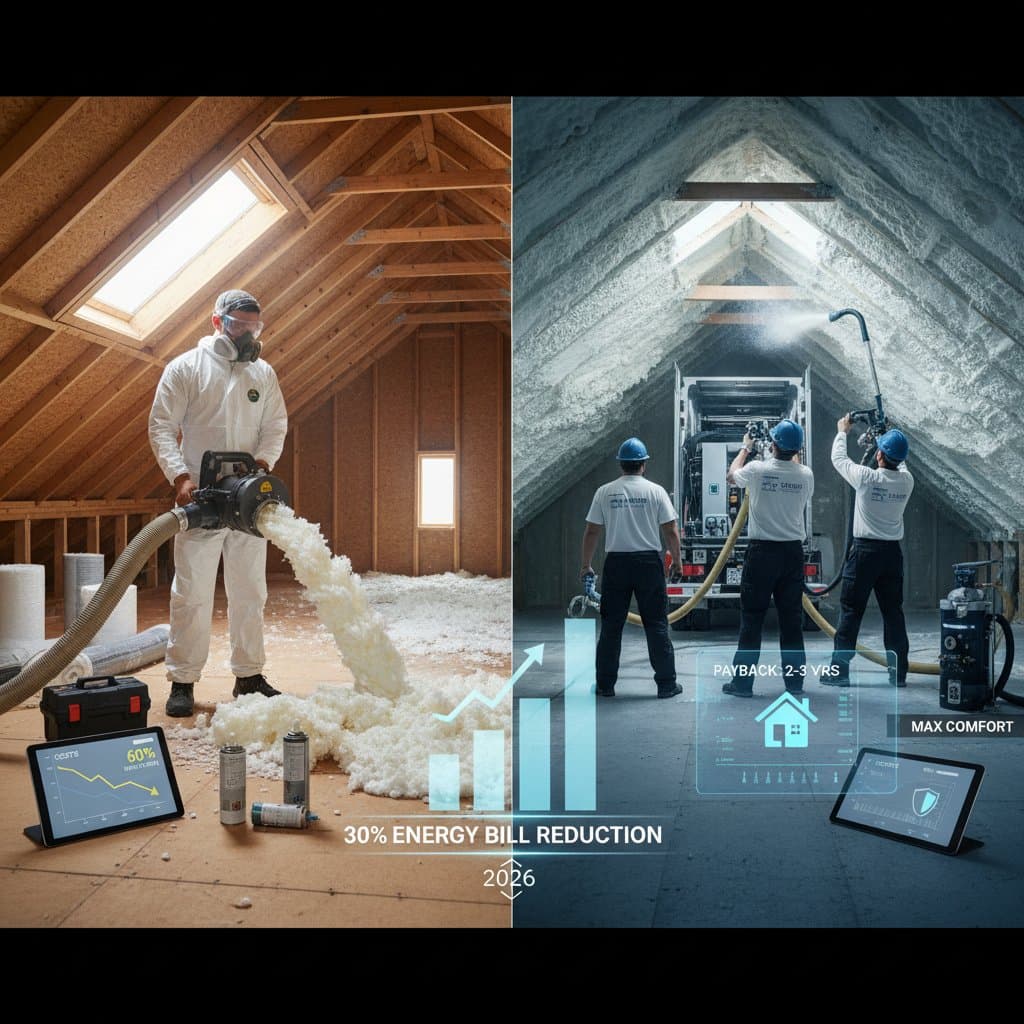
A DIY attic insulation initiative for an average-sized residence demands an investment of $1,500 to $3,000. The equivalent professional service ranges from $3,000 to $7,000, influenced by site accessibility and prevailing labor charges.
Factors Influencing Cost Variations
Multiple elements determine the overall insulation expenditure.
1. Property Dimensions and Configuration
A residence spanning 1,500 square feet necessitates approximately 1,800 square feet of insulation, accounting for attic slopes and wall spaces. Expansive or multi-story structures escalate labor time and material quantities.
2. Local Labor Expenses
Installation fees rise in coastal or metropolitan zones, where certified contractors charge over $75 per hour. In rural settings, rates average around $45 per hour.
3. Pre-Existing Site Conditions
Removal of deteriorated or contaminated insulation precedes new applications. Such professional extraction incurs an additional $1.00 to $1.50 per square foot.
4. Regulatory Standards
Certain regions mandate specific R-values, affecting material depth. For example, R-38 suits frigid areas, whereas R-30 suffices in milder climates. Verify local codes prior to material acquisition.
Decision Framework for DIY or Professional Installation
The choice between self-managed and expert-led projects rests on safety protocols, technical proficiency, and project scale.
| Project Element | DIY Suitability | Professional Benefit |
|---|---|---|
| Compact attic or crawl space | Straightforward with batt rolls | Unnecessary absent structural concerns |
| Extensive attic or zoned areas | Viable using rented blowers | Quicker execution and even distribution |
| Spray foam application | Hazardous without training | Demands certified specialists |
| Removal involving mold or infestations | Poses health risks | Essential for proper remediation |
| Regulatory adherence checks | Restricted by owner knowledge | Confirmed via official inspections |
DIY approaches excel in straightforward attic or wall enhancements, provided safe access exists and materials prove manageable. Professionals provide superior outcomes for tasks encompassing old insulation disposal, air barrier sealing, or spray foam deployment that adheres to curing specifications.
Techniques to Minimize Expenses
Both DIY and professional routes benefit from targeted approaches that curb costs while preserving effectiveness.
- Integrate air sealing with insulation installation. Apply expanding foam or caulk to seal fissures prior to insulation placement, potentially boosting efficiency by 25 percent.
- Schedule projects in low-demand periods. Specialists frequently reduce labor fees in late summer or early autumn.
- Leverage available rebates and incentives. Utility providers commonly extend $200 to $800 in credits for insulation upgrades that satisfy efficiency benchmarks.
- Opt for equipment rentals over purchases. A loose-fill blower rents for $50 to $100 daily, avoiding the full cost of ownership.
- Solicit bids from multiple sources. Obtaining at least three professional estimates can decrease project totals by 10 percent to 20 percent.
Request three complimentary quotes from nearby contractors to gauge localized pricing and incentive opportunities.
Safety Protocols and Installation Essentials
Self-directed insulation efforts present notable safety hurdles. Fiberglass particles irritate skin and respiratory systems, necessitating full protective equipment including goggles, respirators, and gloves. Refrain from operations in high temperatures or enclosed areas lacking airflow.
Upon discovering moisture accumulation, mold growth, or wiring complications during preparation, halt activities and summon a qualified contractor. These issues demand specialized handling and may require permitting for lawful continuation. Spray foam processes, in particular, comply with stringent fire and ventilation regulations beyond typical homeowner capabilities.
Investment Recovery Analysis
Effective insulation placement trims heating and cooling expenditures by 15 percent to 30 percent, varying by regional climate. Most owners recoup investments within three to five years, with comfort gains evident from the outset. For those preparing to sell, such enhancements recoup 70 percent to 80 percent of costs through elevated property appeal. Prospective buyers value diminished utility charges and superior indoor environments, enhancing market positioning.
Steps to Implement Your Upgrade
Initiate the process by evaluating your attic or crawl space for voids, compacted materials, or exposed framing. Precisely calculate square footage to determine required supplies.
Individuals skilled in fundamental building practices find fiberglass batt or blown-in cellulose installation a fulfilling endeavor, yielding sustained energy reductions. In cases of intricate designs or spray foam needs, expert teams ensure accuracy, efficiency, and adherence to standards.
Insulation ranks among the most impactful home modifications available. An allocation of $2,000 for DIY efforts or $6,000 for professional execution yields enduring comfort, operational savings, and efficiency that reflect in subsequent utility statements.