Tasks for DIY Approach:
- Position wireless sensors in leak-prone zones.
- Test alarm triggers and connectivity.
- Monitor and replace batteries periodically.
Scenarios for Professional Help:
- Retrofitting shutoff valves into existing plumbing.
- Integrating with hardwired systems or complex electrical setups.
- Diagnosing persistent leaks in structural elements like walls or foundations.
Cost Breakdown: Individual DIY sensors range from $20 to $60 per unit. Full professional installations typically cost $150 to $500, scaled to the number of zones and features.
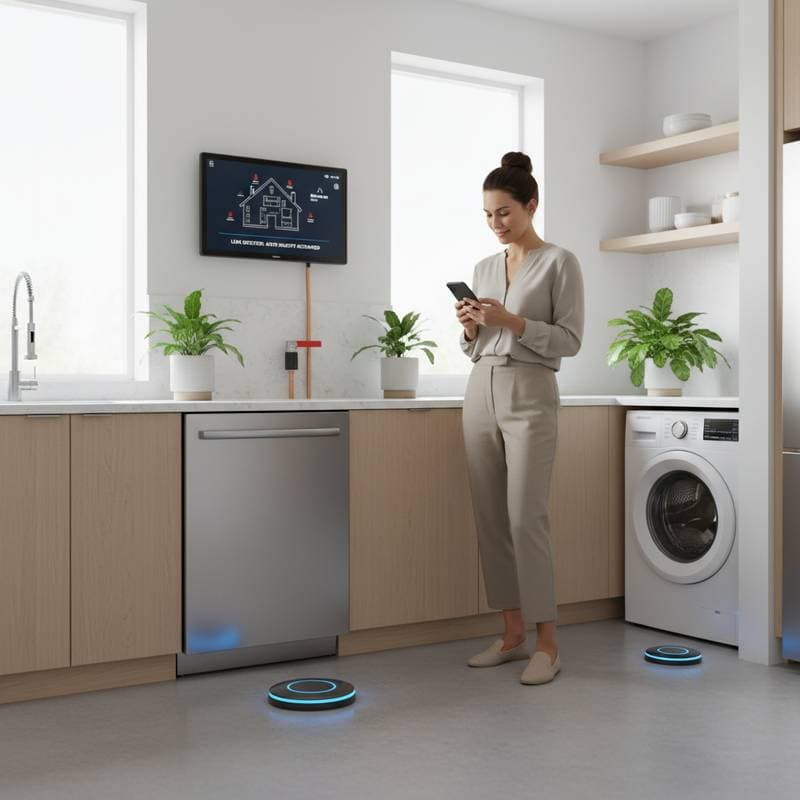
Begin by mapping your home's risk areas. Focus on spots near water sources, such as water heaters, dishwashers, and exterior walls. Proper placement maximizes detection accuracy.
How 2026 Sensor Networks Operate
These networks blend precise sensing technology with intelligent automation for effective water management.
Sensors employ dual electrodes that complete a circuit upon water contact. This triggers an immediate signal to the central hub, which analyzes the data for false positives, such as brief spills.
Advanced units incorporate environmental monitoring. They track temperature and humidity levels to anticipate issues like pipe freezing in cold weather or condensation buildup in humid climates.
Upon validation, the hub activates safeguards. It dispatches notifications to your phone, email, or connected devices. Integrated shutoff valves then isolate the water supply, often within seconds of detection.
Remote oversight comes through dedicated apps. Users view system status, receive customizable alerts, and adjust settings from anywhere. This connectivity proves invaluable during vacations or extended absences.
Integration extends to broader smart home ecosystems. Link sensors to lights, sirens, or even HVAC systems for comprehensive responses, such as ventilating damp areas to prevent mold.
Step-by-Step Installation Guide
Setting up your 2026 sensor network follows a straightforward process.
-
Select and Unbox Components: Choose a kit based on home layout. Verify inclusion of hub, sensors, and mounting hardware.
-
Power the Hub: Place the central unit in a central, accessible location. Connect to power and Wi-Fi, then follow app prompts for initial setup.
-
Install Sensors: Adhere or mount sensors flat against floors or walls in target zones. Ensure they remain low enough to contact pooling water but elevated from routine cleaning.
-
Pair Devices: Use the app to sync each sensor with the hub. Test by simulating a leak with a wet cloth.
-
Configure Automations: Set alert preferences and link to shutoff valves if equipped. Run a full system test to confirm end-to-end functionality.
For valve installations, consult a plumber to avoid compromising water lines. Professionals ensure compliance with local codes and safe pressure handling.
Long-Term Maintenance Practices
Reliable performance demands consistent care to keep sensors vigilant.
Batteries in wireless units last about one year under normal use. Schedule replacements during annual home maintenance routines, and enable low-battery alerts in the app.
Conduct monthly tests by dampening a cloth and placing it near each sensor. Verify that alarms sound and notifications arrive promptly. Clean units with a soft cloth to remove dust, which can impair sensitivity.
Reassess placements quarterly. Home changes like furniture rearrangements or renovations might obstruct sensors. Relocate as needed to maintain clear lines to potential leak sources.
Firmware updates enhance security and features. Check the app regularly for prompts, and apply them to protect against vulnerabilities.
Monitor overall plumbing health alongside sensors. Address drips, corrosion, or unusual pressure to reduce false alarms and extend system life.
Advancing Your Home Protection Strategy
Mastering a 2026 sensor network equips you with tools for sustained home resilience.
Regular testing builds familiarity with the system's responses. Combine this with preventive plumbing checks to create layered defenses against water threats.
As technology advances, upgrade sensors for improved accuracy, such as AI-driven anomaly detection. These enhancements predict issues from patterns in usage data.
Consult specialists for comprehensive audits. They identify overlooked risks and optimize coverage, ensuring your setup aligns with evolving home needs.
Ultimately, effective protection stems from proactive habits. By leveraging sensor networks, you minimize disruptions, preserve property value, and foster a safer living environment.