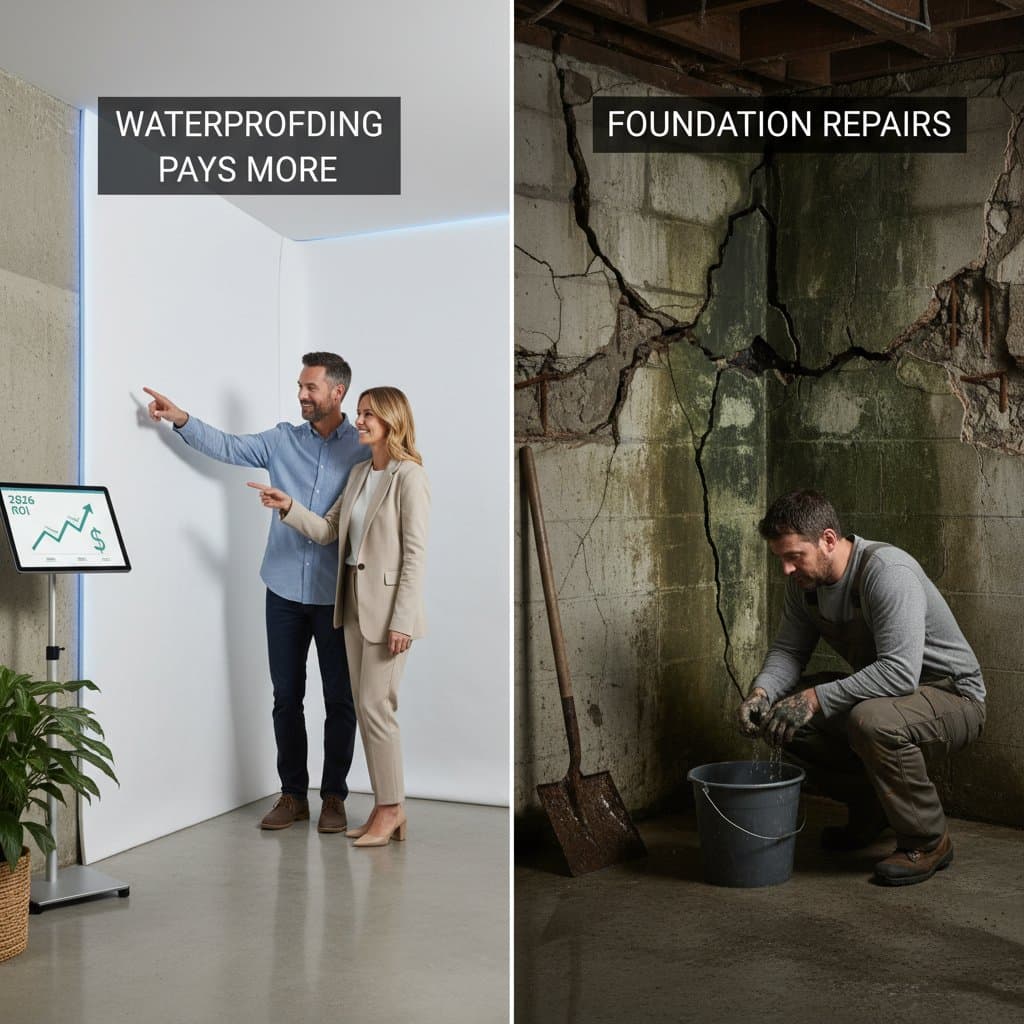
Secure Strong ROI by 2026 Through Basement Waterproofing
A damp basement erodes your home's value and financial resources over time. Even minor leaks contribute to foundation cracks, mold proliferation, and elevated energy expenses. For homeowners anticipating a sale or refinance within the coming year, basement waterproofing stands out as a prudent investment. This approach fortifies the foundation, preserves indoor air quality, and yields quantifiable returns via elevated appraisals and diminished repair expenditures.
The Value Protection Offered by Waterproofing
A dry or finished basement expands functional living area by as much as 30 percent. Prospective buyers scrutinize evidence of water intrusion, while appraisers penalize properties exhibiting musty smells or foundation fissures. A well-sealed basement elevates resale value by 8 to 12 percent and forestalls repair costs ranging from $5,000 to $25,000 for foundation work.
Moisture fosters mold and mildew growth, which can disseminate within 24 hours of water entry. Remediation for mold typically ranges from $2,500 to $6,000, whereas waterproofing expenses often amount to less than half that figure. Proactive measures thus yield clear financial advantages.
Factors Influencing Your Overall Investment
Budget for basement waterproofing typically falls between $2,000 and $10,000, depending on several key variables. Gaining insight into these elements enables more informed planning and effective negotiations with contractors.
1. Foundation Type
Concrete block foundations retain more moisture compared to poured concrete. Homes with block walls may incur 10 to 20 percent higher costs for sealing and drainage solutions.
2. Home Age and Access
Structures of greater age with restricted exterior access demand extensive excavation. Confined property boundaries or adjacent patios near foundation walls can increase expenses by $2,000 or more for soil displacement and subsequent restoration.
3. Water Source and Severity
Addressing surface runoff from inadequate grading proves less costly than combating subsurface groundwater. Visible white mineral efflorescence or pooled water post-rainfall indicates deeper issues requiring comprehensive drainage systems.
4. Existing Finishes and Flooring
Waterproofing finished basements involves higher costs due to the removal of carpets, drywall, and insulation. Allocate an extra $1,500 to $3,000 for demolition and material reinstatement.
5. Regional Labor Rates
Labor constitutes approximately 40 percent of total project costs. Metropolitan areas feature premium rates, whereas rural locations offer reduced pricing, though specialized teams may involve extended scheduling delays.
Cost-Reduction Tactics That Preserve ROI
Reduce expenses while upholding quality through deliberate timing and preparation.
1. Time Projects for Dry Seasons
Contractors provide competitive rates during periods of stable soil conditions. Steer clear of rainy seasons, which create scheduling backlogs and inflate labor charges.
2. Integrate Multiple Projects
If contemplating foundation repairs, basement finishing, or exterior regrading, consolidate into one agreement. This bundling approach can lower labor expenses by 10 to 15 percent.
3. Incorporate Vapor Barriers and Dehumidifiers
A dehumidifier paired with vapor barriers, costing $300 to $800, prolongs system durability and mitigates mold hazards. These enhancements also boost occupant comfort and energy conservation.
4. Investigate Financing and Incentives
Certain states and utility providers extend low-interest loans or rebates for systems that enhance energy efficiency through moisture management. Inquire about financing during contractor consultations prior to contract execution.
5. Obtain Multiple Estimates
Quotations differ significantly, even locally. Secure at least three comprehensive bids to discern inclusions and exclusions.
Obtain three complimentary quotes from qualified local contractors prior to committing.
Critical Indicators of Basement Issues
Early detection averts substantial reconstruction outlays. Conduct basement inspections quarterly and following significant rainfall to identify these indicators:
- Water stains or moisture patches on walls
- Musty or soil-like smells
- Peeling paint or efflorescence buildup
- Fissures exceeding 1/8 inch in width
- Curving or protruding foundation walls
- Soggy carpet margins or distorted baseboards
- Corrosion on metal supports or appliances
Address these promptly. Mold propagates rapidly, and structural fissures exacerbate during freeze-thaw periods.
Calculating ROI and Recovery Timeline
A robust waterproofing installation generates direct and indirect benefits.
Direct ROI:
Properties featuring verified waterproofing attract quicker sales and premium pricing. Anticipate recovery of 50 to 75 percent of costs at resale, influenced by local market dynamics.
Indirect ROI:
Preventing a single flooding incident spares $10,000 to $30,000 in remediation. Across ten years, savings from energy efficiency and mold avoidance contribute an additional $3,000 to $6,000 to retained value.
Recovery Period:
Homeowners generally recoup investments in 5 to 7 years via maintenance reductions, utility savings, and resale premiums.
Sustaining Your Waterproofing System
Preserve a dry basement through routine annual upkeep.
Routine Checks and Testing
Examine sump pumps every three months by introducing water to the sump pit, verifying automatic operation. Swap batteries in backup units yearly.
Additional Maintenance Practices
Clear gutters and downspouts biannually to divert surface water. Monitor interior humidity levels, aiming below 60 percent, and clean or replace dehumidifier filters monthly during peak use. Address any new cracks immediately with sealant to prevent escalation.
Steps to Advance Your Project
- Conduct a Basement Inspection This Week to detect moisture or structural concerns.
- Solicit Quotes from no fewer than three licensed contractors experienced in waterproofing.
- Assess Financing for projects surpassing $5,000 in scope.
- Schedule for Optimal Weather to facilitate smooth execution.
- Monitor Post-Installation Metrics including energy consumption, humidity, and appraisals to quantify benefits.