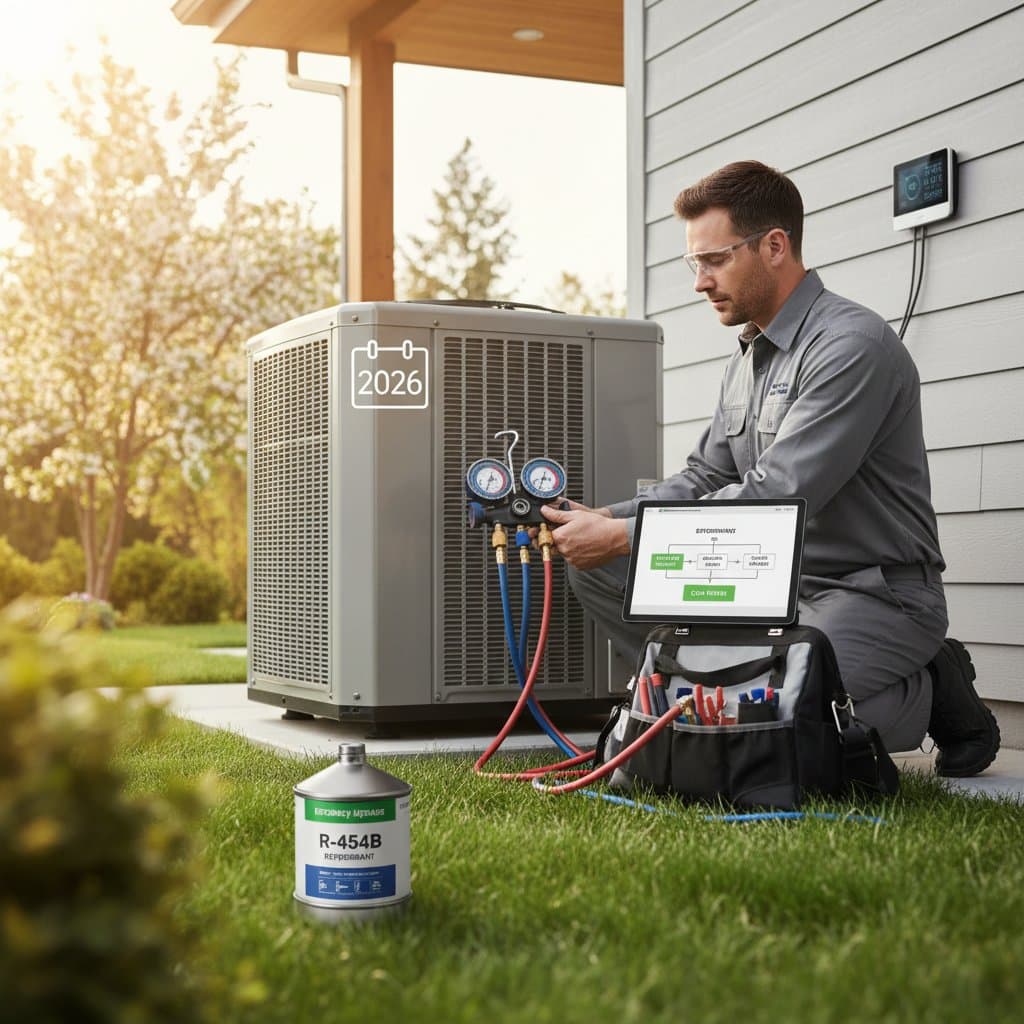
Prepare Your HVAC Now for the R-454B Refrigerant Switch
Your aging HVAC system may be running fine. Refrigerant changes are about to reshape what fine really means. The upcoming switch to R-454B refrigerant affects every homeowner planning a repair, replacement, or upgrade. Acting early can save thousands of dollars, prevent downtime during peak cooling months, and keep your home compliant with evolving efficiency standards.
Why the R-454B Change Matters
R-454B replaces R-410A, the current refrigerant in most residential HVAC systems. The new formula reduces global warming potential by roughly 75 percent. Manufacturers are therefore phasing out older units that rely on R-410A. If your system uses R-410A, repairs will soon become more expensive as supplies shrink.
Waiting until your old system fails could leave you paying premium prices for emergency replacement. Preparing now gives you control over timing, cost, and contractor selection.
What Drives Total Cost
Several factors influence your final investment.
- Existing ductwork. Older or leaky ducts can raise installation costs by 1500 to 3000 dollars for sealing or replacement.
- Electrical upgrades. R-454B systems may need updated breakers or wiring, usually 300 to 800 dollars.
- System size. Oversized units waste energy, while undersized ones strain to keep up. Have a Manual J load calculation done before purchasing.
- Local permitting. Fees range from 100 to 500 dollars, depending on your municipality.
- Disposal of old refrigerant. Proper removal of R-410A costs about 100 to 200 dollars.
Money-Saving Strategies
Schedule replacement in spring. Labor demand drops after heating season, so you can save up to 15 percent on installation quotes. Bundle upgrades by combining HVAC replacement with insulation or duct sealing to qualify for utility rebates or local incentives. Many contractors offer low-interest financing for R-454B systems, spreading costs over 12 to 24 months. Always obtain at least three bids from licensed professionals before committing.
Safety and Compliance Notes
Refrigerant work is not a DIY task. R-454B, while more environmentally friendly, is mildly flammable under certain conditions. Only certified technicians are legally allowed to handle or charge systems using it. Improper installation can lead to refrigerant leaks or compressor damage, both of which void manufacturer warranties.
Check with your local building department for required permits. Many regions now require proof of licensed installation for refrigerant-based systems to ensure code compliance and environmental safety.
Maximizing ROI from the R-454B Transition
Upgrading to an R-454B system can lower your household energy bills by 20 to 30 percent compared to older R-22 or R-410A units. The improved efficiency and lower global warming potential make your home more appealing to future buyers.
If you are not ready for full replacement, schedule a professional inspection this spring. A technician can test refrigerant pressure, check coil performance, and confirm whether your current system can run efficiently until you decide to upgrade.
Identifying Your Next Steps
Start by identifying what refrigerant your current system uses. If it is R-410A, plan for replacement within the next few seasons rather than waiting for failure. By acting early, you preserve choice, manage costs, and keep your home comfortable year-round. The R-454B transition is coming quickly, but with preparation, it is an opportunity to upgrade your home comfort and efficiency on your own terms.