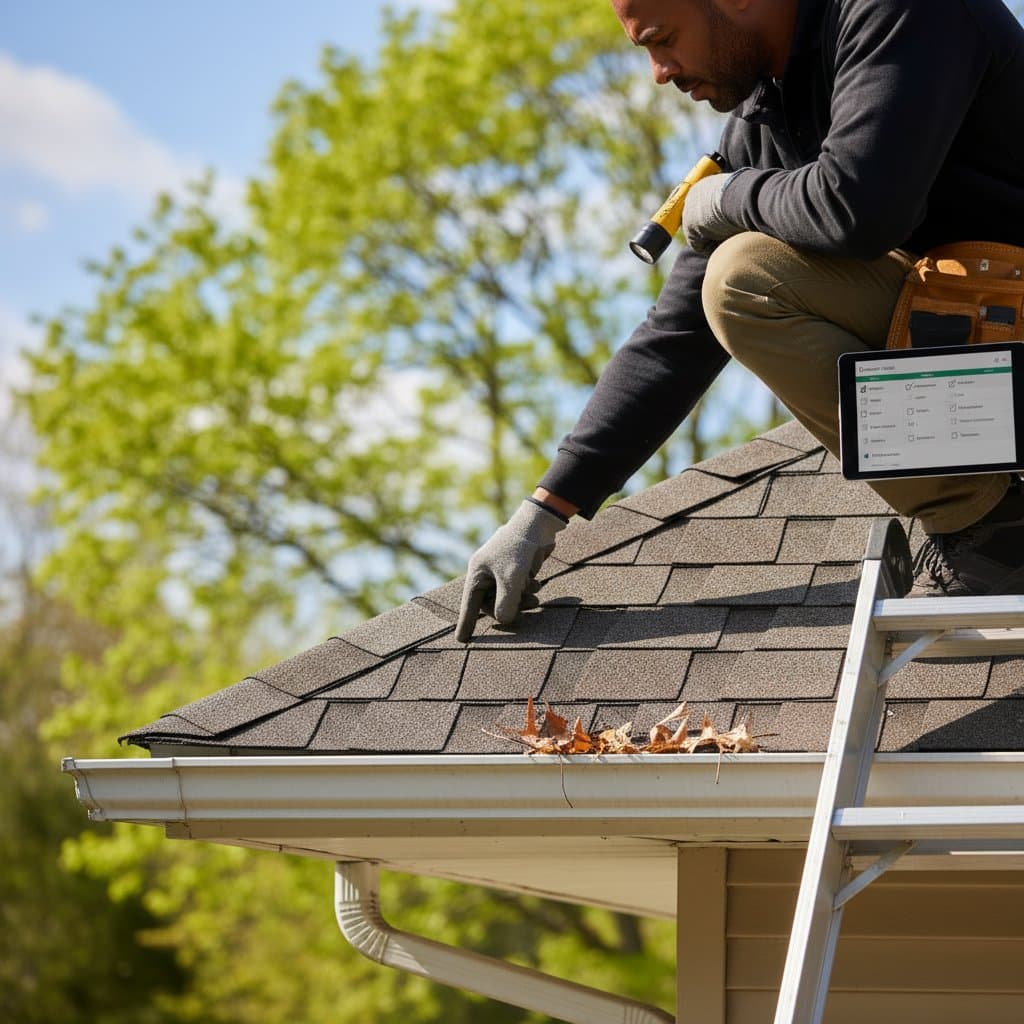
- Granule shedding that exposes asphalt cores.
- Protruding nails disrupting seals.
- Blisters or swells from enclosed moisture.
To replace flawed shingles, elevate the overlying row, extract nails using a pry bar, insert a matching replacement, and secure with nails in the standard positions.
5. Evaluate Gutter and Downspout Systems
Gutters direct water from roof margins. Obstructed or shifted gutters force backflow under shingles, rotting fascia.
- Clear debris and rinse gutters thoroughly.
- Detect leaks at connections or seams.
- Verify downspouts extend at least five feet from foundations.
- Confirm gutter inclines at one-quarter inch per ten feet toward outlets.
For gutters detaching from fascia, affix hangers to rafter ends with rust-resistant screws.
6. Inspect Roof Valleys and Eaves
Valleys channel heavy water volumes, heightening leak risks. Verify intact valley flashing without cracks or shifts, and ensure proper shingle overlaps. At eaves, confirm drip edges remain secure and positioned beneath initial shingle rows. Absent or deformed drip edges enable water to seep beneath materials.
7. Test Roof Ventilation and Soffit Function
Adequate attic airflow averts condensation and prolongs roof durability. Systems balance soffit intakes with ridge or gable exhausts.
- Confirm soffit vents free of insulation obstruction.
- Ensure ridge vents lack debris buildup.
- Apply an anemometer or smoke test to validate circulation.
Inadequate ventilation generates moisture resembling leaks, making airflow confirmation vital.
8. Inspect Flashing Kick-Outs and Sidewalls
At wall-roof junctions, kick-out flashing routes water to gutters. Deficient or misaligned units permit infiltration behind exteriors. Ascertain flashing projects at least four inches up walls and funnels water directly into gutters.
9. Review Skylight and Solar Panel Mounts
These fixtures pierce the roof, necessitating robust seals. Examine gasket integrity and flashing alignment around skylights. For rail-mounted panels, check mounts for corrosion or sealant breakdown. Secure loose hardware and refresh seals promptly.
Cost and Energy Considerations
Roof upkeep influences more than structure; it impacts efficiency. Saturated insulation forfeits up to 40 percent of thermal capacity. Small leaks form drafts that compromise building envelopes, straining heating and cooling systems.
Cost Comparison by Maintenance Type:
| Task | Average Material Cost | Estimated DIY Time | Potential Savings |
|---|---|---|---|
| Replacing damaged shingles | $2 to $3 per square foot | 2 to 3 hours | Avoids $500+ in repair bills |
| Resealing flashing | $20 to $30 in sealant | 1 hour | Extends flashing life by 5 years |
| Cleaning gutters | Free if DIY | 1 to 2 hours | Prevents fascia rot costing $300+ |
| Attic ventilation check | Free | 30 minutes | Reduces energy costs by 10 percent |
Long-Term Maintenance Strategy
Leak prevention demands ongoing effort. Establish a schedule encompassing:
- Spring: Comprehensive review and debris removal post-winter.
- Mid-Summer: UV assessment and sealant renewal.
- Fall: Gutter clearing and flashing checks pre-freeze.
- Post-Storm: Rapid evaluation for wind or debris impacts.
Record inspections via photos and logs. Monitoring trends uncovers subtle system flaws over time.
Implement Your Roof Protection Plan
Apply this checklist to fortify your roof against spring threats. Early action preserves your home's value and comfort, minimizing future expenses and disruptions.