Induction Retrofits: Beat the Gas Ban Deadline with Efficient All-Electric Cooking
Homeowners face a pivotal choice in kitchen upgrades as cities impose stricter limits on natural gas use. This shift toward all-electric homes demands solutions that balance compliance, performance, and everyday convenience. Induction technology stands out as the optimal retrofit option, offering superior efficiency, enhanced air quality, and immediate cooking benefits while preparing homes for regulatory changes.
System Overview
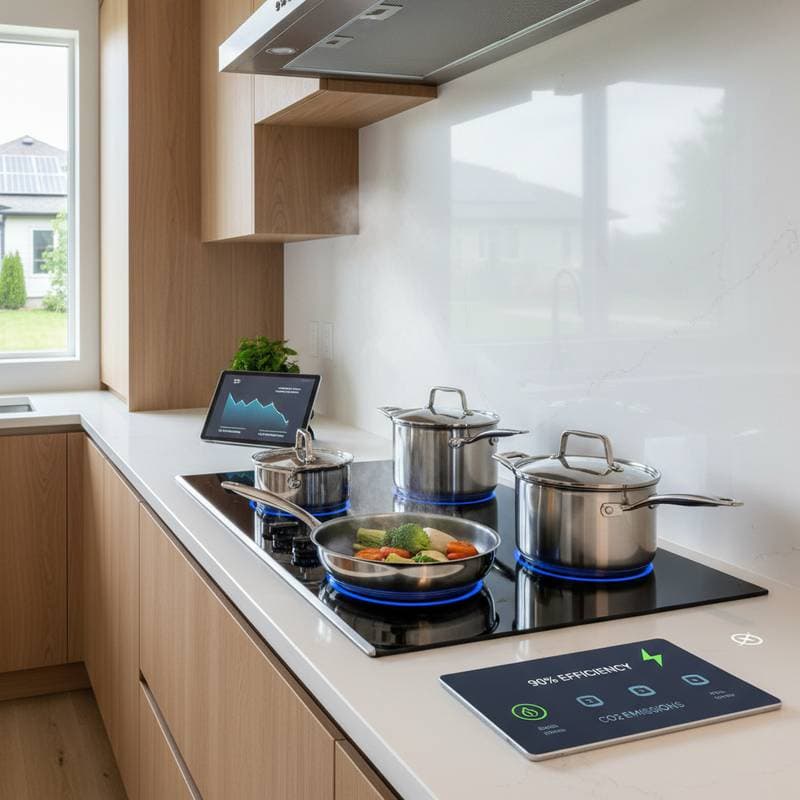
Induction cooktops and ranges use electromagnetic fields to heat cookware directly, bypassing the inefficiencies of gas flames or coil elements.
- Technology Type: Induction cooktop or range
- Efficiency Rating: 84% to 90% energy transfer efficiency
- Climate Zones: Suitable for DOE zones 1 through 8, performing reliably in diverse conditions
- Average Capacity: 1,800 to 3,700 watts per cooking zone
- Typical Lifespan: 15 to 20 years with routine maintenance
- Installation Complexity: Moderate, varying with electrical service needs
This direct heating method minimizes energy loss and eliminates combustion, making induction ideal for modern electrification efforts.
Regional Performance Analysis
Induction systems maintain strong performance across all U.S. Department of Energy climate zones, independent of ambient air or venting needs. In colder regions, they avoid pressure imbalances from competing exhaust systems in tightly sealed homes. In warmer, humid areas, the lack of excess heat reduces demands on cooling equipment.
Homeowners in high-electricity-cost areas benefit from integrating induction with time-of-use pricing and automated controls to minimize expenses. Where utilities promote electrification, rebates often apply, shortening the return on investment through targeted incentives.
System Types Breakdown
Induction options vary to suit different kitchen layouts and upgrade scopes.
Built-in Induction Cooktops
These models fit into standard countertop openings, serving as direct replacements for electric coils or smooth-top surfaces. They typically require 240-volt service and draw 30 to 50 amps, enabling precise temperature control for professional-level cooking.
Freestanding Induction Ranges
Combining an induction cooktop with a convection oven, these units slot into spaces once occupied by gas ranges. Electrical demands mirror built-in models, but installation avoids cabinet modifications, simplifying the process.
Portable Induction Units
Single-burner designs operate on 120 volts, plugging into standard outlets for apartments or interim use. They provide an accessible entry to induction benefits, though full retrofits demand more robust setups.
| System Type | Efficiency (%) | Installation Cost | Typical Operating Cost (annual) | Maintenance Level |
|---|---|---|---|---|
| Gas Range | 35 | Low | High | Moderate |
| Electric Coil | 70 | Moderate | Medium | Low |
| Induction | 90 | Moderate to High | Low | Low |
Integration Considerations
Evaluate your home's electrical infrastructure before proceeding. A four-zone induction cooktop often needs a dedicated 40- or 50-amp circuit, and older panels may require expansion to handle added loads from appliances like heat pumps.
Compatible cookware features a magnetic surface, such as stainless steel or cast iron; test non-ferrous pots with a magnet for responsiveness. Induction generates no combustion byproducts, so ventilation systems prioritize capturing grease and steam over pollutant extraction.
Cost-Benefit Analysis
Initial costs for induction exceed those of gas, yet long-term savings emerge from high efficiency. Studies indicate 25% to 40% reductions in cooking energy versus gas, with near-zero emissions when using renewable sources.
| Metric | Gas Range | Induction Range |
|---|---|---|
| Average Upfront Cost | Moderate | Higher |
| Energy Efficiency | 35% | 90% |
| Annual Operating Cost (600 hours) | High | Low |
| Indoor Air Quality | Pollutants from combustion | No emissions |
| Estimated Payback Period | 8 to 12 years | 4 to 6 years with incentives |
Induction's durable design reduces repair needs, and built-in safety features like overflow detection enhance household security.
Code and Compliance Considerations
Gas bans primarily affect new builds and renovations, yet retrofits can invoke updated standards. Ensure circuits comply with National Electrical Code guidelines for sizing and protection. Permits become necessary for wiring changes or additions.
Several areas provide financial support for pre-ban electric cooking installations, easing the transition and distributing grid impacts evenly.
Professional Recommendation
Engage a licensed electrician to review panel capacity and plan circuit paths. In shared buildings, align with management on metering and balancing. An energy audit reveals how induction integrates with broader upgrades, optimizing overall consumption.
Steps to Electrify Your Kitchen
Start the retrofit process by inventorying your electrical setup and cookware. Select a system aligned with your cooking habits, then schedule professional installation to ensure code adherence. This upgrade not only meets impending regulations but also delivers responsive cooking, cleaner air, and sustained savings for years ahead.