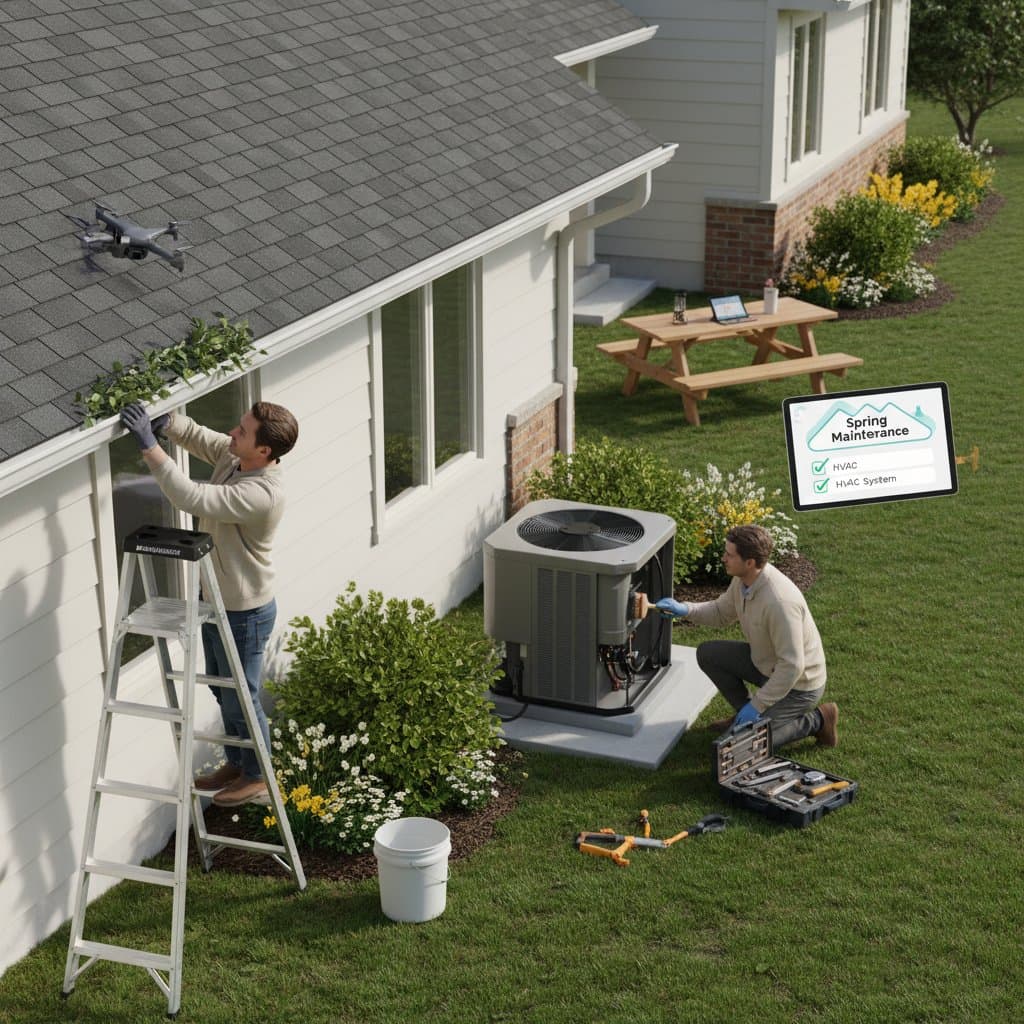
Prevent Spring Challenges: Essential Roof, Gutter, and HVAC Maintenance
Spring arrives with extended daylight and renewed energy, offering an ideal opportunity to address vital home maintenance tasks. The roof, gutters, and HVAC system endure significant stress during winter months, and neglecting them now leads to substantial repair expenses later. Dedicated time for inspection and care prevents emergencies and preserves your home's integrity.
The Importance of Spring Home Maintenance
Rising temperatures melt accumulated snow and introduce early rainfall, placing demands on your home's exterior components. Blocked gutters cause water to overflow, damaging fascia boards and foundations. Deteriorating shingles permit leaks that worsen with each weather event. An inefficient HVAC unit increases energy consumption and elevates utility costs as warmer weather approaches. Proactive attention to these areas ensures reliable performance throughout the year.
A comprehensive spring evaluation focuses on three key elements: examining and repairing the roof, clearing and reinforcing gutters, and tuning the HVAC system prior to peak usage. These efforts safeguard your property, prolong equipment durability, and maintain indoor comfort.
Roof Inspection and Repair
Significance of Roof Care
The roof shields your home from environmental elements, but winter ice, wind, and debris often compromise its condition. Early detection of issues prevents minor problems from escalating into major structural failures. Spring assessments identify vulnerabilities before summer storms arrive.
Detailed Inspection Steps
-
Examine shingles and tiles. Look for cracks, missing pieces, or curling edges using binoculars from the ground or a ladder for closer views.
-
Check flashing around chimneys and vents. Ensure seals remain intact to block water entry; reseal with roofing cement if gaps appear.
-
Inspect for granule loss. Granules protect asphalt shingles; excessive loss indicates aging, requiring partial replacement.
-
Assess attic interior. Search for daylight through cracks or stains on ceiling joists signaling leaks.
-
Clear debris from valleys and edges. Remove accumulated leaves or branches to avoid water pooling.
Associated Costs
-
DIY supplies: $30 to $100, including sealant, ladder rental, and safety gear.
-
Professional inspection: $200 to $400, with repairs adding $500 to $2,000 depending on damage extent.
-
Full roof replacement: $8,000 to $20,000 for an average home, influenced by material and size.
Professionals recommend annual checks, particularly for homes in harsh climates. They utilize tools like drones for safe, thorough evaluations.
Indicators of Trouble
Observe sagging areas, interior water marks, or granules in gutters. These signs demand immediate professional intervention to avert extensive harm.
Gutter Cleaning and Maintenance
Why Gutters Require Attention
Gutters channel vast amounts of water away from the structure annually. Debris accumulation leads to overflows that erode landscapes, discolor exteriors, and infiltrate basements. Spring removal of winter residues prepares the system for impending rains.
Step-by-Step Maintenance Process
-
Gather debris. Employ a scoop or trowel to extract leaves and twigs from the channels.
-
Rinse thoroughly. Direct a garden hose to verify drainage and reveal any remaining obstructions.
-
Verify alignment. Confirm gutters tilt gently toward downspouts to facilitate efficient flow.
-
Examine connections. Apply caulk to minor leaks or substitute faulty segments as needed.
-
Clear downspouts. Insert a plumber's snake or hose to dislodge blockages and confirm unobstructed passage.
Cost Breakdown
-
DIY essentials: $20 to $60 for gloves, tools, attachments, and sealants.
-
Hired service: $150 to $350 for one-story properties, $300 to $600 for two-story homes.
-
Gutter protection systems: $5 to $15 per linear foot, varying by design and durability.
Opt for experts when dealing with high roofs or multi-level structures. They identify concealed problems such as corroded brackets or underlying wood decay.
Red Flags to Watch
Peeling exterior paint along the eaves, discoloration on walls, or moisture near the base suggest urgent evaluation. Prompt action mitigates risks of foundational or siding impairment.
HVAC System Servicing
Value of HVAC Upkeep
Heating, ventilation, and air conditioning units operate continuously, yet winter inactivity allows dust and wear to accumulate. Pre-summer servicing optimizes efficiency, reduces breakdowns, and lowers operational expenses. Regular tune-ups extend system longevity by several years.
Comprehensive Servicing Guide
-
Replace air filters. Install new ones to improve airflow and indoor air quality.
-
Clean coils and drains. Remove dirt from evaporator and condenser coils; clear condensate lines to prevent overflows.
-
Inspect electrical components. Check wiring, capacitors, and thermostats for wear or loose connections.
-
Test refrigerant levels. Ensure proper charge to maintain cooling capacity without overworking the compressor.
-
Evaluate ductwork. Seal leaks and insulate exposed sections to minimize energy loss.
Expense Overview
-
DIY filter changes: $10 to $50 per filter, performed quarterly.
-
Professional tune-up: $75 to $200 annually, including diagnostic tests.
-
Major repairs or upgrades: $1,000 to $5,000, depending on component replacement.
Schedule with certified technicians who possess specialized equipment for precise adjustments. They also advise on zoning systems for enhanced control.
Warning Signals
Strange noises, uneven temperatures, or rising energy bills indicate potential issues. Address them swiftly to avoid complete system failure during heat peaks.
Effective Cost-Reduction Approaches
-
Combine inspections. Contractors frequently provide 10 to 15 percent discounts for bundled roof, gutter, and HVAC evaluations.
-
Time appointments strategically. Book HVAC work early in spring to secure lower fees and shorter wait times.
-
Consider protective additions. Gutter guards, costing $800 to $2,000 installed, minimize ongoing maintenance and damage risks.
-
Pursue incentives. Local programs may rebate costs for energy-efficient HVAC installations or smart thermostats.
-
Explore payment options. Select vendors offering interest-free financing to manage expenses over time.
Securing Long-Term Home Performance
The roof, gutters, and HVAC constitute core elements of your residence's functionality and security. Spring initiatives shield against water intrusion, inefficiency, and sudden malfunctions. Such foresight proves more economical than crisis responses.
Conduct initial assessments, record observations, and tackle simple fixes personally. Engage qualified specialists for complex or hazardous work. Obtain quotes from three local providers to evaluate options and secure timely service.
A meticulously tended property enhances market appeal and financial worth. Prospective owners value intact roofs, functional HVAC, and debris-free gutters. Completing these measures establishes resilience against seasonal demands, fostering peace of mind year-round.