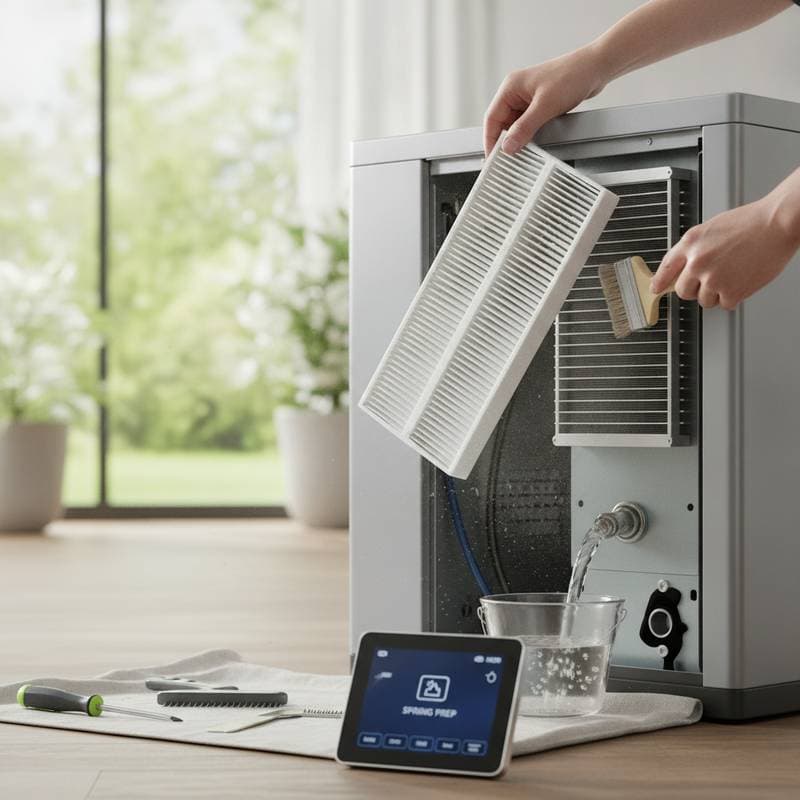
Spring HVAC Checklist for Reliable AC Performance
- Replace the air filter.
- Clear debris from the outdoor unit.
- Inspect and clear the condensate drain line.
- Seal visible duct leaks.
- Verify thermostat function.
- Ensure vents remain unobstructed.
- Book a professional tune up.
When the first warm breeze arrives, the air conditioning system requires attention. A reliable HVAC unit keeps indoor air fresh rather than humid. Neglect leads to breakdowns during the first heatwave. Preparation now supports steady cooling through the season.
This checklist guides homeowners through practical steps. No special tools are needed. A steady approach reveals what requires attention.
Why Spring Maintenance Supports Performance
The HVAC system operates throughout the year. Spring serves as its transition point. Dust accumulates during heating cycles and humidity fluctuates. A tune up allows the unit to shift into cooling mode without strain. Preparation reduces energy use and prevents gradual performance loss.
Many assume that an AC unit that powers on requires no further care. In reality, clogged coils and dirty filters reduce efficiency before complete failure. Maintenance corrects these issues early.
Results After Proper Care
A serviced system moves air evenly. The thermostat maintains set temperatures without delay. Energy consumption drops because components face less resistance. Homeowners notice steadier comfort and quieter operation.
Replace the Air Filter
Locate the filter compartment near the indoor air handler. Slide out the old filter and note its size. Insert a new filter with the airflow arrow pointing toward the blower. Repeat this step every one to three months during heavy use.
Clear Debris Around the Outdoor Unit
Maintain two feet of clearance around the condenser. Trim nearby plants and remove leaves. Rinse fins with a garden hose from inside the unit outward. Skip pressure washers to avoid bent fins. Thick grime or oil stains warrant a service call.
Inspect the Condensate Drain Line
Humidity removal creates water that exits through a small pipe. Algae can block this line and cause leaks. Pour one cup of white vinegar into the line to break down buildup. Standing water near the air handler requires immediate clearing.
Check Ductwork for Leaks or Dust
Ducts in attics often leak cooled air. Feel for temperature differences between rooms. Seal gaps with mastic or foil tape. Professional duct cleaning every few years improves airflow and air quality.
Test Thermostat Accuracy
Lower the setting a few degrees and confirm the system starts. Replace batteries if response lags. A smart thermostat can automate adjustments based on occupancy patterns.
Clean or Adjust Vents and Registers
Walk through each room and confirm vents are open. Move furniture away from registers. Vacuum vent covers to remove dust. Clear paths support balanced airflow.
Schedule a Professional Tune Up
Technicians measure refrigerant levels and inspect electrical connections. They lubricate motors and test overall capacity. A written report documents system condition and highlights future needs.
Daily Comfort Gains From Maintenance
Clean components reduce airborne dust and pollen. Humidity levels stay consistent. Motor noise decreases. These changes support better sleep and fewer allergy symptoms.
Budget Friendly Upgrades
Filter changes and duct sealing cost little yet extend equipment life. A new thermostat improves scheduling precision. Homes with aging units may benefit from variable speed models that adjust output to demand.
Ongoing System Awareness
Listen for unusual sounds throughout the year. Note rooms that cool unevenly. Early attention prevents emergency repairs. Completed checklist steps confirm the system is prepared for warmer weather.