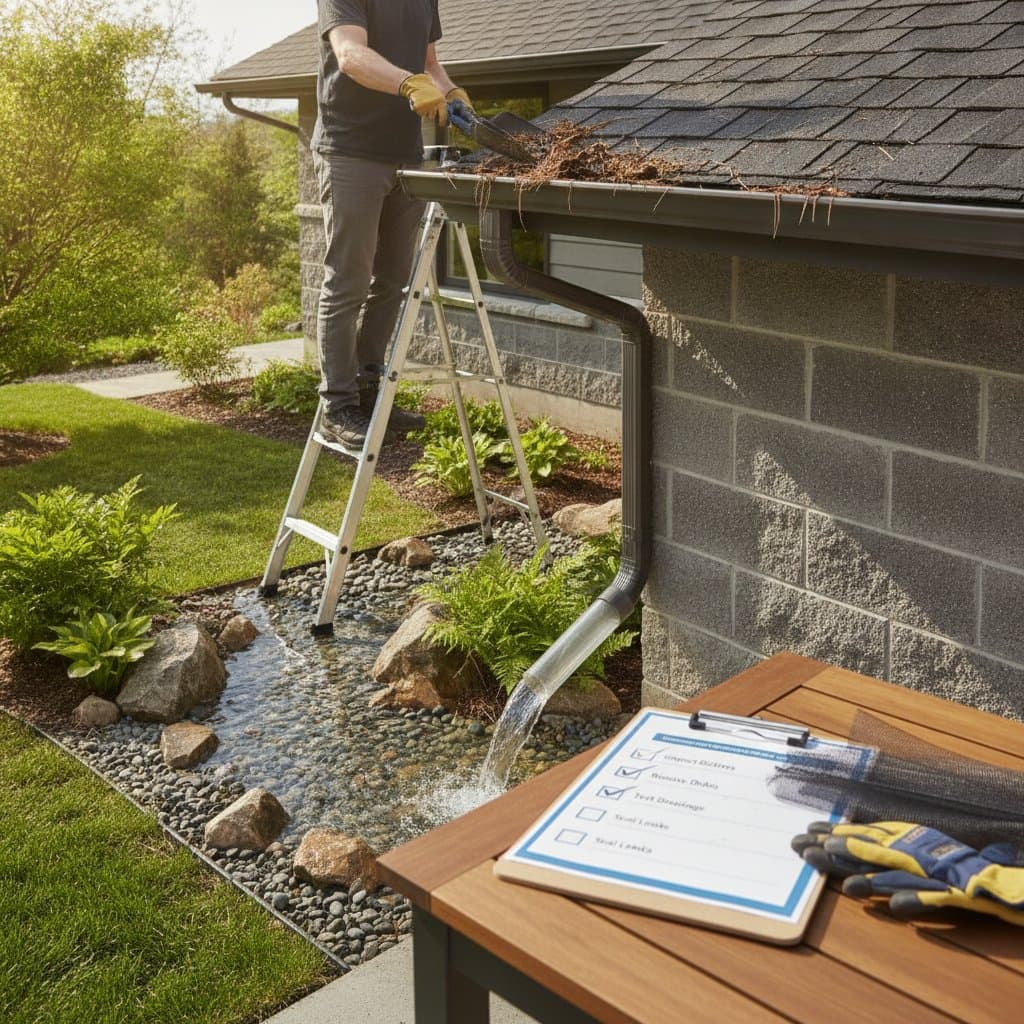
Spring Gutter and Drainage Maintenance Checklist
When spring arrives, melting snow and frequent rain test the strength of your gutter and drainage system. If leaves, dirt, or ice from winter remain in the gutters, water can overflow onto siding, seep into basements, or damage the foundation. A thorough spring maintenance routine keeps water flowing away from the home and prevents expensive repairs later.
Before storms arrive, inspect, clean, and repair gutters and drainage paths. This checklist will help homeowners handle the job safely and determine when to call a professional.
Step-by-Step Spring Gutter Maintenance
1. Inspect the Entire System
Start with a full walkaround of the home. Look for sagging gutters, loose hangers, or sections pulling away from the fascia. Check for cracks, rust, or peeling paint that might indicate trapped moisture. Pay attention to downspouts that have separated from the gutter or are disconnected from extensions leading water away from the home.
Signs of mildew on siding or pooling water near the foundation indicate that the drainage system may already be failing to move water properly.
2. Clear Out Debris
Use a small scoop or garden trowel to remove leaves, twigs, and dirt from gutters. Flush each section with a garden hose to confirm that water runs freely toward downspouts. If water backs up, a clog likely exists near the elbow or base of the downspout. A plumber snake or pressure nozzle can help clear it.
Always wear gloves and eye protection. Homeowners who are not comfortable working on a ladder should hire a professional gutter cleaning service. Professionals can handle the job safely and inspect for hidden damage while they work.
3. Test Downspouts and Extensions
Once gutters are clean, verify that each downspout directs water at least six feet away from the foundation. Use flexible extensions or splash blocks to guide runoff further if needed. Ensure underground drainage pipes are not blocked by soil or tree roots. A simple flush test with a hose reveals whether water flows freely through buried lines.
4. Examine Gutter Slope and Fasteners
Gutters must slope slightly toward downspouts to drain correctly. If water sits in sections after cleaning, adjust the pitch by tightening or repositioning hangers. Replace any rusted nails or brackets with corrosion-resistant screws for a stronger hold. Seal small leaks at joints with high-quality gutter caulk or sealant once the system is completely dry.
5. Check for Roof and Fascia Damage
Overflowing gutters can loosen shingles or rot wood trim. Inspect the edges of the roof and fascia boards for soft spots, mold, or peeling paint. Replace damaged boards and repaint exposed wood to protect it from moisture. A minor repair now prevents major structural problems later.
When to Hire a Professional
Homeowners can handle light cleaning and inspection, but major gutter or drainage repairs require expertise. Consider hiring a professional when the roof is steep or high, when gutters are heavily rusted or detached, when foundation drainage failure is suspected, or when underground pipes are clogged or collapsed.
Professional services often include camera inspections and water flow tests. They can identify hidden leaks or structural weaknesses that are hard to see from ground level.
Cost-Saving Strategies
Install gutter guards to keep out leaves and reduce cleaning frequency. Schedule cleaning during off-peak seasons when contractors offer discounts. Bundle services such as roof inspection and gutter maintenance with one contractor. Inspect twice a year to catch small issues before they require full replacement.
Upgrading to seamless aluminum or copper gutters can also reduce future leaks and repair costs. Although the initial price is higher, the long-term savings in maintenance often make the upgrade worthwhile.
Ongoing Protection Measures
Consistent care is the best defense against water damage. Keep trees trimmed back to limit falling debris, and recheck downspout extensions after storms or landscaping changes. If persistent overflow or ground saturation appears, schedule a professional inspection. A qualified contractor can assess slope, soil type, and gutter design to recommend permanent solutions.
Protecting the Home Foundation
Clean gutters and strong drainage keep the home dry, the foundation stable, and the exterior looking its best. Start by clearing debris, testing water flow, and sealing small leaks. For tall roofs or complex drainage systems, bring in a licensed professional who can inspect and maintain everything safely. Regular upkeep this spring prevents costly repairs later and ensures the home stays protected through every season.