Understanding Smart Thermostats for 2025 Energy Efficiency
Homeownership involves managing interconnected systems that impact daily comfort and expenses. The heating, ventilation, and air conditioning (HVAC) system stands out as a prime area for cost reductions. At its core, the thermostat directs HVAC operations, and smart versions elevate this control to deliver substantial savings and enhanced livability.
This guide examines how smart thermostats function, highlights essential features for energy conservation, and compares leading models. Homeowners gain practical insights to select and install devices that align with their needs, ensuring lower utility bills without sacrificing convenience.
Pre-Installation Maintenance for Optimal Performance
Prior to installing a smart thermostat, verify that the HVAC system operates at peak efficiency. A well-maintained foundation allows the new device to maximize its potential for energy savings.
- Replace the air filter if it appears dirty or clogged, as this prevents unnecessary strain on the system.
- Inspect ductwork for leaks, such as gaps or loose connections, and seal them with appropriate materials to minimize energy loss.
- Clean all vents and registers to remove dust accumulation that impedes airflow.
- Assess electrical compatibility, particularly the presence of a common (C) wire, which many smart models require for reliable power.
Addressing these steps ensures a smooth upgrade and immediate benefits from improved system efficiency.
Comparing Top Smart Thermostats for 2025 Savings
Numerous smart thermostats promise bill reductions, yet real-world results vary based on design and integration. The following four models excel in energy efficiency and user satisfaction, evaluated for features, compatibility, and cost-effectiveness.
1. Google Nest Learning Thermostat
Best for: Users seeking hands-off automation and seamless smart home integration.
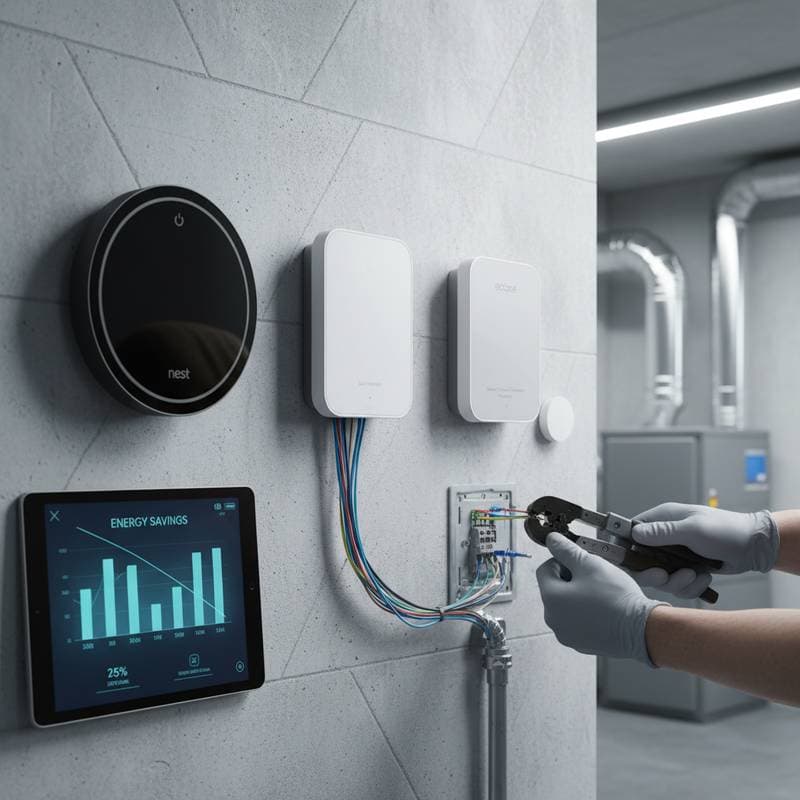
The Nest Learning Thermostat analyzes occupancy patterns and temperature preferences to create personalized schedules. It optimizes energy use during absences and integrates with Google Assistant for voice control. The sleek, high-resolution display provides clear visibility and intuitive navigation.
Key energy-saving features:
- Auto-Away function senses when the home is empty and adjusts settings accordingly.
- Energy History reports track consumption trends over time.
- True Radiant technology employs predictive algorithms to heat or cool rooms more efficiently.
Considerations: Initial investment exceeds basic models, and optimal performance depends on consistent Wi-Fi access.
2. Ecobee Smart Thermostat Premium
Best for: Households prioritizing advanced sensors and air quality monitoring.
Ecobee stands out with included remote sensors that measure temperature and occupancy in multiple rooms. The device supports Apple HomeKit, Alexa, and Google Assistant, offering versatile control. Its radar-based occupancy detection enhances precision in energy management.
**Key energy-saving features:**n- Multi-room sensors enable balanced comfort without overworking the HVAC.
- Eco+ mode leverages weather forecasts for proactive adjustments.
- Detailed energy reports identify savings opportunities through app-based analytics.
Considerations: Setup involves configuring sensors, which may require additional time, and the price reflects premium capabilities.
3. Honeywell Home T9 Smart Thermostat
Best for: Budget-minded individuals desiring solid functionality without complexity.
The T9 provides essential smart controls at an accessible price point, including up to 20 remote sensors for zoned temperature management. It connects easily with major voice assistants and offers straightforward app-based scheduling.
Key energy-saving features:
- Geofencing activates energy-saving modes based on smartphone location.
- Room-specific sensors prevent uneven heating or cooling.
- Auto Alerts notify users of potential efficiency issues, such as filter changes.
Considerations: The interface lacks the polish of premium competitors, and advanced analytics are minimal.
4. Amazon Smart Thermostat
Best for: Beginners wanting affordable entry into smart home technology.
Collaboratively designed with Honeywell, this model delivers core scheduling and remote access at a low cost. It excels in Alexa ecosystems, enabling voice commands for quick adjustments.
**Key energy-saving features:**n- Hunches suggest optimizations, like adjusting temperatures during peak hours.
- Eye tracking via the display confirms user presence for targeted control.
- Simple energy dashboards highlight usage patterns.
Considerations: Feature set is basic, limiting customization compared to higher-end options.
Installation Guidance for Homeowners
Skill Level: Suitable for beginners with basic tools.
Required Tools: Screwdriver, level, wire labels, smartphone for app guidance, and optionally a drill for mounting.
DIY Approach: Proceed if you can safely disconnect power at the breaker and match wires to the device's diagram. Most installations take 30 to 60 minutes.
Professional Assistance: Opt for an HVAC specialist if wiring is complex, no C-wire exists (a power extender kit may be needed), or the system involves multiple zones.
Cost Estimates: Devices range from $100 to $300; add $100 to $200 for professional labor, depending on location and complexity.
Follow manufacturer instructions closely to avoid electrical hazards and ensure warranty coverage.
Strategies for Budget-Conscious Upgrades
Energy savings do not require premium pricing. Consider these tiers to fit various financial plans:
- Entry-Level Option: The Amazon Smart Thermostat offers remote control and basic automation for under $100, ideal for testing smart features.
- Mid-Range Choice: Honeywell T9 delivers sensor technology and geofencing around $150, providing value for multi-room homes.
- Premium Investment: Ecobee or Nest models, priced at $200 to $300, unlock advanced learning and reporting for long-term efficiency.
Regardless of selection, consistent use amplifies returns over traditional thermostats.
Mechanisms Behind Energy Bill Reductions
Smart thermostats lower costs through intelligent oversight of HVAC operations. Automation eliminates manual errors, while data empowers informed adjustments.
Core Functions for Savings:
- Adaptive learning refines schedules based on routine behaviors, reducing runtime by up to 15 percent.
- Location-based geofencing shifts to setback temperatures upon departure.
- Usage reports reveal high-consumption periods, guiding behavioral changes.
- Weather-responsive modes preemptively adapt to forecasts, avoiding over-cycling.
Homeowners typically observe 10 to 20 percent monthly reductions, compounding annually with minimal effort.
Resolving Typical Setup and Operation Challenges
Occasional glitches arise, but most yield to simple diagnostics.
- Power Failure: Verify the circuit breaker and C-wire connections; reset if necessary.
- Connectivity Problems: Reposition the router or install a Wi-Fi extender to strengthen the signal.
- Temperature Inaccuracies: Use the app to recalibrate sensors and clear any cached data.
- System Unresponsiveness: Tighten wire terminals and confirm correct labeling; perform a factory reset as a last resort.
Consult the device's app for guided troubleshooting. Persistent issues warrant manufacturer support for tailored resolution.
Expanding Efficiency Through Integrated Home Management
Mastering a smart thermostat builds foundational knowledge of home systems. Apply these skills to incorporate complementary devices, such as smart vents for targeted airflow or occupancy sensors for lighting automation. Each addition compounds savings, fostering a fully optimized living environment that prioritizes comfort and conservation.