How Biophilic Plant Walls Reduce HVAC Costs by 30 Percent
Selecting an ineffective building envelope approach can elevate HVAC energy demands by up to 40 percent. Homeowners and designers embracing biophilic principles find a compelling option in living plant walls. These installations offer visual charm alongside thermal efficiency. Properly designed, they serve as temperature moderators, air cleansers, and humidity balancers, slashing HVAC requirements by as much as 30 percent. To grasp these advantages, consider the principles of evapotranspiration, shading, and thermal mass, and their interplay with construction materials and local weather patterns.
Core Principles of Biophilic Wall Systems
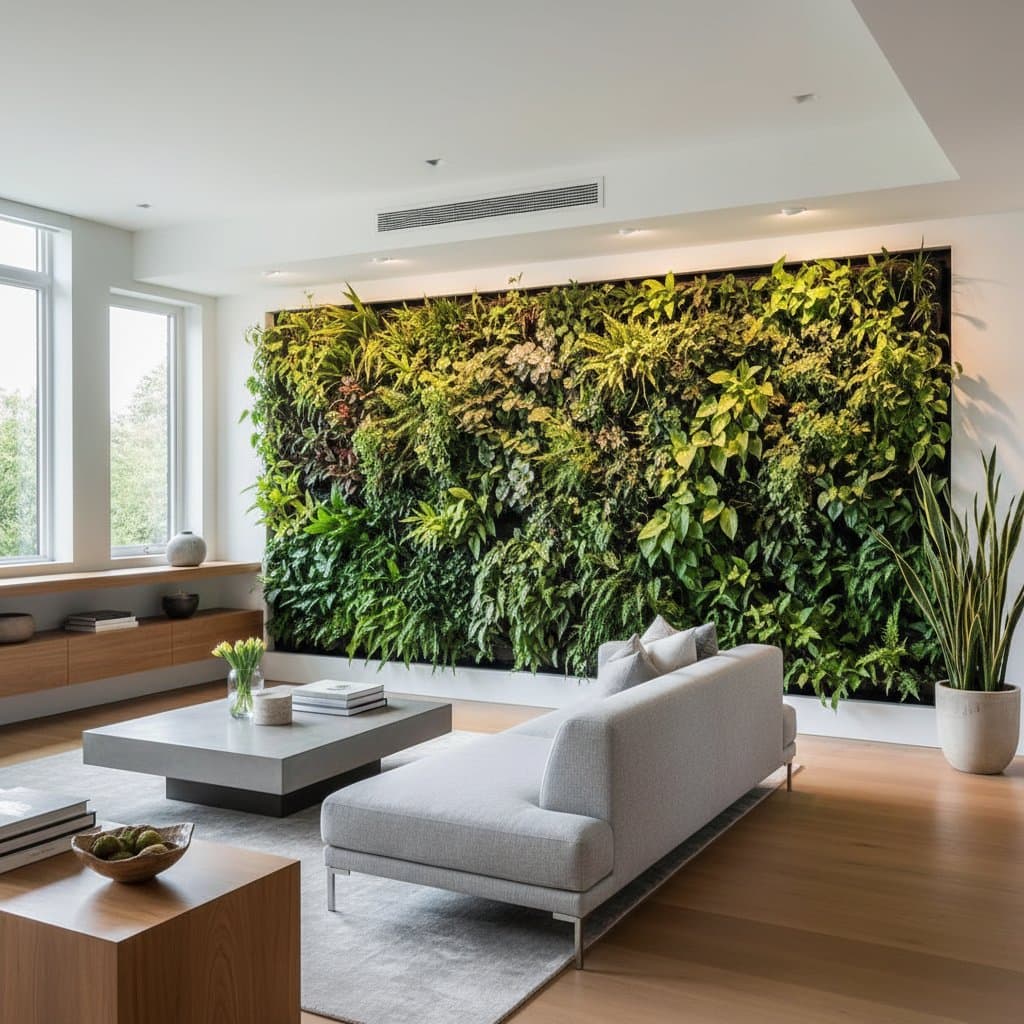
A living plant wall functions as an integrated assembly of plants, growing medium, watering setup, and support framework. The primary driver of energy efficiency stems from managing heat flow via evapotranspiration. Plants release water vapor from their foliage, which cools the adjacent air. This process diminishes the temperature close to outer walls, thereby easing the structure's cooling needs.
During colder months, the growing medium and plants provide added thermal resistance, minimizing heat escape through conduction. Many designs incorporate an air space behind the vegetation that promotes ventilation, curbing summer heat buildup and winter warmth loss. Research using thermal imaging reveals that wall surfaces protected by vegetation exhibit temperature differences of 7 to 15 degrees Fahrenheit relative to exposed ones.
Overview of System Varieties
Living wall systems fall into two primary types: modular panel systems and felt-based hydroponic systems. These differ in thermal properties, water handling, and upkeep demands.
| System Type | Typical R-Value | Cooling Performance | Water Use | Maintenance | Best Use Scenario |
|---|---|---|---|---|---|
| Modular Panel | R-2.5 to R-4 | High shading and insulation | Moderate | Replaceable trays | Large exteriors or retrofits |
| Felt-Based Hydroponic | R-1.8 to R-2.2 | Strong evapotranspiration | Higher | Nutrient monitoring required | Interiors or lightweight exteriors |
Modular panel systems employ prefabricated units with established plants that secure to mounting frames. They deliver superior insulation and simplify repairs. In contrast, felt-based hydroponic systems use ongoing watering layers where roots anchor in absorbent fabric. These excel in humidity regulation and seamless appearance, yet demand careful water level adjustments.
Evaluating Costs and Returns
Initial Expenses
Setting up living walls typically costs between $90 and $250 per square foot, influenced by design intricacy and vegetation selection. Automated features like nutrient feeders and supplemental lights push expenses higher. Yearly upkeep runs $12 to $18 per square foot, encompassing trimming, replanting, and system inspections.
Sustained Financial Gains
Simulations indicate annual cooling reductions of 25 to 35 percent in warm regions, with heating savings of 10 to 15 percent in temperate or chilly areas. Across a 20-year span, these efficiencies recoup upfront investments, especially alongside solar power or incentive programs from utilities.
Additional Advantages
- Decreased wall temperatures enhance material longevity by lessening expansion and contraction cycles.
- Enhanced air purity supports resident well-being and work efficiency indoors.
- Shorter HVAC operation periods prolong system durability, postponing upgrade needs.
Measuring and Tracking Effectiveness
Assessing a biophilic wall's impact demands ongoing observation. Key indicators encompass:
- Surface Temperature Variance: Captured via infrared imaging to gauge shading efficacy.
- Indoor Temperature Consistency: Assesses lighter demands on heating and cooling cycles.
- Humidity Regulation: Reflects the influence of plant moisture release.
- Energy Use per Area: Compares real-world reductions to projections.
Sophisticated setups embed sensors for temperature and moisture behind the wall, linking to central controls. Such data enables fine-tuning of watering and climate system timings.
Enhancing Energy Performance
Many utility providers now credit green facades as conservation strategies, providing grants to cover part of setup fees. Pair living walls with complementary elements like adjustable sun blockers or advanced glazing to amplify results.
Positioning solar arrays near or above vertical greenery boosts overall eco-friendliness. The shaded zonelowers air warmth, allowing panels to generate power more effectively at moderated temperatures.
Expert Guidance for Implementation
Engage a mechanical engineer and a plant specialist prior to proceeding. Engineers perform heat simulations, while experts select flora compatible with site direction, light levels, and weather conditions. For expansive or elevated projects, initial testing should verify watering accuracy, sensor function, and performance under load.
Enduring Value of Integrated Design
Beyond aesthetics, a thoughtfully constructed plant wall integrates into the home's climate management. Vegetation works in harmony with mechanical components to foster a balanced interior that demands minimal energy for comfort.
This approach trims operational expenses, safeguards equipment longevity, and elevates living quality. Homeowners desiring quantifiable outcomes and designers aiming for restorative architecture will appreciate the reliable 30 percent drop in HVAC needs from engineered biophilic walls. Such investments cultivate residences that adapt, refresh, and flourish with their inhabitants.