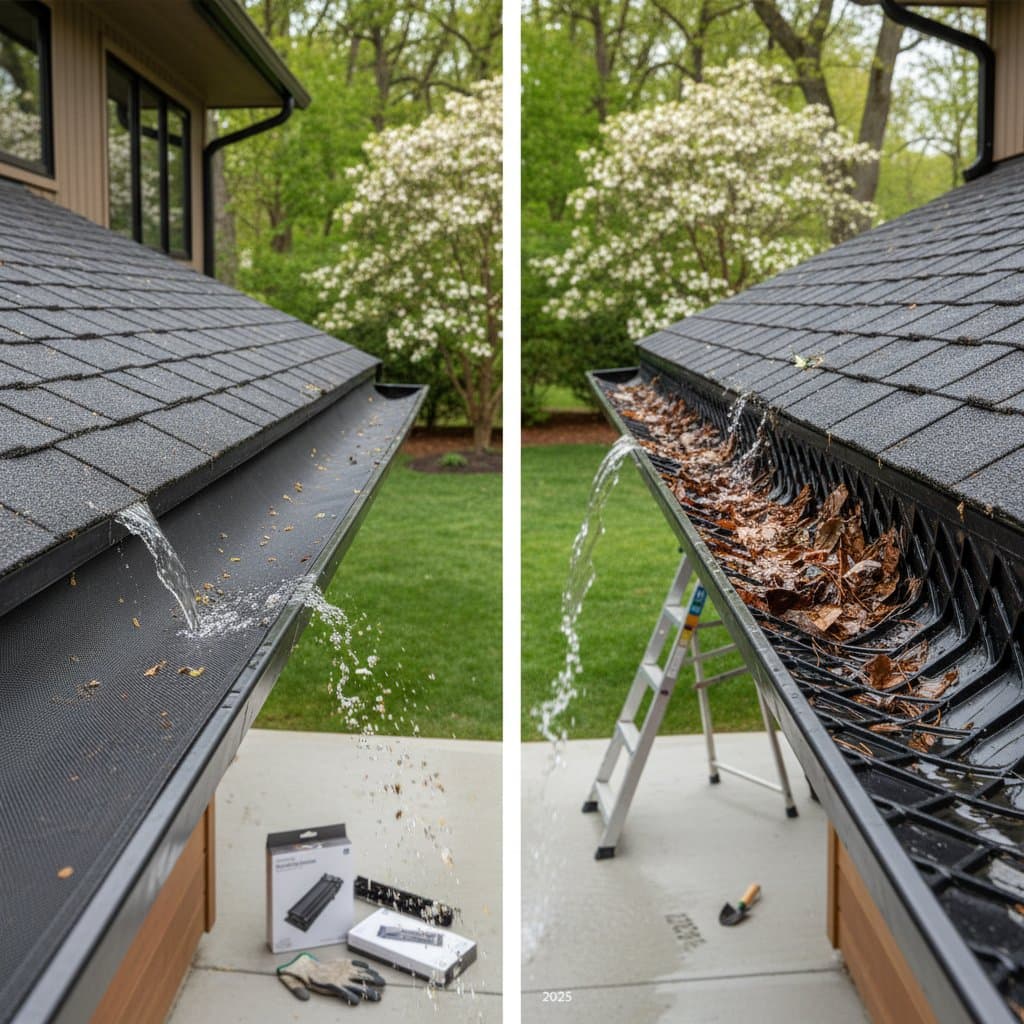
Understanding Gutter Guards and Spring Challenges
Gutters play a vital role in directing rainwater away from your home's foundation, roof, and siding. However, spring weather often introduces heavy pollen, flower petals, seed pods, and pine needles that accumulate rapidly and lead to clogs. These blockages cause overflows, which can damage fascia boards, erode landscapes, and even invite pests into your attic spaces.
Traditional gutters without protection require frequent cleaning, sometimes weekly during peak seasons. Installing a guard system addresses this issue by preventing debris buildup while allowing water to flow freely. Homeowners face a choice between micro-mesh and traditional designs, each suited to different needs and environments.
What Are Micro-Mesh Gutter Guards?
Micro-mesh guards feature a finely woven stainless steel or aluminum mesh with openings smaller than one millimeter. This design filters out tiny particles like sand, pollen, and shingle grit that larger guards might miss. Manufacturers often coat the mesh with a protective finish to resist rust and UV degradation, ensuring longevity in harsh weather.
Installation involves securing the guard over existing gutters using clips or screws, a process that typically takes a professional two to four hours for an average home. Once in place, micro-mesh systems demand little upkeep; a gentle rinse with a garden hose every few months suffices to remove surface dust. Their precision makes them ideal for regions with dense tree cover or frequent storms.
Exploring Traditional Gutter Guards
Traditional guards, often called screen or perforated models, use larger mesh or solid surfaces with slits or holes ranging from one to five millimeters. These options, commonly made from galvanized steel or plastic, block bigger debris such as leaves and twigs while permitting smaller particles to pass through. Over time, this can lead to gradual accumulation beneath the guard.
Homeowners appreciate the straightforward installation, which many complete as a DIY project in under a day using basic tools like a ladder and snips. Costs remain lower, with materials available at most hardware stores for budget-conscious buyers. Cleaning involves occasional brushing or vacuuming, performed safely from the ground with extension tools.
Key Comparison: Micro-Mesh Versus Traditional Guards
Filtration Effectiveness
Micro-mesh guards capture 99 percent of debris, including microscopic elements that cause spring clogs. Traditional guards handle larger items well but allow finer particles to infiltrate, potentially requiring more frequent interventions during rainy seasons.
Durability and Longevity
Constructed from high-grade materials, micro-mesh withstands winds up to 90 miles per hour and maintains integrity for 20 years or more. Traditional models, while robust, may dent or corrode faster in acidic environments like those near oak trees, lasting 10 to 15 years with proper care.
Maintenance and Convenience
With micro-mesh, seasonal checks replace exhaustive cleanings, saving hours annually. Traditional guards necessitate bi-annual deep cleans to prevent under-guard buildup, though their accessibility simplifies the task for handy individuals.
Cost Considerations
Initial investment for micro-mesh runs higher, averaging 15 to 20 dollars per linear foot installed professionally. Traditional guards cost 5 to 10 dollars per foot, providing an economical entry point for rental properties or short-term homes.
Tailoring Your Choice to Spring Conditions
Assess your property's surroundings first. In areas with pine trees or cottonwoods, micro-mesh prevents the sticky residues that traditional screens struggle against. Budget plays a role; if funds limit options, start with traditional guards and upgrade later.
Consider your lifestyle too. Active families benefit from micro-mesh's hands-off approach, reducing ladder use and injury risks. For those comfortable with routine yard work, traditional guards align with existing maintenance habits.
Professional assessment helps; a contractor can evaluate roof pitch, gutter size, and local rainfall patterns to recommend the optimal fit. This step ensures the system performs reliably from March through June.
Steps to Install and Maintain Your Selected Guard
- Measure your gutter length accurately, adding 10 percent for overlaps.
- Choose materials resistant to your climate; stainless steel suits coastal humidity, while powder-coated aluminum fits arid zones.
- Secure the guard firmly, ensuring no gaps at seams or downspouts.
- Test water flow immediately after installation by simulating rain with a hose.
- Schedule inspections post-storm to catch any shifts early.
Regular maintenance extends any system's life. For micro-mesh, use soft brushes to avoid mesh tears. With traditional guards, employ leaf blowers cautiously to prevent dislodging.
Realizing Long-Term Home Protection
Selecting the appropriate gutter guard transforms spring maintenance from a chore into a minor task. Micro-mesh delivers peace of mind through superior clog prevention, while traditional options provide reliable performance at a fraction of the cost. Both approaches safeguard your investment, preventing water damage that could cost thousands in repairs.
Homeowners report fewer insurance claims and enhanced curb appeal after implementation. Invest in the system that matches your needs today, and enjoy drier eaves and worry-free seasons ahead.