Micro-Mesh Versus Traditional Gutter Guards: Optimal Choices for Fall Protection
Homeowners face increasing pressure this season as prices for gutter guards rise alongside costs for aluminum and steel. Supply chain disruptions in building materials continue to affect availability from many suppliers. For properties with trees near the roofline, neglecting gutters invites serious risks, including roof leaks, fascia board deterioration, and foundation damage. The key decision involves selecting between micro-mesh gutter guards and traditional options to achieve the most effective protection relative to current expenses.
Professionals who have installed both types emphasize that the distinctions extend beyond initial design. These differences influence cleaning schedules, rainwater management, and ongoing upkeep expenses. This guide examines the systems, installation considerations, selection criteria, and maintenance strategies to support informed choices.
Key Features of Each Gutter Guard System
Traditional Gutter Guards
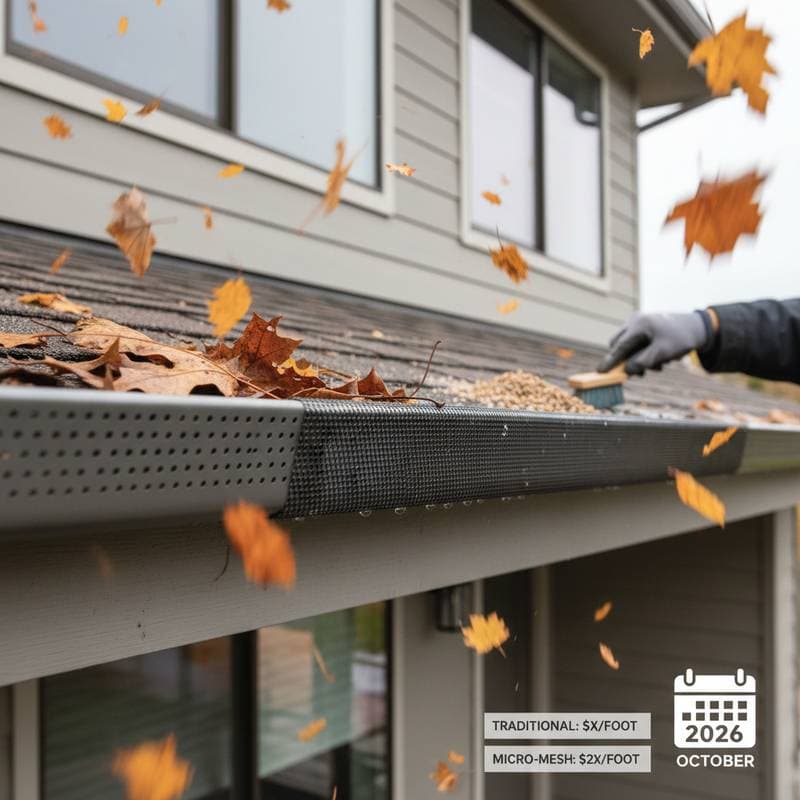
Traditional models typically feature perforated sheets made from metal or plastic. These components rest atop the gutter channel to prevent large debris, such as leaves and twigs, from entering while permitting rainwater to pass through. Installation proves straightforward, and initial costs remain lower, often ranging from $5 to $10 per linear foot depending on material quality.
However, these guards permit smaller particles like pine needles, seed pods, or shingle granules to infiltrate the gutter. In regions with moderate debris, they perform adequately but may necessitate more frequent inspections. Over time, accumulation of fine materials can reduce efficiency and increase the likelihood of partial blockages during storms.
Micro-Mesh Gutter Guards
Micro-mesh designs incorporate a finely woven stainless steel or aluminum screen that captures nearly all debris except water droplets. This filtration level excels in blocking minuscule items, including pollen, insect remnants, and granular roof particles. Upfront pricing sits higher, generally between $15 and $25 per linear foot, reflecting the advanced materials and manufacturing process.
The superior barrier translates to reduced cleaning needs, often limited to one or two sessions annually. Homeowners under dense canopies of oak, pine, or maple trees report significant improvements in performance. For instance, after upgrading from traditional guards, one property owner observed no overflows during intense rainfall events, eliminating the need for emergency cleanouts.
Installation Approaches: DIY or Professional Assistance
Handling Traditional Guards Independently
Experienced individuals with basic tools can manage traditional guard installation over a weekend for a standard single-story home. Essential equipment includes tin snips for cutting, a level for alignment, and secure fasteners. Position the ladder on firm ground, and secure it with ties or stabilizers to prevent shifts.
Begin by measuring gutter lengths accurately, then cut sections to fit precisely. Secure the guards using screws or clips every 18 to 24 inches along the edge. Test water flow by simulating rain with a hose to confirm proper drainage before completing the project.
Considerations for Micro-Mesh Installation
Micro-mesh systems demand greater precision due to requirements for custom trimming and secure roofline attachments. Incorrect placement may direct water away from the gutter, fostering issues like siding damage or interior flooding. Professionals recommend measuring roof pitch and overhang distances beforehand to ensure compatibility.
For complex setups, such as multi-story structures or steep slopes, professional installation becomes essential. Contact licensed contractors well in advance, ideally two to three months before peak leaf fall, to secure appointments. Reputable services provide warranties covering materials and labor for five to ten years, adding peace of mind.
Safety Protocols: Always prioritize protective gear, including gloves, eye protection, and footwear with strong grip. Avoid working alone on heights exceeding one story, and consult local building codes for any permitting needs.
Evaluating Options for Long-Term Value
Traditional guards suit budgets focused on immediate affordability and scenarios with sparse tree coverage. They integrate easily with existing gutters and require minimal alterations. In low-debris environments, they maintain functionality for 10 to 15 years with routine care.
Micro-mesh alternatives justify their higher cost through enhanced durability and efficiency. The fine mesh resists corrosion and withstands wind gusts up to 90 miles per hour. Studies from home improvement associations indicate that these systems reduce annual maintenance by 40 percent, offsetting the initial outlay within three to five years for most households.
Consider your residency plans when deciding. Long-term owners benefit from the enduring performance of micro-mesh, which preserves property value by preventing water-related repairs. Short-term residents or property managers might opt for traditional guards to minimize upfront spending without sacrificing basic protection.
To compare effectively:
- Assess annual debris volume from surrounding vegetation.
- Calculate total linear footage of gutters and multiply by per-foot costs.
- Factor in time value: estimate hours spent on cleaning over five years.
- Review local climate patterns for rainfall intensity and frequency.
Strategies for Sustained Performance and Cost Savings
No gutter guard eliminates all upkeep, so regular evaluations prove vital. Inspect systems after major storms for signs of damage, such as bent sections or embedded debris. Use a soft brush to dislodge surface accumulations, followed by a gentle hose rinse to restore flow.
For tree-heavy landscapes, arrange biennial professional cleanings to remove compacted materials. Apply sealants to attachment points annually to guard against weathering. These practices extend the lifespan of both guards and underlying gutters, typically adding five to seven years of service.
Homeowners investing in micro-mesh often experience tangible returns through fewer service calls and avoided repair bills. For example, preventing a single foundation leak can save thousands in remediation. By aligning guard selection with specific home needs, you secure reliable drainage that supports structural integrity year-round.