Enhance Bathroom Safety Using $8,000 Medicaid Waivers
Daily activities in the bathroom can present significant risks, especially with slippery surfaces, protruding edges, and confined spaces. These elements often lead to falls, which are a leading cause of injury among older adults and those with mobility challenges. Medicaid Home and Community-Based Services waivers address this issue by offering up to $8,000 for targeted home modifications, enabling safer and more functional bathroom environments.
These upgrades extend beyond basic safety measures. Professional design integration ensures the space remains comfortable and visually appealing, facilitating easier maintenance and long-term use.
Identifying Common Bathroom Hazards
Traditional bathroom designs emphasize style and space efficiency over accessibility. Polished tile floors become slick when wet, bathtubs demand high steps that strain balance, and towel racks serve as unreliable supports. Individuals with reduced mobility or balance issues face heightened dangers in such settings.
Consider one homeowner's experience: the vanity edges protruded slightly, risking impacts during movement. The shower threshold required an uncomfortable lift, and inconsistent lighting created shadows that obscured wet areas on the floor. This configuration appeared adequate on the surface but generated constant apprehension during use.
Key Modifications for Safety and Style
Effective bathroom enhancements balance functionality with design elegance. Medicaid waivers fund a range of upgrades that integrate seamlessly into existing aesthetics. The following options provide practical improvements:
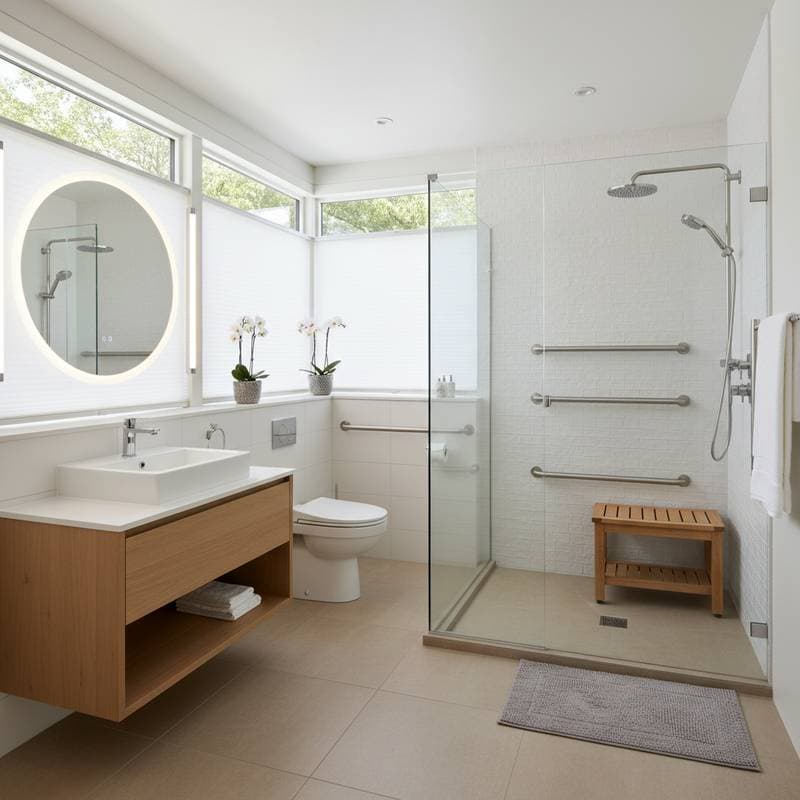
- Walk-In Showers: Opt for a curbless entry to remove step-related risks. Select non-slip porcelain tiles with a textured surface and install a adjustable-height showerhead for versatile use.
- Grab Bars: Position these near the toilet, at shower entrances, and within the shower area. Available in brushed nickel or oil-rubbed bronze finishes, they blend with existing hardware while offering firm support rated for 250 pounds or more.
- Raised Toilets: Install seats 17 to 19 inches high to ease transitions for those with joint limitations. Pair with elongated bowls for added comfort and stability.
- Non-Slip Flooring Materials: Choose low-maintenance vinyl planks with etched patterns or matte ceramic tiles that meet ADA slip-resistance standards. These options maintain a modern look while minimizing fall risks.
- Strategic Lighting Solutions: Combine recessed ceiling fixtures with under-cabinet LED strips at the vanity. This setup delivers uniform brightness, eliminating shadows and improving visibility during tasks.
- Ergonomic Storage Solutions: Incorporate lower pull-out cabinets and wall-mounted shelves at 36 to 42 inches high. These keep essentials accessible without requiring bending or stretching.
Such modifications foster a serene atmosphere by reducing clutter and enhancing usability. Accessible design principles ensure the space supports daily routines without compromise.
Navigating the Medicaid Waiver Application Process
The waiver application requires organization, yet straightforward actions streamline the effort. Eligibility typically includes individuals receiving Medicaid long-term services, but verification confirms specifics.
- Reach Out to Your State Medicaid Agency: Inquire about Home and Community-Based Services programs and review qualification criteria based on health and income.
- Schedule a Home Evaluation: An occupational therapist or assessor visits to pinpoint necessary changes, such as grab bar placements or flooring needs.
- Obtain Quotes from Qualified Contractors: Select firms certified in universal design, ensuring estimates detail materials, labor, and compliance with safety codes.
- Compile Required Paperwork: Assemble medical documentation, assessment reports, and bids; include before-and-after photos where applicable to strengthen the case.
- Monitor Application Progress: Contact your assigned coordinator biweekly to address questions and expedite approvals, which may take 60 to 90 days.
Approval directs funds toward approved projects, often covering full costs for qualifying modifications. This support alleviates financial barriers to essential improvements.
Sustaining Accessibility Over Time
A well-designed bathroom adapts to changing needs without frequent overhauls. Incorporate modular elements like fold-down benches or height-adjustable rods for future flexibility. Select durable, easy-to-clean materials that withstand regular use.
These investments benefit caregivers, aging-in-place planners, and proactive homeowners alike. Medicaid waivers enable environments that prioritize security while preserving personal comfort and style, ultimately fostering greater confidence in everyday activities.