Introduction to Medicare and Home Safety
Many individuals over 65 prefer to remain in their homes as they age. Bathrooms pose significant risks due to slips, falls, and mobility challenges. Medicare provides limited support for modifications that address these hazards, focusing on items deemed medically necessary.
Understanding coverage options helps plan effective upgrades. This article examines what qualifies under Medicare, common exclusions, and practical steps to enhance bathroom safety without straining finances.
Medicare Basics and Coverage Scope
Medicare consists of several parts that influence home modification benefits. Part A covers hospital stays, while Part B addresses outpatient services and durable medical equipment (DME). Part D focuses on prescription drugs, but Parts A and B are most relevant here.
DME includes items like wheelchairs or hospital beds prescribed by a doctor for specific medical conditions. For bathrooms, coverage applies only to portable aids, not permanent structural changes. Medicare requires proof of medical necessity, such as a physician's order documenting fall risks or mobility impairments.
What Bathroom Remodels Medicare Typically Excludes
Full bathroom remodels, including new flooring, expanded layouts, or luxury features, fall outside Medicare coverage. These projects are considered home improvements rather than medical treatments. Installing a walk-in shower or replacing a bathtub entirely requires out-of-pocket payment or alternative funding.
Medicare does not reimburse for aesthetic or convenience upgrades, even if they indirectly support aging in place. Contractors and designers must separate medical items from general renovations to avoid claim denials.
Qualifying Modifications Medicare May Cover
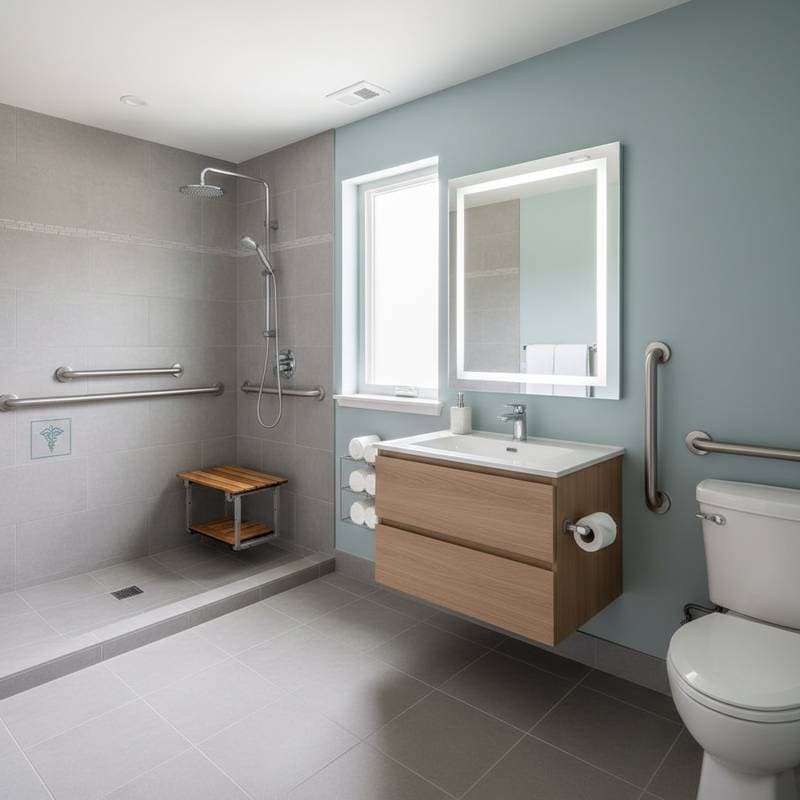
Certain bathroom safety features qualify as DME when prescribed. Grab bars, for instance, receive coverage if a doctor certifies their need to prevent falls. These must be installed by the beneficiary or a professional, but Medicare pays only for the bars themselves, not labor or installation.
Raised toilet seats and bath benches also qualify under similar conditions. Non-slip mats or transfer benches for tubs may be approved if they aid mobility-limited individuals. Coverage limits apply: Medicare covers 80 percent of the approved amount after the deductible, leaving 20 percent for the beneficiary.
Key Qualifying Criteria
- Obtain a written prescription from a Medicare-enrolled physician detailing the medical condition.
- Purchase from a Medicare-approved supplier to ensure reimbursement.
- Submit claims promptly with documentation of necessity.
Specific Upgrades and Coverage Details
Grab bars provide essential support near toilets and showers. Medicare views them as DME when fixed securely to walls, but suppliers must confirm compliance with safety standards.
Walk-in tubs or showers rarely receive direct coverage, as they involve structural alterations. However, portable shower chairs or handheld showerheads may qualify if prescribed for hygiene assistance in cases of arthritis or post-surgery recovery.
Shower curtains with built-in seats or adjustable-height commodes fit within DME guidelines. Beneficiaries should verify supplier accreditation through Medicare's database to avoid out-of-network costs.
Navigating the Claims Process
Start by scheduling a doctor's appointment to discuss mobility concerns. The physician evaluates and prescribes necessary items, explaining how they address specific health issues.
Select a supplier from Medicare's approved list. Purchase the equipment and retain receipts. File claims via the supplier or directly with Medicare, including the prescription and proof of medical need.
Appeals follow if initial claims deny. Provide additional medical records to strengthen cases, as denials often stem from insufficient documentation of necessity.
Alternatives for Uncovered Remodel Costs
When Medicare falls short, other resources assist. Medicaid programs in many states offer home modification grants for low-income seniors, covering structural changes like widened doorways or lever faucets.
Veterans benefits through the VA include adaptive housing grants up to $109,986 for eligible individuals, funding comprehensive bathroom overhauls. Local aging agencies or nonprofits like Rebuilding Together provide free or low-cost labor for safety installations.
Home equity loans or reverse mortgages serve as financing options. Community programs, such as Area Agencies on Aging, connect beneficiaries to grants focused on fall prevention.
Budgeting and Designing for Long-Term Safety
Assess current bathroom risks through a professional evaluation. Prioritize high-impact changes: install grab bars first, then add non-slip surfaces. Combine Medicare-covered DME with personal funds for integrated designs.
Consult occupational therapists for personalized recommendations. They identify modifications that maximize independence, such as zero-threshold entries or touchless fixtures.
Track expenses to explore tax deductions under medical expense categories. Collaborate with contractors experienced in accessible design to ensure compliance and efficiency.
Securing Coverage and Building a Safer Space
Proactive planning aligns Medicare benefits with broader remodel goals. By focusing on prescribed DME, individuals reduce costs while addressing core safety needs. Explore supplemental insurance or state programs to fill gaps.
Ultimately, these steps foster environments that support health and autonomy. Consult healthcare providers early to tailor solutions, ensuring bathrooms evolve with changing abilities.