2026 Materials That Block Mold in Humid Homes
Moisture drives mold growth inside homes, particularly in coastal or tropical regions. Homeowners in high-humidity areas see mold spread rapidly across drywall, grout, and wood framing. New building products now resist mold at the material level. Selecting these options during a remodel or new build reduces future repair costs and supports healthier indoor air.
Key Facts
- Average cost increase ranges from 10 percent to 25 percent above standard materials.
- Expected service life spans 20 to 50 years depending on the product.
- DIY difficulty falls in the moderate to advanced range.
- Professional installation is recommended for full moisture-control systems or large renovations.
Top Mold-Blocking Materials for 2026 Homes
Mold-Resistant Drywall
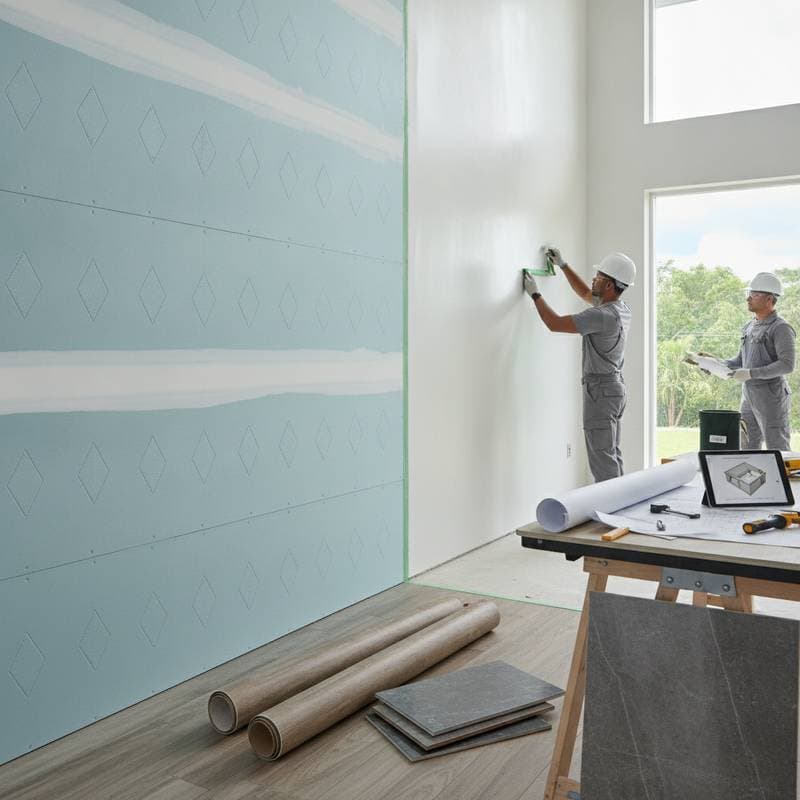
Standard drywall uses paper facing that absorbs water and feeds mold. Fiberglass-mat or treated-paper versions limit moisture uptake. These boards suit bathrooms, basements, and laundry rooms. Prices run 12 to 20 dollars per sheet versus 8 to 15 dollars for ordinary drywall. Cut fiberglass boards with a sharp utility knife and wear a dust mask during installation.
Cement Board
Cement board replaces drywall in constantly wet zones. It consists of cement and reinforcing fibers that reject water and mold. Use it behind tile in showers or as a kitchen backsplash substrate. Sheets cost 10 to 14 dollars each and outlast paper-backed alternatives in sustained humidity.
Mold-Resistant Paints
Antimicrobial paints form a surface film that stops mold colonies. The products come in interior and exterior formulas across many colors. A gallon costs 30 to 50 dollars, roughly 10 dollars above conventional paint. Apply two coats over clean, dry surfaces for maximum protection.
Moisture-Resistant Insulation
Fiberglass batts can hold water and promote mold. Closed-cell spray foam or rigid foam boards create a continuous moisture barrier inside wall cavities. Spray foam runs 1.50 to 3 dollars per square foot yet delivers superior air sealing and long-term humidity control.
Waterproof Flooring Options
Carpet and solid wood absorb spills quickly. Replace them with these alternatives:
- Luxury vinyl plank offers 100 percent waterproof performance and realistic wood visuals.
- Ceramic or porcelain tile resists moisture without special coatings.
- Engineered vinyl composite combines hardwood appearance with full waterproofing.
Material and labor costs range from 3 to 10 dollars per square foot.
Mold-Resistant Caulks and Grouts
Silicone caulk with antimicrobial additives seals joints in wet rooms. Tubes cost 6 to 10 dollars. Epoxy grout resists both staining and mold better than traditional cement-based mixes.
Cost-Saving Strategies for Mold-Resistant Upgrades
- Bundle work with an existing bathroom or kitchen remodel to limit added expense.
- Prioritize basements, bathrooms, and laundry rooms where moisture accumulates first.
- Check local utility rebates for qualifying insulation or dehumidification equipment.
- Purchase materials in volume through a contractor for better unit pricing.
- Install a whole-home dehumidifier to lower long-term mold risk across all surfaces.
Advantages and Limitations
Advantages include prevention of expensive remediation, better indoor air quality, longer material life, and reduced routine maintenance. Limitations involve a modest increase in upfront cost, narrower color selections on certain products, and the need for correct installation to achieve stated performance.
Planning Steps for a Mold-Resistant Remodel
- Inspect the property for existing damp areas, leaks, or visible mold.
- Establish a budget that accounts for the 10-to-25-percent premium on upgraded materials.
- Match products to room conditions: waterproof wallboard and tile for baths, foam insulation and vinyl flooring for basements.
- Select contractors experienced with moisture-resistant assemblies.
- Add mechanical ventilation or dehumidification to maintain stable humidity.
- Finish surfaces with mold-resistant paint and caulk to complete the assembly.
- Schedule annual inspections for leaks or rising humidity.
Ongoing Care After Installation
Keep indoor relative humidity below 50 percent. Clean surfaces with mild detergent rather than abrasive chemicals. Examine caulk and grout lines quarterly and replace any that crack or separate. Deploy a dehumidifier promptly if condensation appears on windows or walls. These habits preserve the performance of the upgraded materials and protect the home structure over decades.