Granny Flats: Maximizing Rental Income and ROI in 2025
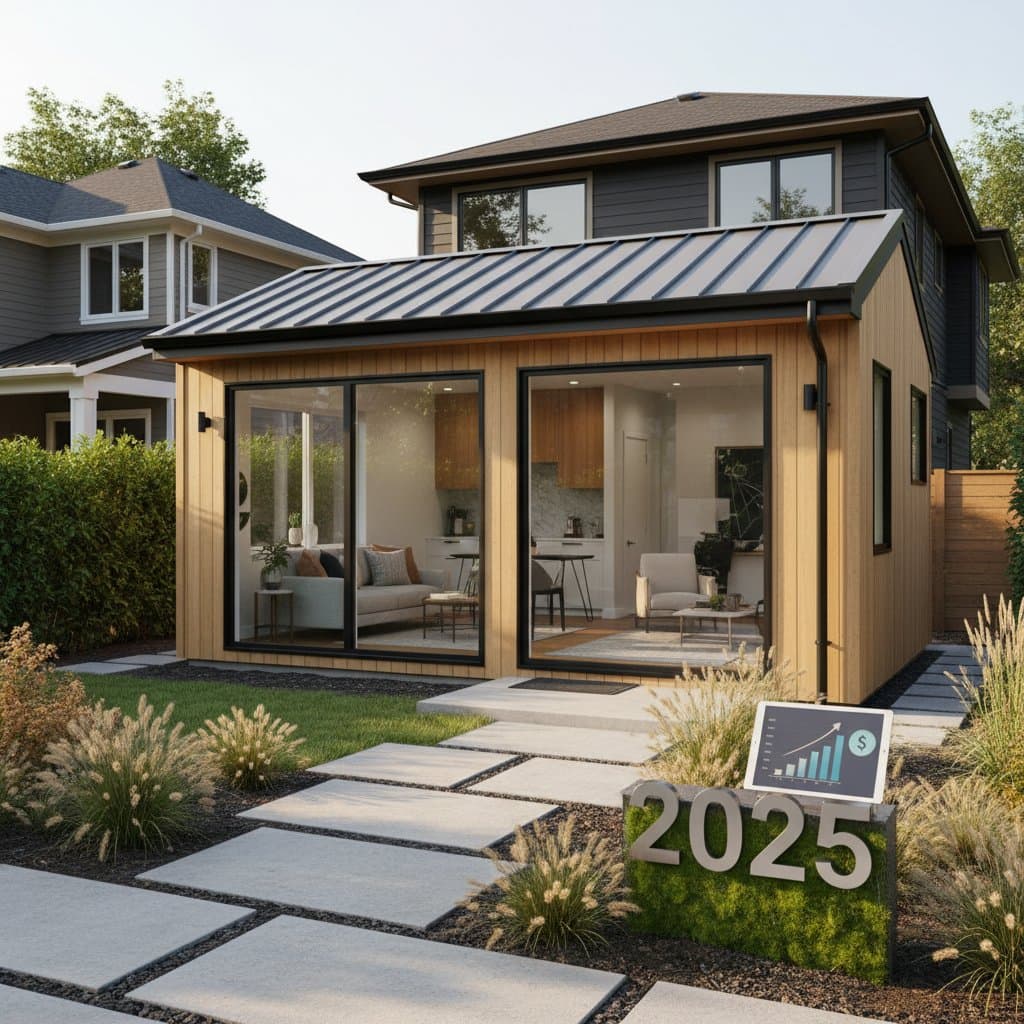
Home renovation initiatives nationwide face escalating expenses, yet the granny flat, or accessory dwelling unit, emerges as a prudent investment option. Property owners with available backyard space can enhance their asset's value and secure consistent rental revenue, despite increasing construction outlays. Two years ago, the author constructed a backyard cottage, a choice that proved superior to other home improvements in financial terms. That structure recouped its costs more rapidly than a kitchen renovation and now offsets almost half of the monthly mortgage via reliable tenant payments.
Granny flats offer a pathway to break even within five years under optimal conditions. Factors such as location, rental market strength, and efficient planning determine this timeline. For instance, in urban areas with high demand for affordable housing, monthly rents of $1,500 to $2,500 become feasible for a 400- to 600-square-foot unit. At an average build cost of $200,000, such income covers expenses in approximately 60 to 80 months, aligning with the five-year goal when maintenance and utility savings factor in.
Project Overview
Average Cost: $145,000 to $260,000
Timeline: 14 to 24 weeks
Lifespan: 40 to 60 years
Optimal Season: Spring or early fall
DIY Feasibility: Partial, with professional oversight recommended for structural elements
This overview highlights the project's viability as a mid-term investment. Owners should assess local rental yields early to project realistic break-even periods. Tools like online ROI calculators from real estate platforms assist in these projections, factoring in local market data.
Detailed Cost Breakdown and Market Influences
Understanding expense distribution proves essential for budgeting accuracy. Current market dynamics, including material inflation and labor shortages, influence these figures. The following table outlines typical allocations for a standard 500-square-foot granny flat:
| Category | Cost Range | Market Considerations |
|---|---|---|
| Site Preparation and Foundation | $10,000 to $25,000 | Expenses rise with necessary grading or drainage enhancements to meet soil stability requirements |
| Framing and Structural Elements | $40,000 to $70,000 | Stable lumber pricing persists, but experienced crews command higher fees due to demand |
| Utilities and Connections | $15,000 to $30,000 | Municipal permits and excavation costs increase alongside broader economic pressures |
| Interior Finishes | $25,000 to $45,000 | Selections in cabinetry, flooring, and appliances drive variability; bulk purchasing mitigates overruns |
| Permits and Design Services | $5,000 to $12,000 | Fees depend on unit size and compliance with local zoning ordinances |
| Landscaping and Site Access | $3,000 to $8,000 | Pathways and driveways ensure accessibility, often mandated by building codes |
Total costs for a fully equipped granny flat range from $145,000 to $260,000, varying by customization, geographic location, and proximity to existing infrastructure. Opting for prefabricated modules reduces expenditures by 10 to 15 percent, although this approach limits aesthetic and layout flexibility. To refine estimates, consult regional builders for site-specific quotes, incorporating current inflation rates of 3 to 5 percent on key materials.
Timing Strategies for Efficient Execution
Initiating construction in spring minimizes weather-related disruptions and secures contractor availability. Concrete work demands dry conditions to avoid extended curing periods and additional fees. Regional rainy seasons or winter freezes similarly complicate schedules, potentially inflating timelines by four to six weeks.
Material procurement requires foresight, as supply chain issues persist for items like energy-efficient windows and electrical components. A six-week delay in window delivery once postponed drywall phases and inspections in the author's project, underscoring the need for proactive ordering.
Follow these steps to maintain momentum:
- Secure contractor quotations promptly; most remain valid for 30 to 45 days.
- Procure extended-lead-time materials immediately following permit issuance.
- Coordinate utility installations prior to framing to avoid rework.
- Reserve inspection slots two weeks ahead to prevent bottlenecks.
Adhering to this sequence aligns tradespeople and curtails idle periods, preserving the 14- to 24-week target.
Enhancing Energy Efficiency for Sustained Savings
Contemporary granny flats incorporate advanced features that surpass the efficiency of legacy structures. High-quality insulation, LED fixtures, and compact HVAC units, such as mini-splits, keep operational costs modest. The author's 400-square-foot dwelling incurs under $65 monthly in utilities; integrating solar panels further halves this amount.
Such designs accelerate ROI by lowering ongoing expenses and appealing to environmentally aware renters, who often accept higher rents for green amenities. Regions provide incentives like rebates for efficient windows, heat pumps, and solar-compatible wiring, amplifying financial benefits.
To quantify savings, utilize calculators from utility providers or material vendors. Input local energy rates and unit specifications to forecast annual reductions, which can reach 30 to 50 percent compared to standard builds.
Calculating ROI and Break-Even Potential
Achieving break-even within five years hinges on precise financial modeling. Begin by tallying total investment, including construction, permits, and minor furnishings. Subtract annual operating costs like maintenance and insurance, estimated at 5 to 10 percent of build expenses.
Project rental income based on comparable local listings; aim for 0.8 to 1.2 percent of property value monthly. For a $200,000 outlay and $2,000 rent, net income after 20 percent vacancy and costs yields $16,000 yearly, recouping the principal in roughly 12.5 years without appreciation. However, property value uplift of 10 to 20 percent from the addition shortens this to five years, especially in appreciating markets.
Sensitivity analysis helps: Adjust for 5 percent annual rent increases and 3 percent cost inflation. Software from financial planning sites simplifies these computations, revealing scenarios where strategic choices, like energy upgrades, compress the timeline further.
Steps to Launch Your Granny Flat Project
Embark on this venture with a comprehensive site evaluation, consulting zoning experts to confirm eligibility. Assemble a team of licensed professionals, including architects and contractors, to draft compliant plans. Secure financing options, such as home equity loans, tailored to renovation projects.
Monitor progress through weekly check-ins, documenting milestones for warranty and tax purposes. Post-completion, market the unit via platforms emphasizing its modern features and location benefits. This approach not only realizes the five-year break-even promise but also fortifies long-term financial security through diversified income and enhanced equity.