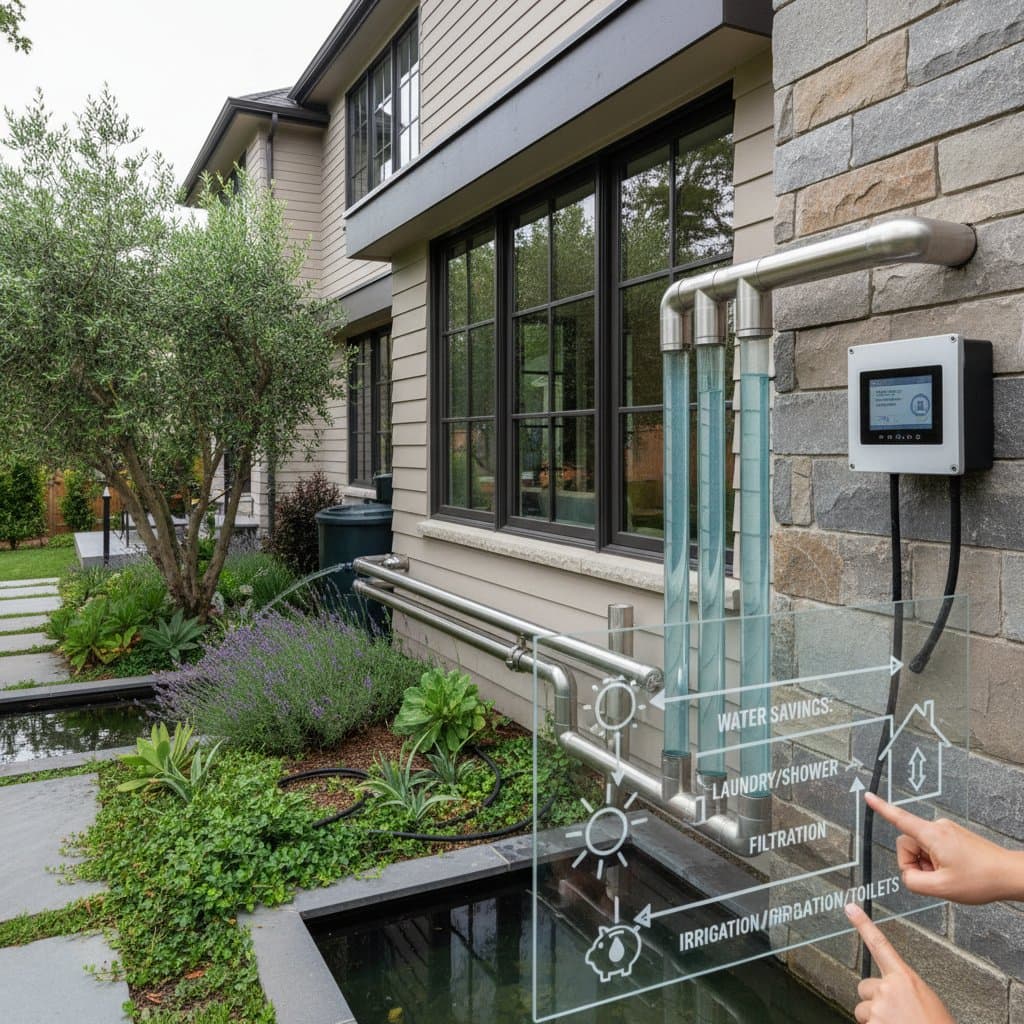
Unlock Savings with 2026 Greywater Permits and Rebates
Monthly water bills rise steadily, and drought restrictions intensify in many areas. Property owners who seek to maximize water efficiency find that a greywater system reduces outdoor water consumption by 50 percent and enhances home value. New rebates and streamlined permit procedures emerge in numerous regions, presenting an ideal opportunity to secure these benefits before installation demand increases.
Greywater systems capture water from sources such as showers, bathroom sinks, and laundry machines for reuse in irrigating landscapes or flushing toilets. This approach differs from blackwater management, which handles waste from toilets and kitchen sinks. Proper installation ensures the water remains safe for non-potable applications like plant nourishment.
Basic configurations, such as laundry-to-landscape designs, redirect washing machine output directly to garden areas through shallow trenches. Advanced setups incorporate pumps, filters, and storage tanks to deliver water evenly across larger zones. Compliance with local plumbing and health regulations remains essential, though authorities increasingly relax rules to promote water conservation.
Key Components of Greywater Systems
Systems vary in design to suit different household needs and site conditions. Simple gravity-fed options suit flat properties with permeable soil, minimizing mechanical parts. Pumped systems prove necessary for sloped terrains or distant irrigation areas, ensuring consistent water distribution.
Filtration elements, including screens and biological treatments, prevent clogs and maintain water quality. Smart controllers automate flow based on soil moisture levels, optimizing usage during dry periods. Homeowners select configurations based on daily water output, typically ranging from 20 to 100 gallons per person.
Integration with existing plumbing demands professional assessment to avoid cross-contamination risks. Certified installers evaluate pipe materials, backflow prevention, and discharge points during planning. These steps guarantee long-term reliability and regulatory approval.
Factors Influencing Total Costs
Multiple elements determine the overall expense of a greywater installation. Plumbing complexity plays a significant role; properties with accessible lines near laundry rooms or bathrooms incur 25 percent less labor cost. Remote or intricate layouts necessitate additional piping, raising expenses.
Permit fees vary by location, spanning $50 to $600, though some jurisdictions eliminate charges for systems processing under 250 gallons daily. Soil characteristics affect design requirements; sandy types facilitate quick drainage with basic trenches, while clay-heavy soils demand expanded leach fields or mulch basins, adding $500 to $1,000.
Optional enhancements like advanced filters, automated sensors, or irrigation timers improve performance but contribute $800 to $1,500 to the budget. Regional labor differences impact pricing, with urban coastal areas commanding higher rates than rural inland locations. A detailed site survey helps predict these variables for precise financial planning.
Streamlining Permits and Accessing Rebates
Municipalities accelerate greywater approvals through user-friendly online portals. Small-scale systems below designated flow thresholds require only a single-page form and basic documentation. Larger installations undergo site inspections, yet processes now feature clearer timelines and fewer bureaucratic hurdles.
Water agencies expand rebate programs to combat drought, offering targeted incentives. Laundry-to-landscape setups qualify for $200 to $600 in rebates. Branched drain or pumped configurations receive $800 to $1,500, with some initiatives covering up to 50 percent of costs when linked to drought-resistant landscaping efforts.
Pre-approval often involves submitting site photographs, a schematic of water pathways, soil analysis, and projected capacity. Post-inspection, rebates arrive as checks or utility credits. Contractors provide itemized invoices to support applications, so obtaining three competitive quotes streamlines the process.
Homeowners verify eligibility through local water district websites or conservation offices. Programs prioritize energy-efficient components, such as low-flow diverters. Combining rebates with tax credits for green improvements amplifies financial returns.
Assessing Return on Investment
An average household irrigating 1,000 square feet reuses 25 to 35 gallons daily from showers and laundry. At prevailing rates, this yields $180 to $350 in yearly savings. Integration with native, low-water plants further cuts outdoor demands by 50 percent or greater.
Systems recoup costs in 6 to 8 years, accelerating with rebate assistance that offsets half the initial outlay. Financial benefits extend to insurance discounts in water-scarce zones. Market data shows properties with conservation features command premiums and sell more quickly.
Longevity depends on maintenance; annual filter cleaning and leak checks preserve efficiency. Over a decade, cumulative savings surpass $2,000, excluding appreciation from eco-friendly upgrades. Track usage via utility meters to quantify impacts and adjust irrigation schedules.
Enhancing Home Resilience Through Greywater
Greywater adoption builds durability against water shortages, eases municipal infrastructure burdens, and sustains landscapes through seasons. Immediate bill reductions appear within the first billing cycle for most users. Pairing with complementary practices like rainwater collection or efficient drip systems lowers total consumption by 60 percent.
Environmental gains include reduced wastewater volume entering sewers, conserving energy in treatment plants. Properties gain appeal to eco-conscious buyers, supporting higher valuations in arid climates. Professional maintenance ensures systems operate at peak, delivering sustained value.
Consult certified experts for tailored designs that align with property goals. Early adoption positions homes as models of sustainability, fostering community-wide conservation efforts.