Why Bathroom Remodel Costs Vary by Region in 2026
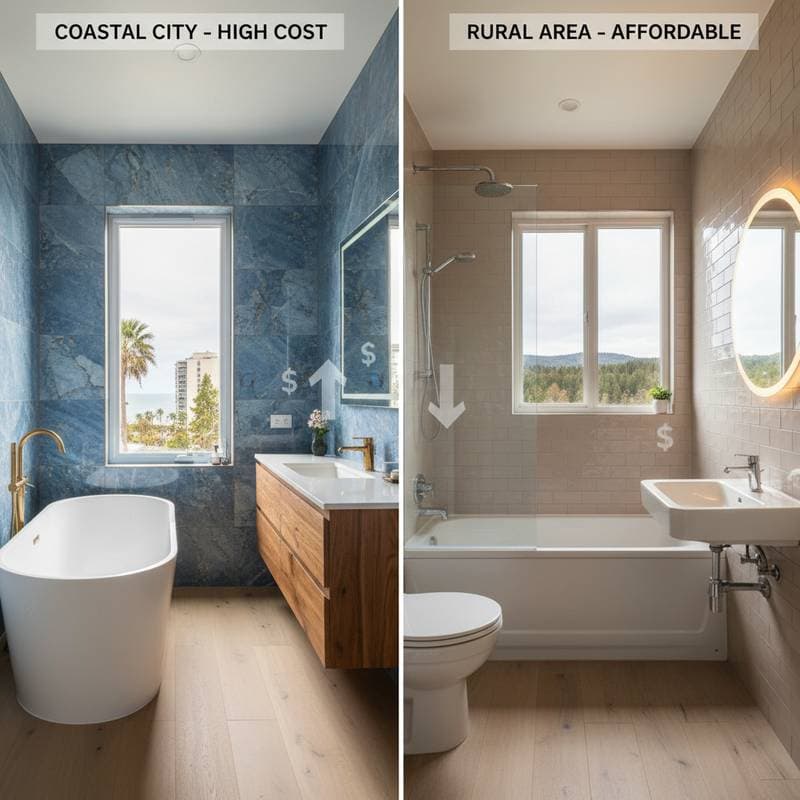
Homeowners often observe significant differences in bathroom remodel quotes across regions. A mid-range renovation that costs under $25,000 in one area may exceed $40,000 in another. These variations stem from regional economics, labor availability, and climate influences rather than contractor pricing alone.
Planning a remodel requires awareness of these factors to avoid unexpected expenses and ensure accurate budgeting.
Key Cost Drivers in Bathroom Remodels
Three main elements drive bathroom remodel costs: labor, materials, and location-specific logistics. Design complexity and fixture selections fall under these broader categories.
Regional Labor Rate Differences
Labor accounts for 40 to 60 percent of total project expenses. In urban centers, licensed plumbers and electricians charge $120 to $180 per hour, compared to $75 to $100 per hour in smaller communities. Projects involving new plumbing, drain relocations, or electrical rewiring incur higher costs in expensive regions due to elevated rates.
Labor shortages exacerbate pricing in high-demand areas like coastal cities, where contractors book months in advance. Such delays increase hourly charges and extend project timelines, adding to the overall bill.
Variations in Material Costs and Sourcing
Material prices fluctuate by location. For instance, tile ranges from $3 to $5 per square foot in the Midwest but $7 to $10 in coastal markets after accounting for shipping and markups. Imported items such as vanities, stone countertops, and custom shower panels involve extended lead times and elevated freight expenses when transported to inland areas.
Residents in rural or remote locations face additional delivery fees for heavy items like stone, porcelain, or bathtubs. These logistics can increase totals by several hundred dollars.
Impact of Building Codes and Permits
Local building codes directly affect expenses through varying requirements for inspections and waterproofing. Permit fees range from $100 in some counties to $400 to $600 in others, particularly where plumbing and electrical inspections incur extra charges.
Stricter enforcement demands more contractor time for coordination with inspectors, which raises labor hours and costs.
Framework for DIY Versus Professional Decisions
Homeowners can reduce expenses by evaluating tasks suitable for self-handling. This approach succeeds for those with basic repair skills, provided plumbing and electrical work remain untouched.
Tasks Suitable for DIY
- Painting walls and ceilings
- Installing towel bars and mirrors
- Replacing light fixtures without altering wiring
- Laying basic ceramic tile
Potential labor savings range from $1,000 to $3,000.
Tasks Requiring Professionals
- Relocating plumbing lines or drains
- Installing shower systems or bathtubs
- Upgrading electrical circuits or GFCI outlets
- Applying waterproofing in moisture-prone areas
Attempting these without expertise risks code violations, leaks, and safety issues. Insurance coverage may exclude damages from unlicensed efforts.
In high-labor-cost regions, adopt a hybrid strategy: manage cosmetic finishes personally while engaging licensed experts for structural elements.
Regional Material Preferences and Cost Implications
Climate and lifestyle shape material choices, influencing both initial costs and durability.
- Coastal Regions: Porcelain tiles and solid-surface countertops resist humidity effectively. These durable options command higher prices but minimize long-term repairs in moist conditions.
- Mountainous or Cold Climates: Heated flooring and insulated bathtubs enhance comfort, adding $2,000 to $4,000 to budgets.
- Southern or Arid Areas: Quartz surfaces and polished concrete reflect light and maintain cooler temperatures, supporting energy efficiency.
- Urban Environments: Compact fixtures and wall-mounted vanities optimize space but increase installation complexity and expenses.
Selecting climate-appropriate materials lowers maintenance needs and prolongs remodel longevity, justifying any premium upfront investment.
Evaluating Return on Investment by Region
Bathroom updates yield reliable value recovery, typically 60 to 75 percent upon resale. In competitive coastal markets, modernized bathrooms elevate property values by up to 10 percent.
Energy-efficient features, such as low-flow toilets, reduce utility costs by 15 to 25 percent based on local water rates. In cooler climates, heated floors decrease reliance on whole-home heating systems.
Prioritize upgrades that enhance daily use alongside market appeal. Improvements like enhanced lighting and ventilation deliver both immediate benefits and stronger resale outcomes.
Steps to Execute Your Remodel Effectively
Obtain at least three detailed quotes from licensed local contractors before committing. Request itemized breakdowns for labor, materials, and permits to enable precise comparisons beyond total figures.
In areas with fluctuating material prices, order essentials like tile, fixtures, and cabinetry in advance. On-site storage avoids disruptions from price surges or shortages.
Allocate a 10 to 15 percent contingency budget to address unforeseen issues, such as supply delays or additional inspections. This buffer maintains project momentum without compromising finances.
A strategic bathroom remodel adapts to local conditions, safeguards investments, and creates functional spaces. Grasping regional cost dynamics empowers informed decisions and optimal returns on every expenditure.