The Resurgence of Closed Floor Plans: Maximizing Home ROI in 2025
The Wilsons purchased a spacious suburban brick colonial home. They appreciated its size yet struggled with sound traveling freely throughout the space. The open kitchen merged seamlessly with the living room, where a single blender operation overwhelmed the evening news broadcast. Following a renovation that incorporated walls, distinct rooms, and intentional divisions, an unexpected outcome emerged. The residence became serene, more intentional, and ultimately sold at a premium compared to nearby properties with open configurations.
This transformation reflects a broader trend. Closed floor plans, previously viewed as obsolete, now emerge as a preferred option that enhances daily comfort, personal privacy, and market value. Prospective buyers rediscover the benefits that structured layouts provide for everyday routines.
Challenges of Open Floor Plans in Modern Homes
Open floor plans initially appealed for their promotion of unity and natural illumination. However, they frequently introduced issues such as pervasive noise, accumulated disorder, and odors from cooking that permeated distant areas. Families learned that the absence of divisions complicated simultaneous tasks. Children's playthings often extended into dining zones, while remote work arrangements interfered with routine activities.
Homeowners observed that expansive, undivided areas could appear stark and maintain uneven temperatures. The expense of heating or cooling vast rooms proved higher than anticipated. Furnishing these spaces demanded large-scale pieces to avoid emptiness. Acoustics posed another difficulty. Lacking walls or absorbent dividers, sounds reverberated across the entire area, turning conversations into competitions against background noises like appliance hums or footsteps.
To address these drawbacks, many families experiment with temporary solutions. They install room dividers or area rugs to dampen echoes. Yet such measures offer only partial relief. Permanent structural changes provide more reliable improvements in functionality and ambiance.
Motivations Driving the Shift to Closed Layouts
The revival of closed floor plans stems from practical living patterns rather than mere sentiment. Individuals require adaptable rooms that serve multiple purposes, such as professional offices, visitor accommodations, or dedicated study areas. As home-based activities multiply, the demand for seclusion and demarcation intensifies.
Primary Reasons Buyers Favor Closed Configurations
-
Superior Noise Management: Solid walls and doors effectively contain sounds, facilitating concentration during work or restful moments.
-
Reduced Energy Consumption: Compact rooms achieve desired temperatures more quickly, which decreases overall utility expenses over time.
-
Enhanced Visual Serenity: Boundaries limit the scope of clutter, particularly in homes where various activities overlap.
-
Expanded Creative Opportunities: Individual rooms allow unique color schemes, lighting arrangements, and decor styles, fostering diverse atmospheres within one property.
Prospective purchasers acknowledge that open designs, though striking in appearance, often fall short in practicality. Households managing children, animals, or varied schedules value tranquility and organization above sheer scale. This preference directly elevates the desirability and worth of properties featuring closed plans.
Market data supports this evolution. Homes with defined spaces command higher offers in competitive neighborhoods. Buyers perceive these layouts as more versatile for long-term occupancy. The trend aligns with broader lifestyle adjustments, including hybrid work models and multigenerational living.
Building Emotional Depth Through Structured Spaces
Effective design influences emotions alongside utility. Closed plans foster a retreat-like quality that undivided areas seldom deliver. Transitioning between rooms offers brief interludes for mental refreshment. A tranquil corridor linking the kitchen to the living area encourages a deliberate change in mindset.
This cadence carries significant psychological benefits. Mornings unfold with gentle pacing, and evenings conclude without the intrusion of adjacent activities. Parents maintain productivity while children engage in play within proximity yet separate zones. Visitors savor meals undisturbed by kitchen preparations or household chores.
Boundaries establish essential space for personal recharge. Such environments promote well-being and harmony among residents. When potential buyers enter, this palpable sense of order accelerates decisions and justifies elevated pricing. The emotional resonance of a thoughtfully divided home distinguishes it in a crowded market.
Implementing Closed Plans for Adaptable Living
Optimal closed floor plans adapt to changing family dynamics. Consider installing pocket doors that expand for social gatherings or close for solitary pursuits. Rooms gain versatility through multifunctional furniture, such as desks that convert to dining surfaces. A former formal dining space transforms into a reading retreat, while an extra bedroom functions as a professional workspace.
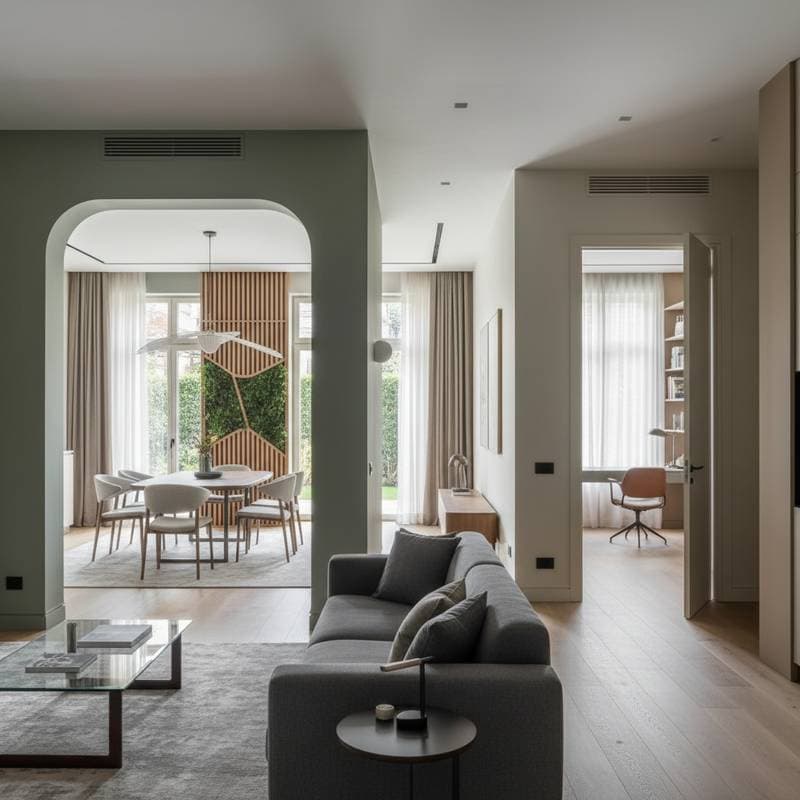
Homeowners contemplating renovations should prioritize circulation over mere dimensions. Identify zones requiring seclusion, like bedrooms or offices. Ensure natural light penetrates key areas through strategic windows or skylights. Collaborate with an experienced architect to integrate divisions without sacrificing connectivity. Elements like frosted glass panels, curved archways, or graduated illumination maintain cohesion across the design.
Budget for quality materials that endure daily use. Select soundproofing insulation for walls to maximize acoustic benefits. Incorporate smart thermostats in individual rooms for precise climate control. These enhancements not only improve immediate livability but also appeal to future owners seeking efficiency.
Positioning Your Home for 2025 Market Success
As preferences evolve toward delineated environments, committing to a closed floor plan transcends aesthetics. It represents a calculated approach to both financial returns and resident satisfaction. Properties embodying this layout attract discerning buyers who prioritize substance over spectacle.
The investment yields compounding advantages. Lower operational costs preserve equity, while the design's timeless appeal sustains resale potential. Families experience reduced stress and heightened enjoyment in their spaces. In 2025, structured homes stand as exemplars of intelligent, forward-thinking architecture.