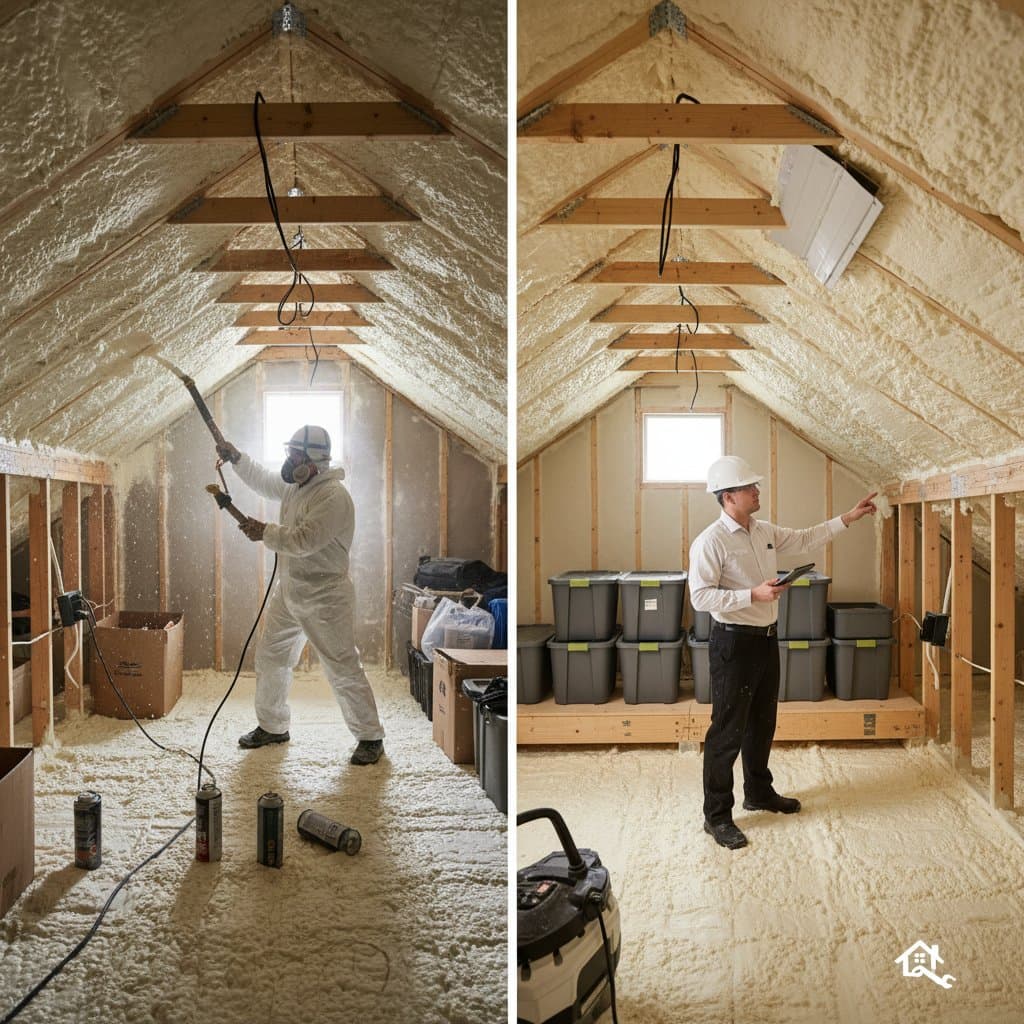
Understanding the Appeal and Challenges of Spray Foam Insulation
High energy bills often highlight the need for better insulation in attics, crawl spaces, or walls. Spray foam offers superior air sealing compared to traditional materials like fiberglass batts or blown-in cellulose. Proper application can reduce heating and cooling expenses by up to 30 percent while improving indoor comfort and minimizing drafts.
However, the installation process demands exacting standards. The foam expands quickly upon mixing, adheres permanently to surfaces, and releases vapors that require careful handling. Factors such as ambient temperature, humidity levels, and substrate preparation influence the final result. Incorrect application may result in gaps, moisture entrapment, or diminished insulating performance, turning a cost-saving measure into an unforeseen expense.
For minor tasks, such as sealing a single rim joist or patching a small area, DIY kits from hardware stores provide a viable option. Larger undertakings, including full attic encapsulation or wall cavity filling, benefit from professional expertise and specialized tools.
Factors Influencing Insulation Costs
Project expenses vary based on several key elements. A clear grasp of these allows informed decisions between self-installation and professional services.
Foam Varieties and Pricing
Open-cell spray foam, ideal for sound attenuation and interior partitions, ranges from $0.45 to $0.75 per board foot. This type absorbs some moisture but excels in thermal performance for non-structural applications.
Closed-cell spray foam, which offers higher R-value per inch and acts as a moisture barrier, costs $1.00 to $1.25 per board foot. Its rigidity also contributes to structural reinforcement, making it suitable for roofs, foundations, and exterior walls.
Site Accessibility and Equipment Needs
Confined areas like narrow crawl spaces or vaulted ceilings extend labor duration. Professionals employ extendable hoses and mobile rigs that deliver consistent pressure and temperature control, features absent in consumer-grade DIY kits.
In contrast, DIY applicators often limit reach and uniformity, potentially requiring multiple passes and increasing material waste.
Climate-Specific Requirements
In humid regions, such as coastal zones, installations incorporate vapor retarders and increased foam thickness to combat mold growth. Colder climates favor closed-cell formulations to mitigate condensation risks within assemblies.
Professionals assess local conditions through site visits, ensuring compliance with regional building standards and optimizing material selection for durability.
Preparation and Post-Installation Efforts
Initial steps involve removing outdated insulation, repairing air leaks, and establishing protective barriers. These tasks demand time and tools that DIY enthusiasts may undervalue.
Cleanup follows curing, as overspray requires solvents and containment to avoid surface damage. Contractors bundle these into comprehensive bids, streamlining the process.
Essential Safety Protocols and Regulatory Compliance
Spray foam consists of isocyanate and polyol components that react to form the final product. During mixing and expansion, they emit volatile organic compounds capable of causing skin irritation, eye discomfort, or respiratory distress without adequate safeguards.
Essential personal protective equipment includes full-face respirators with organic vapor cartridges, disposable coveralls, and nitrile gloves. Homeowners attempting DIY must also secure the workspace to prevent chemical drift into occupied zones.
Licensed installers deploy supplied-air systems and temporary enclosures, maintaining air quality throughout the job. They calibrate equipment to control exothermic reactions, avoiding overexpansion or off-gassing issues.
Building regulations in many jurisdictions mandate certified contractors for projects surpassing 500 square feet, particularly in habitable attics or under-floor spaces. Exposed foam typically requires intumescent coatings for fire resistance. Non-compliance risks denied permits, insurance lapses, or complications during property resale inspections.
Indicators of Subpar Installation and When to Call Experts
Observe the cured foam for telltale issues: separation from substrates signals adhesion failure, often due to surface contamination or improper priming. Persistent odors suggest incomplete curing from imbalanced ratios or low temperatures.
Irregular surfaces with voids reduce effective insulation, while interior condensation points to vapor diffusion problems. Remediation involves abrasive removal or full replacement, a labor-intensive process that escalates costs significantly.
Professionals mitigate these through calibrated proportioners and infrared thermography for verification. Early consultation prevents escalation, especially for projects exceeding basic spot treatments.
Steps to Select and Execute a Professional Insulation Project
Begin with a thorough assessment: calculate square footage, inspect for existing dampness or pests, and evaluate whether open- or closed-cell foam aligns with your goals. Consult energy audits or online calculators for R-value targets based on your climate zone.
When soliciting bids, request documentation of certifications, such as those from the Spray Polyurethane Foam Alliance, along with liability insurance. Demand itemized proposals detailing foam specifications, application thickness, achieved R-value, and performance guarantees.
Seek portfolios of comparable installations and client testimonials to gauge reliability. Schedule during off-peak seasons to potentially lower rates.
Anticipate 1 to 2 days for application in a standard home, followed by a 24-hour off-gassing period before re-entry. Post-installation, monitor energy usage and comfort levels to confirm benefits.
Realizing Long-Term Home Efficiency Gains
Effective spray foam integration transforms energy dynamics, easing the load on HVAC systems and stabilizing indoor temperatures. Beyond utility savings, enhanced air quality and reduced noise contribute to overall well-being.
Professional execution safeguards against pitfalls, ensuring the investment yields sustained returns. For substantial upgrades, this approach not only meets but exceeds expectations in performance and peace of mind.