Introduction
Spring brings renewal, but it also exposes vulnerabilities in your home's exterior. Rising material costs and high demand for contractors make preventive maintenance more valuable than ever. Regular roof and gutter checks identify issues early, averting leaks that lead to structural damage and repair bills exceeding $5,000.
This guide outlines straightforward steps for homeowners. Gather basic tools and proceed safely. Early detection saves time, money, and stress.
Materials Needed: Sturdy ladder, protective gloves, bucket for debris, garden hose for testing.
DIY Difficulty: Moderate (3 out of 5); requires basic comfort with heights.
Professional Cost: $150 to $350, varying by roof size, height, and accessibility.
1. Clean Gutters Thoroughly
Gutters collect leaves, twigs, and debris over winter, blocking water flow. Clogged systems cause overflows that damage foundations, siding, and roofs. Schedule this task early in spring before heavy rains arrive.
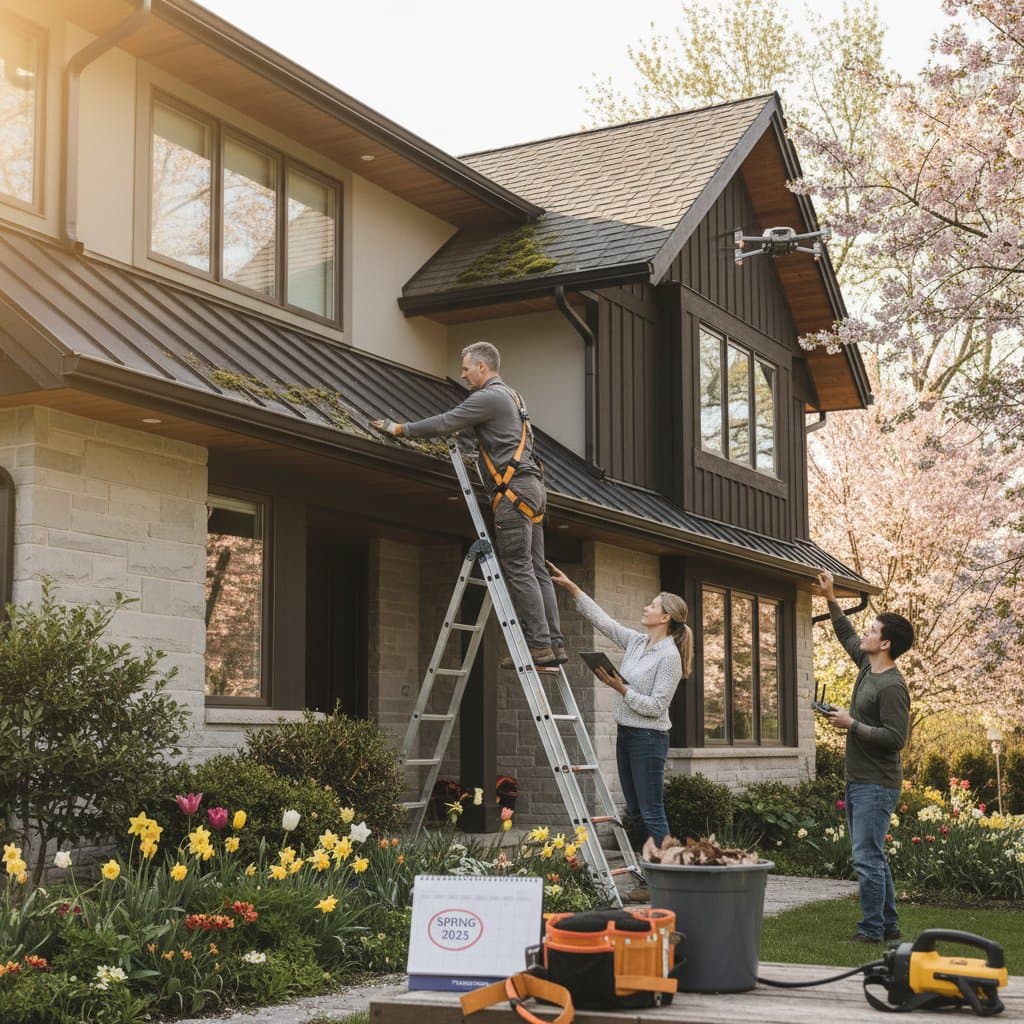
Position the ladder securely on level ground. Wear gloves to remove debris by hand or with a trowel, starting from the downspout end. Dispose of waste in the bucket to avoid mess.
Flush the gutters with a garden hose afterward. This clears fine particles and reveals hidden blockages. If standing water remains, check for improper slope or sagging; realignment costs $4 to $8 per linear foot.
2. Check for Leaks and Loose Fasteners
Water infiltration often starts at seams, joints, or fasteners weakened by freeze-thaw cycles. Inspect these areas closely to prevent interior damage. A single undetected leak can escalate to attic rot and mold growth.
Simulate rainfall by running a hose along the roof edges and gutter connections. Watch for drips or seepage at joints and seams. Tighten any loose screws immediately and apply fresh sealant to worn spots.
Examine for corrosion or holes exceeding the size of a pencil tip. Patch these with aluminum flashing and waterproof sealant for a temporary fix. If rust or cracks appear extensive, schedule section replacements to avoid total failure.
3. Inspect Downspouts
Downspouts channel water away from your home's base, preventing soil erosion and foundation cracks. Obstructions here lead to pooling that undermines stability. Verify their condition to maintain proper drainage.
Clear downspouts from top to bottom using a plumber's snake or flexible brush. Ensure water flows freely without backups. Position extensions or install splash blocks to direct runoff at least five feet from the foundation; these items cost $15 to $40 each.
Test the system by pouring water into the gutters. Observe the full path to confirm no leaks or restrictions. Adjustments here provide long-term protection against water-related issues.
When to Call a Professional
Certain problems exceed safe DIY limits and require expert intervention. Heights, complex structures, and specialized tools increase risks. Recognize signs that demand professional attention to avoid injury or incomplete fixes.
Seek help for leaks around chimneys or skylights, missing flashing in roof valleys with water stains, sagging decking, or heavy moss buildup needing chemical treatment. These indicate deeper issues that could compromise your roof's integrity.
Licensed roofers charge $250 to $500 for comprehensive inspections and minor adjustments. This investment pales against $7,000 to $12,000 for full replacements. Obtain three quotes from local experts to compare rates based on your area's conditions and roof style.
DIY or Hire Out?
Decide based on task complexity and your experience. Simple maintenance builds confidence, but safety remains paramount. Balance effort with expertise to achieve reliable results.
DIY-Friendly Tasks:
- Clearing gutters and downspouts
- Securing loose brackets
- Installing small gutter sections
- Sealing joints with appropriate materials
Professional-Only Tasks:
- Repairs on roofs taller than one story
- Installing or replacing flashing and ridge caps
- Removing extensive moss or algae growth
- Realigning or rehanging complete gutter systems
Professionals complete work efficiently with safety gear and warranties. Many provide detailed reports, including photos and moisture assessments, valuable for insurance claims or home sales.
Benefits of Regular Maintenance
Routine checks extend your roof's lifespan by up to 30 percent and delay gutter replacements for years. Clean systems prevent overflows that harm landscaping and exterior surfaces. Sealed roofs control attic moisture, minimizing mold risks and preserving insulation effectiveness.
Homeowners committing to yearly upkeep spend 25 percent less on urgent repairs. This approach yields strong returns through avoided emergencies and sustained property value.
Protecting Your Home's Core
Effective roof and gutter care extends beyond aesthetics. It shields your foundation from erosion, keeps attics dry, and protects interior elements from moisture intrusion. These efforts prevent minor issues from becoming costly overhauls, ensuring your home remains a secure investment.