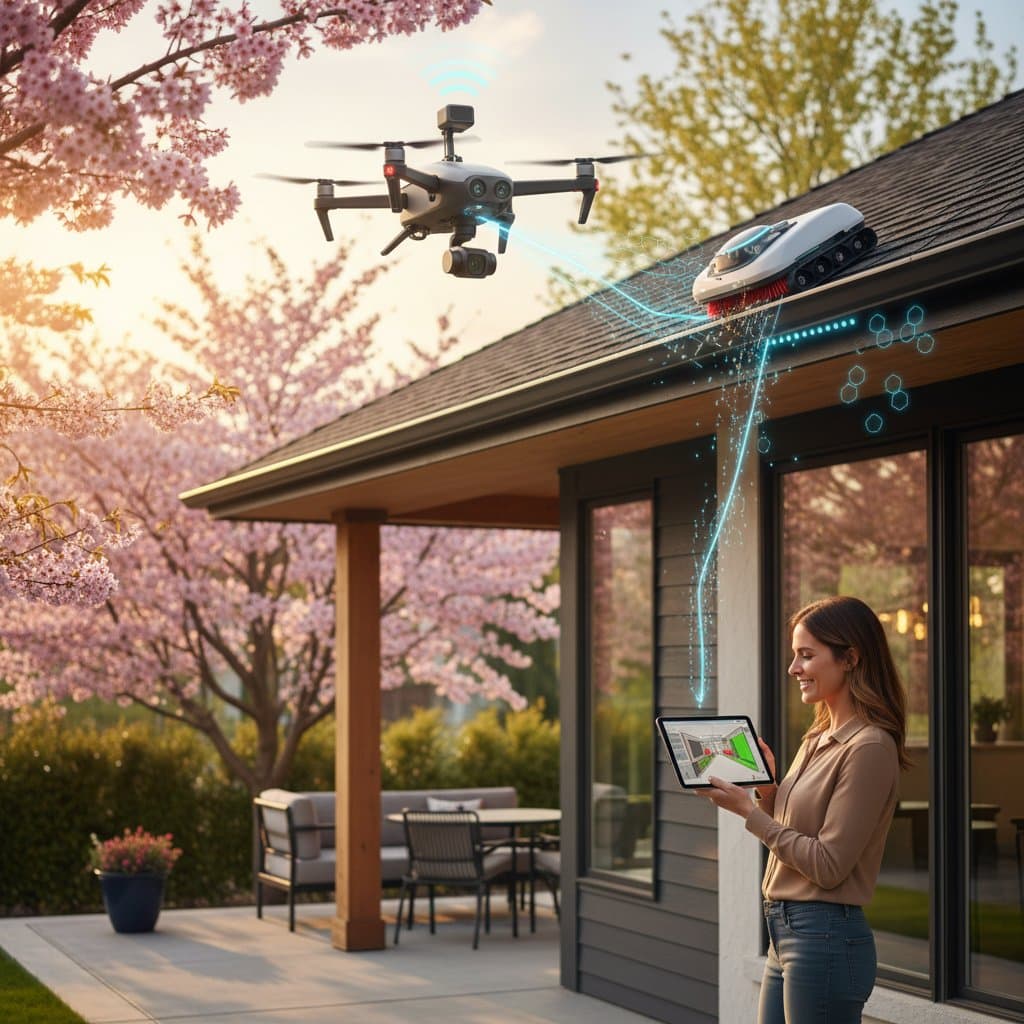
AI Tools Transforming Spring Gutter Cleaning in 2026
Homeownership involves ongoing maintenance responsibilities. Spring gutter cleaning ranks among the most important tasks because it prevents water damage to roofs, foundations, and siding. Traditional methods require ladders and manual labor that many homeowners find inconvenient or hazardous. New AI-powered systems now handle inspections, debris removal, and preventive monitoring with greater precision.
Core Maintenance Requirements
Spring conditions increase water volume through gutters. Perform these tasks each season to maintain proper drainage:
- Inspect all sections for sagging, rust, or loose connections that allow leaks.
- Remove accumulated leaves, twigs, and sediment that block water flow.
- Verify that downspouts discharge water away from the foundation without backups.
- Test the system by running water through it after cleaning to confirm no leaks remain.
Smart sensors and cameras now track debris levels continuously. These devices send alerts when buildup reaches thresholds that require attention, reducing the frequency of full cleanings.
Indicators of Drainage Problems
Address issues promptly to avoid structural repairs. Common signs include:
- Water overflowing gutter edges during moderate rainfall
- Dark stains or mold growth on exterior walls
- Standing water collected near the foundation after storms
- Visible pest activity or nesting material inside gutter channels
- Gaps or separation at joint connections
Drone-mounted cameras capture high-resolution images of the entire roofline. Machine learning models analyze these images to forecast future blockages based on debris patterns and past weather data.
Choosing Between Self-Service and Professional Service
Single-story homes with light debris allow safe DIY cleaning when proper equipment is available. Use a stable ladder, heavy gloves, and a hose with a gutter-specific attachment. Multi-story homes or those with steep roofs increase fall risk, making professional drone services preferable. Drone operators complete inspections and cleanings from ground level while providing live video of the work performed.
Cost-Effective Technology Options
Select tools that match both budget and home complexity:
- Basic hose nozzles and manual scoops handle light seasonal debris at minimal expense.
- Robotic cleaners travel the gutter length and collect debris without ladder use.
- Sensor kits connect to home networks and notify owners of developing clogs.
- One-time drone inspections identify problems when full cleaning is unnecessary.
Situations Requiring Expert Assistance
Compacted debris, visible corrosion, or sagging sections warrant professional evaluation. Technicians using AI tools deliver precise cleaning and produce visual reports of conditions before and after service. Properties with solar arrays or multiple stories benefit from drone access that avoids roof contact.
Technology Components in Modern Systems
Several integrated technologies reduce physical effort:
- Image recognition cameras detect blockages and structural damage during flights.
- Predictive algorithms identify high-risk clog locations from historical inspection records.
- Weather-linked scheduling triggers cleanings ahead of forecasted heavy rain.
- Self-propelled robots map gutter interiors and generate maintenance summaries.
These features limit ladder time while improving cleaning consistency.
Safety Practices During Maintenance
Work at height only when conditions permit safe ladder placement on level ground. Arrange for another person to remain nearby. Avoid operations during rain or high winds. When safety concerns arise, schedule drone inspections that eliminate height exposure entirely.
Prevention and Ongoing Monitoring
Gutter guards combined with sensor networks reduce debris entry and extend intervals between cleanings. Stored inspection records track wear over multiple seasons and support insurance documentation when needed. Data trends also reveal how local weather patterns affect drainage performance.
Implementing a Seasonal Plan
Begin with a visual check of accessible gutter sections. Add sensor monitoring or schedule a drone assessment based on observed conditions. Consistent use of these tools protects the home envelope and reduces emergency repairs over time.