Quartz vs Porcelain: Best Kitchen ROI for 2026
Kitchen counters influence the appearance, comfort, and utility of the space on a daily basis. Selecting between quartz and porcelain presents challenges, as both materials offer durability, aesthetic appeal, and potential for strong return on investment. The optimal decision hinges on cooking routines, maintenance tolerances, and objectives for resale. A thorough grasp of performance characteristics and pricing enables informed investments that align with actual needs.
Cost Breakdown by Material Type and Home Size
| Countertop Material | Material Grade | 50 sq. ft. Kitchen | 75 sq. ft. Kitchen | 100 sq. ft. Kitchen |
|---|---|---|---|---|
| Quartz | Standard | $3,000 - $4,000 | $4,500 - $6,000 | $6,000 - $8,000 |
| Quartz | Premium | $4,500 - $6,000 | $6,500 - $8,000 | $8,000 - $10,000 |
| Porcelain | Standard | $2,800 - $3,800 | $4,000 - $5,500 | $5,500 - $7,000 |
| Porcelain | Premium | $4,000 - $5,500 | $5,800 - $7,500 | $7,500 - $9,000 |
Costs include fabrication and professional installation. Regional labor rates can shift totals by up to 15 percent.
To calculate precise expenses, measure the countertop area accurately and factor in additional elements such as edge profiles or sink cutouts, which may add 10 to 20 percent to the base price. Consult multiple suppliers for current material costs, as fluctuations in raw material availability influence final quotes.
Performance and Longevity Comparison
Quartz Countertops
Quartz consists of engineered stone formed from crushed natural stone bound with resin, resulting in uniform color and texture throughout. The nonporous nature resists stains effectively and supports rigorous daily use in food preparation. While brief contact with hot pans proves tolerable, extreme temperature differentials risk thermal shock and potential cracking.
Maintenance: Employ mild soap and water for routine cleaning. Steer clear of abrasive pads or harsh chemicals to preserve the surface integrity. Sealing remains unnecessary over the material's lifetime.
Lifespan: Expect approximately 25 years of service with diligent care.
Common Issues: Extended exposure to ultraviolet light may lead to fading, positioning quartz as a preferable choice for enclosed kitchen environments rather than exterior applications.
Porcelain Countertops
Porcelain derives from refined clay subjected to intense heat during firing, yielding a dense, glass-like finish that withstands scratches, stains, and elevated temperatures more robustly than many alternatives.
Maintenance: Address spills promptly using warm water and a soft cloth. The surface demonstrates resilience against acids, oils, and direct heat sources.
Lifespan: Anticipate 30 years or longer when installation adheres to manufacturer guidelines.
Common Issues: Edge areas prove susceptible to chipping upon impact from heavy utensils, underscoring the importance of expert installation techniques.
For enhanced longevity, integrate coasters under hot items and trivets for cookware on either material. Regular inspections for minor damages allow timely repairs, extending overall durability.
DIY vs Professional Installation
| Installation Path | Skill Level | Average Cost | When to Choose |
|---|---|---|---|
| DIY Quartz | Advanced | $1,000 - $2,000 (materials only) | Only if you have stone-cutting tools and help lifting slabs |
| Professional Quartz | Licensed fabricator | $3,000 - $8,000 | When you need precision seams, cutouts, and warranty coverage |
| DIY Porcelain | Intermediate | $800 - $1,500 | Viable for smaller panels or backsplashes |
| Professional Porcelain | Tile or countertop specialist | $3,000 - $7,000 | Required for large panels or integrated sinks |
Safety Alert: Slabs of both quartz and porcelain weigh substantially and remain brittle prior to securement. Mishandling risks fractures or personal injury. Opt for professional assistance absent appropriate lifting gear or cutting expertise.
Professionals ensure level surfaces and secure anchoring, critical for preventing future shifts or gaps. For DIY attempts, acquire safety equipment including gloves, goggles, and dust masks to mitigate hazards from dust and sharp edges.
Environmental and Health Factors
Both quartz and porcelain promote hygiene by inhibiting bacterial growth due to their nonporous compositions. Porcelain holds a marginal advantage in sustainability, relying on abundant natural clays with limited resin requirements. Quartz manufacturing demands greater energy for resin integration and color enhancement processes.
To safeguard indoor air quality, select products certified for low volatile organic compound emissions. Individuals committed to eco-friendly practices benefit from porcelain options or quartz variants incorporating recycled aggregates, aligning with broader green building initiatives.
Evaluate supplier transparency regarding sourcing and production methods. Certifications from bodies like the Greenguard Environmental Institute provide assurance of minimal environmental impact.
Design Flexibility and Aesthetic Choices
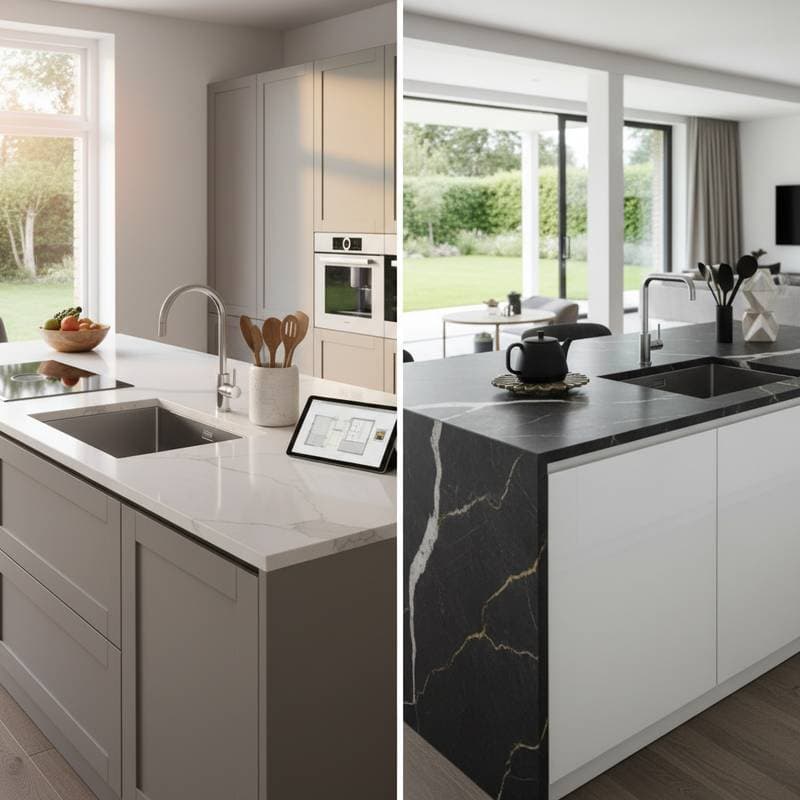
Quartz provides an extensive array of colors and patterns designed to emulate granite or marble effectively. Customization of tones and veining facilitates seamless integration with existing cabinetry and flooring. The consistent surface suits traditional or transitional kitchen layouts with ease.
Porcelain distinguishes itself through advanced printing techniques that replicate stone, concrete, or wood textures with remarkable fidelity. Expansive slabs enable seamless installations for islands or backsplashes, reducing visible grout lines. Such features complement contemporary aesthetics or open-plan designs that merge interior and exterior elements.
Assess samples under ambient kitchen illumination to gauge true color rendition, as finishes may shift from cool to warm tones based on light sources. Coordinate with flooring and wall treatments early to achieve cohesive visual harmony.
Regional Considerations and Code Compliance
Porcelain demonstrates superior performance in climates with significant temperature variations, accommodating thermal expansion without compromise. Quartz thrives in controlled indoor settings where stable humidity and temperatures prevail. Local regulations often mandate minimum thickness and support structures for substantial countertops, particularly over extended unsupported spans.
Verify structural integrity by consulting building codes specific to your area. For islands exceeding eight feet in length, incorporate steel reinforcements or plywood underlayment to comply with standards and avert deflection over time.
Engage a local inspector during planning to confirm adherence to seismic or load requirements, especially in regions prone to environmental stresses.
Selecting the Right Material for Your Needs
Quartz and porcelain each furnish exceptional functionality and resale potential, though their advantages diverge. Opt for quartz when seeking enduring style, consistent aesthetics, and straightforward upkeep. Choose porcelain for unparalleled resilience, thermal tolerance, and innovative visual effects.
Prior to procurement, conduct precise measurements, specify edge treatments, and ascertain slab stock from vendors. Request a digital rendering from your installer to preview joint placements and pattern orientations. Secure a comprehensive warranty document encompassing fabrication and installation assurances.
Strategic selection and execution yield countertops that endure for decades, enhance kitchen aesthetics, and contribute substantially to property value upon sale. Professional oversight, premium materials, and stylistic alignment with market preferences form the foundation of optimal return on investment.
Next Step: Obtain quotes from at least three regional providers, examine physical samples, and time your project for the warmer months to secure competitive rates and expedited service.