Which Kitchen Island Features Boost 2025 ROI?
Remodeling a kitchen often sparks debate over the island design. Questions arise about seating, storage, or integrated appliances. A thoughtfully designed kitchen island serves as a significant return-on-investment element when aligned with modern lifestyles and cooking needs. With elevated material costs and buyer expectations for multifunctional spaces, selections made in 2025 directly impact the kitchen's overall value.
Before selecting finishes or accessories, evaluate features that truly enhance resale potential. Certain additions prove essential, while others may not justify the expense. The following sections detail the key considerations.
Why Kitchen Islands Remain the Heart of the Home
Buyers continue to view the kitchen as the emotional core of a residence. Visions of family gatherings, informal dining, and shared activities center around this space. Kitchen islands draw people together, yet contemporary designs must deliver beyond aesthetics. Storage solutions, practical functionality, and visual harmony each contribute equally to appeal.
For homeowners, an island provides everyday utility. From a real estate standpoint, it enhances perceptions of spaciousness and sophistication. A strategically planned island elevates the kitchen's return on investment by 15 to 25 percent, influenced by local market dynamics and material choices.
In one recent home sale, prospective buyers highlighted the island's practical elements. Built-in compartments for appliances and a convenient pull-out waste system streamlined daily tasks. Such details subtly elevate property value without overwhelming the design.
Smart Decision Framework: DIY or Professional Installation?
Partial do-it-yourself island projects offer appeal, yet they seldom conclude as straightforward endeavors.
Suitable for DIY:
- Painting or refinishing cabinetry
- Attaching new hardware
- Incorporating trim or open shelving
- Installing lightweight, pre-cut countertops
Best Handled by Professionals:
- Electrical installations for outlets or fixtures
- Plumbing integrations for sinks or appliances
- Structural alterations or floor modifications
Engaging a licensed contractor guarantees adherence to building codes, particularly for electrical or plumbing additions. Budget approximately $100 to $150 per electrical outlet and $300 to $500 for plumbing lines. Neglecting permits may complicate future sales, so verify local requirements early.
Timing Strategies: Scheduling for Efficiency and Savings
Supply chain fluctuations and contractor availability frequently extend project durations. Current patterns indicate early spring and late summer as optimal periods for kitchen renovations.
Essential Planning Steps:
- Secure Materials in Advance: Countertops and hardware typically require 3 to 5 weeks for delivery.
- Reserve Contractors Promptly: Experienced professionals often schedule out one month or longer.
- Prepare a Provisional Kitchen Setup: Anticipate disruptions for a minimum of two weeks if utilities are involved.
Those who order components ahead of time often achieve savings of nearly 10 percent and sidestep interruptions.
Energy Efficiency and Sustainability in Design
Sustainability extends beyond heating and cooling systems into kitchen elements. Informed buyers prioritize environmentally responsible materials.
- LED Illumination: Consumes 75 percent less energy compared to traditional halogen options.
- Recycled Counter Materials: Choices like paper composites or reclaimed timber enhance eco-credentials.
- Low-VOC Coatings: Appeal to health-aware purchasers through reduced emission profiles.
Incorporating certified sustainable elements can increase long-term return on investment by 5 to 10 percent, bolstered by verifiable documentation from suppliers.
Buyer Insights: Elements That Capture Attention
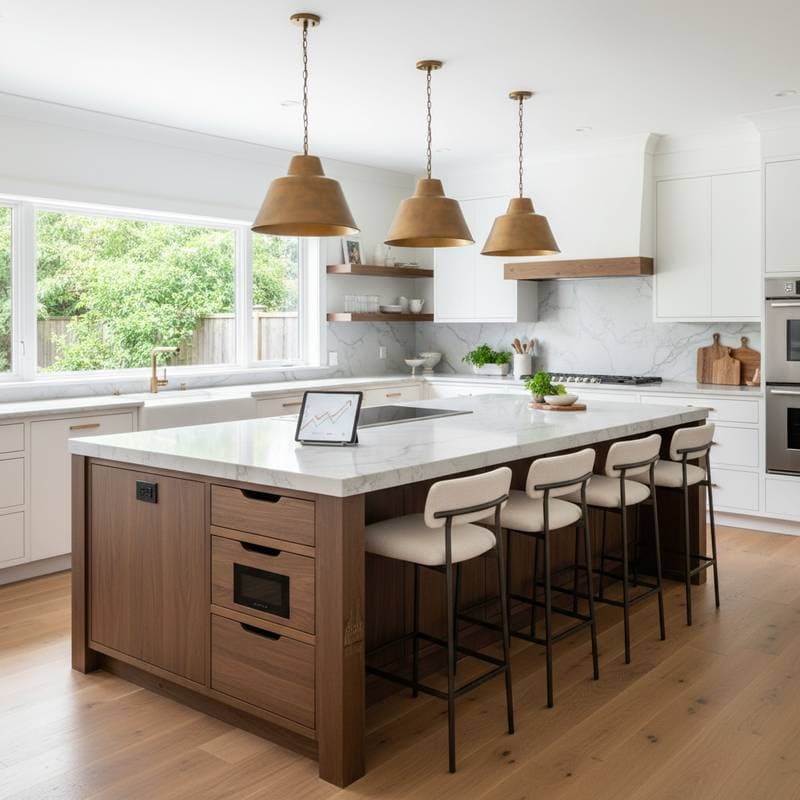
Upon entering a kitchen, prospective buyers focus immediately on the island. This focal point establishes the ambiance for the entire property. Industry experts identify these primary attractors:
- Scale and Proportion: The island integrates seamlessly without impeding traffic flow.
- Material Harmony: Surfaces align with or enhance surrounding cabinetry.
- Illumination Quality: Even lighting illuminates the workspace effectively.
- Utility Features: Integrated seating or systematic storage solutions.
An expertly crafted island conveys meticulous property upkeep. Even amid dated perimeter elements, a refreshed island can positively influence bidding outcomes.
Preserving the Investment Through Maintenance
After installation, consistent care ensures the island retains its appeal and bolsters resale prospects.
Routine Cleaning Protocols:
- Apply mild detergent solutions to quartz or solid-surface materials.
- Reapply sealant to natural stone or wood annually or biennially.
- Inspect and secure hardware, along with drawer alignments, yearly.
Proactive Protection Measures:
- Prevent abrasion from heavy utensils on surfaces.
- Employ cutting boards to safeguard edges.
- Maintain dry conditions around outlets and tidy cord arrangements.
These practices sustain aesthetics and avert expensive restorations. A diligently maintained island evolves into a enduring asset.
Implementing Your Kitchen Island Upgrade
Begin the process by assessing available space and defining primary objectives. Prioritize needs such as expanded storage, additional seating, or enhanced prep areas. All subsequent choices stem from these priorities.
Obtain detailed estimates from at least two certified contractors. Request breakdowns distinguishing labor from materials. Confirm inclusion of timelines and necessary permits.
Focus investments on elements that harmonize usability with market desirability. A kitchen island transcends mere decoration; it shapes daily experiences and buyer impressions. Select designs that provide enduring comfort and financial benefits, whether preparing for an imminent sale or enhancing family functionality.