2026 Hidden Grab Bars: Integrating Style and Safety in Bathrooms
Planning a bathroom renovation raises a key concern: how to incorporate safety without compromising aesthetics. During the remodel of a guest bathroom, the need arose to ensure secure access for frequent elderly visitors while preserving a sleek, contemporary look. Hidden grab bars emerged as the solution, reshaping perceptions of bathroom safety.
The Evolution of Grab Bars in Bathroom Design
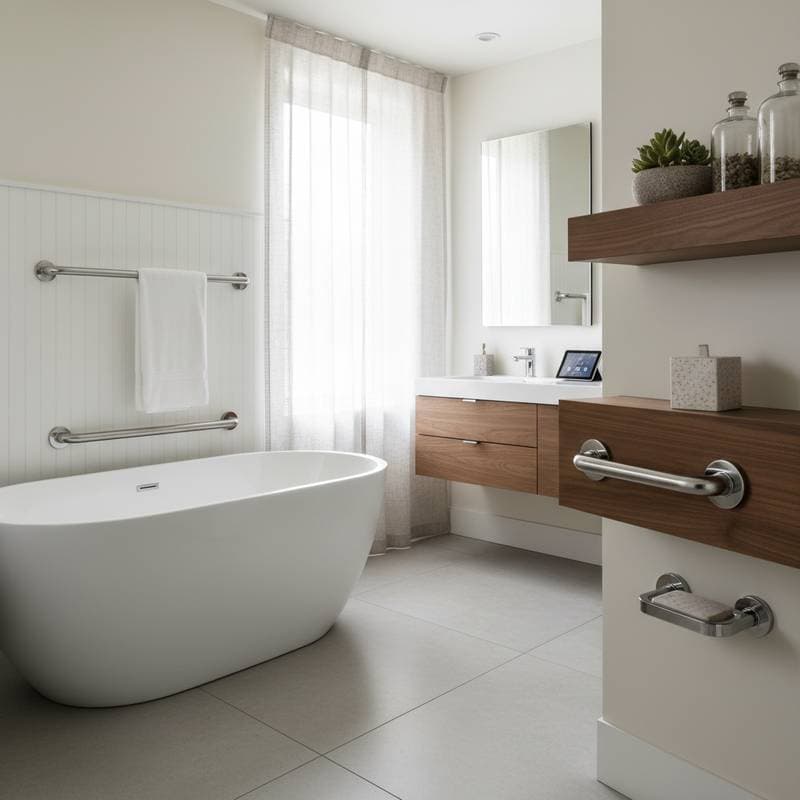
Conventional grab bars often detract from decor by appearing as stark safety aids. Hidden grab bars address this issue through their dual-purpose design, mimicking towel bars, floating shelves, or integrated shower niches. These fixtures bear loads from 250 to 500 pounds while remaining visually unobtrusive.
Homeowners increasingly demand safety elements that harmonize with interior styles, a trend manufacturers have embraced. By 2026, leading bathroom fixture collections feature concealed or ornamental grab bars in finishes such as brushed brass, matte black, and polished nickel. These options align seamlessly with faucets and shower hardware, appearing as deliberate design choices rather than utilitarian additions.
Decision Framework for Installation: DIY Versus Professional Assistance
Hidden grab bars may seem suitable for do-it-yourself projects, yet practical experience reveals potential risks. Mounting solely into drywall proves unreliable, as even robust anchors fail under dynamic loads. For installations involving tiled surfaces or wall modifications to add blocking, engage a licensed contractor experienced in safety-compliant work.
DIY suits scenarios where:
- Existing grab bars replace with updated versions in identical positions.
- Stud locations identify accurately, and walls consist of sturdy wood paneling.
Professional installation recommends for:
- Interventions in tile or stone surfaces.
- Uncertainty regarding stud positions.
- Placement of several bars within shower or tub areas.
In one installation, a contractor employed concealed brackets positioned behind tile, yielding a floating towel bar appearance capable of supporting over 300 pounds. Such precision exceeds the confidence level achievable through self-installation.
Selecting Styles and Finishes for Optimal Integration
Hidden grab bars classify into three primary types.
-
Integrated Accessories: These incorporate towel racks, toilet paper dispensers, or corner shelves with enhanced structural integrity. They suit minimalist bathroom designs.
-
Concealed Mount Bars: Positioned behind tile or within shower recesses, they reveal only a minimal ledge or edge.
-
Designer Bars: Featuring artistic contours and premium finishes, these coordinate with surrounding fixtures.
Finishes influence both visual appeal and upkeep. Polished chrome facilitates cleaning, whereas matte variants mask water marks effectively. Stainless steel endures in high-humidity settings due to its corrosion resistance. For spaces blending modern and classic elements, brushed nickel offers versatile compatibility.
Essential Safety Standards and Compliance
Residential building codes vary, yet they specify minimum load capacities for grab bars. Select models certified to withstand at least 250 pounds, using hardware that adheres to ADA-equivalent rigorous testing. Avoid securing bars directly to drywall using cavity anchors, as gradual or abrupt forces can dislodge them.
Apply silicone sealant around mounting points in moisture-exposed areas to avert water infiltration behind tiles. In shower environments, opt for bars with slip-resistant textures or ergonomic curves to improve grip when surfaces prove slick. Verify stability by testing each bar prior to finalizing surrounding finishes, as subsequent alterations prove challenging.
Enhancing Property Value and Long-Term Benefits
Incorporating concealed grab bars elevates resale appeal and daily usability. Real estate professionals observe that bathrooms equipped for accessibility attract multigenerational households more readily. Investment recovery ranges from 50 to 70 percent, though the primary advantage lies in injury prevention, potentially averting substantial medical expenses.
For individuals intending to remain in their homes through later years, proactive installation of these bars minimizes future retrofit costs. This upgrade uniquely combines enhanced security, aesthetic refinement, and preparedness for evolving needs.
Steps to Implement Hidden Grab Bars Effectively
Begin by evaluating user requirements and pinpointing support locations, such as adjacent to the toilet, within the shower, or along tub perimeters. Draft a layout sketch, marking wall stud positions for secure anchoring. Proceed to source fixtures that complement the prevailing design theme, ensuring a cohesive and functional outcome.