2026 Ember Zones: Key Landscaping Strategies for Home Safety
Selecting inappropriate vegetation near a home can transform a drifting ember into a devastating blaze. With defensible space regulations growing stricter and wildfire patterns increasingly erratic, homeowners in fire-prone areas must grasp the role of ember zones. These zones extend beyond mere visual appeal or plant selection; they form a deliberate system that minimizes ignition risks and safeguards structures through strategic layering and advanced materials.
How Ember Zones Function
The ember zone encompasses the initial 30 feet around a building, corresponding to Zones 0 and 1 in standard defensible space guidelines. This critical buffer acts as the main line of defense against ignition. Embers, capable of traveling several miles ahead of the main fire front via wind and updrafts, ignite quickly upon landing in dry fuels such as mulch or bark. Effective ember zone design eliminates or alters these fuels to disrupt ember accumulation.
This approach relies on three core elements: separation, selection, and suppression. Separation employs gaps and nonflammable surfaces to halt fire progression. Selection prioritizes plants with low flammability, elevated moisture levels, and reduced resin or oil content. Suppression maintains soil and plant hydration to lower overall ignition susceptibility.
Major Advances in Defensible Space Landscaping
1. Nonflammable Ground Cover Options
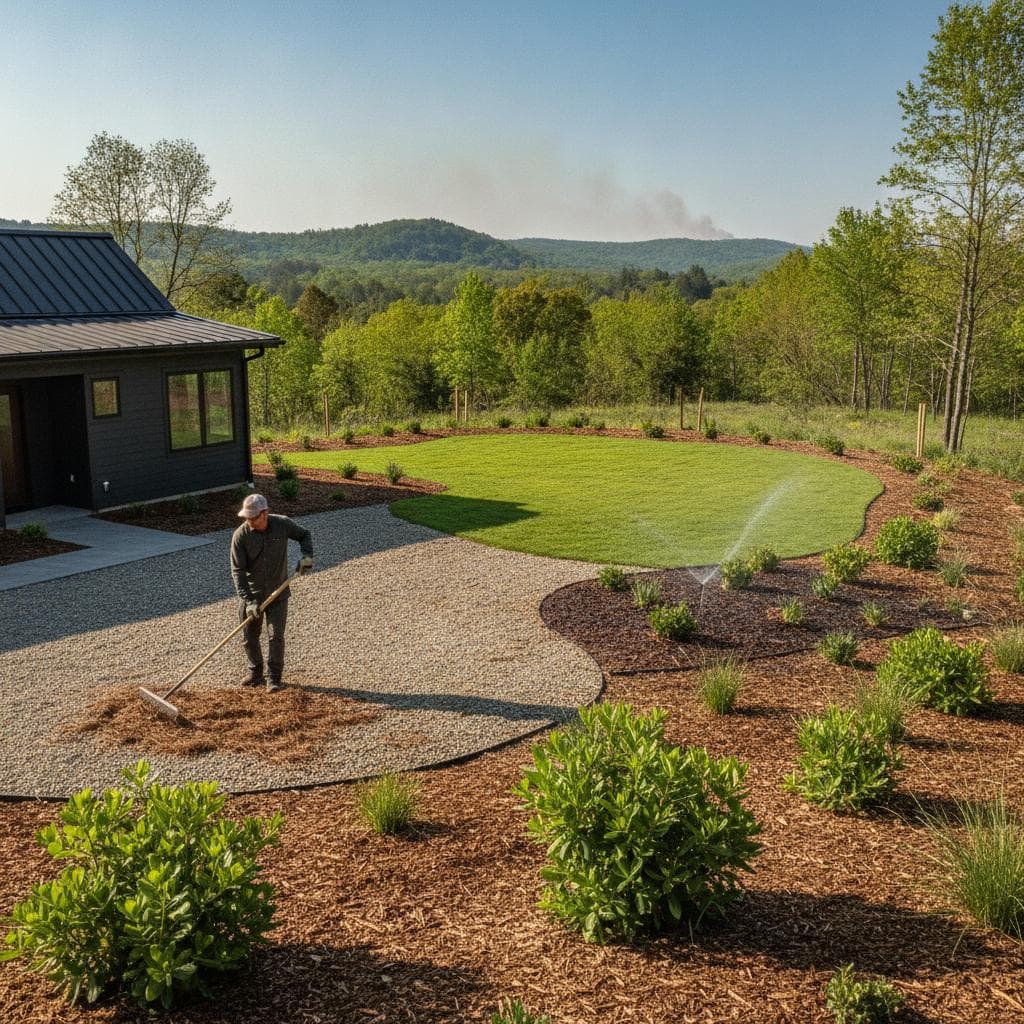
Bark mulch, previously favored for water retention, now poses risks close to buildings and faces discouragement in guidelines. Opt for gravel, decomposed granite, or stabilized soil blends instead. These choices offer virtually no ignition risk and demand little upkeep. Anticipate that forthcoming regulations will require nonflammable surfaces within the first five feet of any structure.
2. Zoning Vegetation by Risk Level
Updated defensible space models organize landscapes into layered rings according to ignition likelihood:
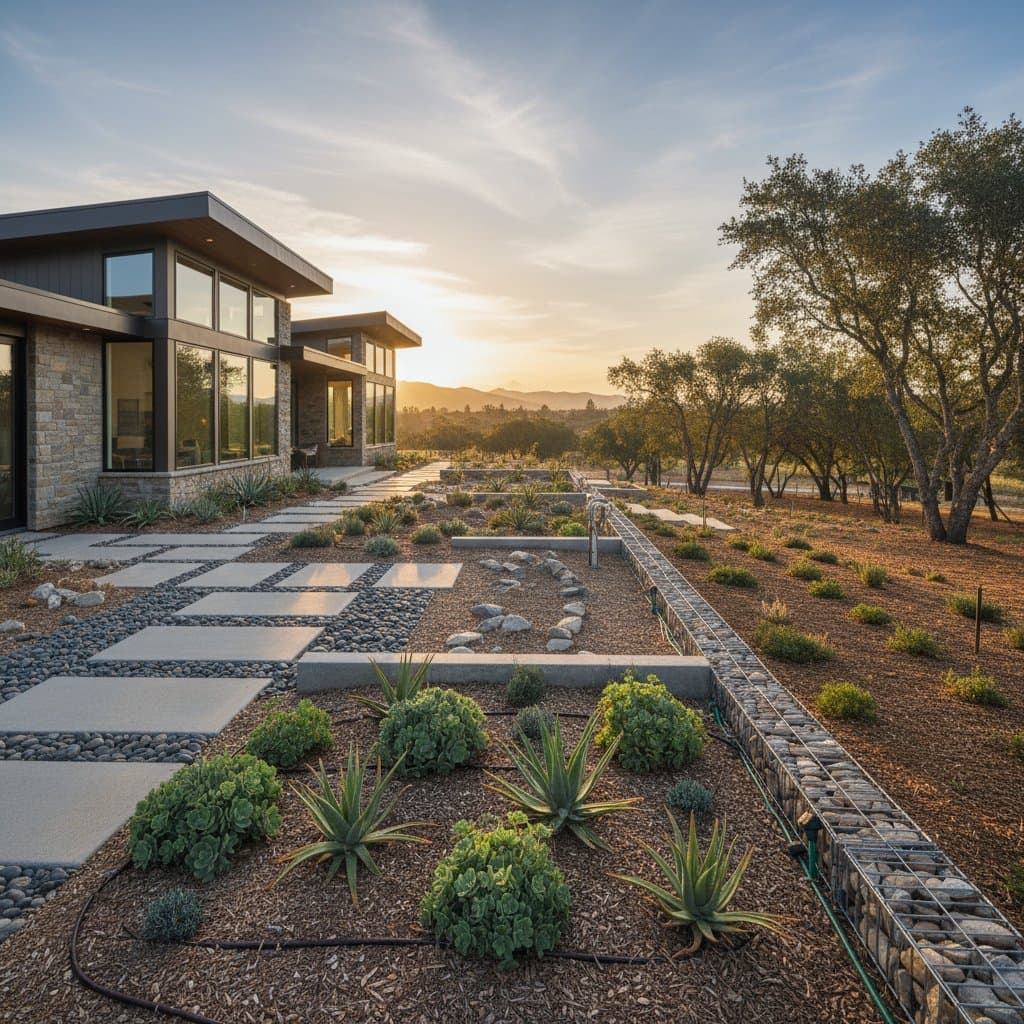
- Zone 0 (0-5 feet): Eliminate all combustible elements. Install gravel, concrete slabs, or permeable pavers to create a bare buffer.
- Zone 1 (5-30 feet): Plant only ground-level species with superior moisture retention. Ensure shrubs stand at least 2 feet from tree branches and maintain 18-inch gaps between plants to block lateral fire spread.
- Zone 2 (30-100 feet): Thin out trees and shrubs, keeping canopies 10 feet apart to interrupt potential crown fires.
Such zoning breaks the fuel continuity, preventing embers from reaching the home via unbroken pathways.
3. Smart Irrigation for Moisture Control
Incorporate automated irrigation equipped with soil moisture sensors into fire mitigation plans. These systems sustain steady hydration, which directly counters ember ignition. Choose drip lines over spray heads to target roots efficiently, conserving water while enhancing plant resilience against dry conditions.
4. Swapping Out Flammable Materials
Replace wooden fences, decks, and raised planters adjacent to homes with fiber-cement composites or galvanized metal equivalents. Attaching nonflammable barriers directly to the house exterior stops embers from contacting siding or walls. For added protection, seal gaps at fence-to-structure junctions with metal flashing.
Aligning Landscaping with Building Features
Ember zone effectiveness depends on synergy with a home's physical components, including roofs, walls, and vents. Superior landscaping proves futile if vents permit ember entry; current standards mandate screens with no larger than 1/8-inch openings. Design plantings to channel winds and embers away from these vulnerable points, perhaps using low berms or deflecting shrubs.
Incorporate hardscape elements like winding paths and patios that double as firebreaks and emergency access corridors. Slope the ground to guide runoff and debris away from foundations, decks, and overhangs, reducing pooling risks during wind events.
Steps for Installation and Ongoing Care
Start with a thorough professional evaluation of the site, factoring in soil type, terrain gradient, and local weather patterns. Certified firewise landscapers can tailor plant selections and layouts to comply with regional codes while maximizing ventilation and hydration. During setup, clear all dead wood and debris to establish a clean baseline.
Ongoing vigilance ensures long-term performance. Prune fire-adapted plants quarterly to remove dry litter, which accumulates even in resilient species. Test irrigation components biannually for clogs or malfunctions, and limit any remaining mulch to a one-inch layer. Keep tree branches trimmed to provide 10-15 feet of clearance over rooftops and structures.
Balancing Safety with Ecological Benefits
Implementing fire-resistant features need not harm local ecosystems. Many native plants possess inherent fire tolerance through thick cuticles that retain moisture and open growth habits that limit fuel density. Integrate species such as drought-hardy succulents, creeping groundcovers, and resin-poor shrubs to support wildlife while fulfilling safety mandates.
Prioritize water efficiency by pairing sensor-driven irrigation with permeable hardscapes that allow infiltration. Source materials like regional stone or reclaimed gravel to minimize carbon footprints associated with transport and production. This holistic method sustains healthy landscapes without straining resources.
Preparing for Changing Wildfire Dynamics
Forecasts predict extended fire periods and intensified wind events due to climate shifts. Build flexibility into designs with adjustable irrigation timers, removable plant modules, and modular stone walls that can be reconfigured. These adaptations enable responses to shifting threats without full redesigns.
Innovations such as flame-retardant sprays for exterior surfaces and IoT-enabled early-warning sensors increasingly integrate into home setups. Embed these tools within ember zones—for instance, by mounting detectors on key hardscape features—to layer proactive monitoring atop passive barriers.
Steps to Implement Your Ember Zone
Secure a certified assessment to pinpoint weaknesses in your existing setup, such as overgrown borders or flammable mulch beds. Prioritize swaps within the 0-5 foot radius, then extend low-risk plantings outward. Activate a zoned irrigation network calibrated to your yard's sun exposure and soil drainage.
View the landscape as a unified shield, where every element reinforces the next. This integrated strategy not only shields the home but elevates overall site durability and market appeal. Dedicate time to precise execution and routine checks for enduring protection.