Decks, Fences, and Outdoor Features
Decks and fences often ignite first because they collect dry debris beneath them. Embers readily find fuel in these spaces.
Step-by-Step Upgrades
- Replace wood decking with composite or metal decking rated for fire resistance. Installed costs typically range from 25 to 45 dollars per square foot.
- Add a metal flashing strip at the point where the deck meets the house wall.
- Remove all combustibles stored beneath decks. This includes lumber, cushions, and firewood.
- Replace mulch or bark with gravel or pavers beneath and around decks.
For fences, replace wood sections that attach directly to the home. Use metal or masonry within five feet of the structure.
Defensible Space: Creating a Buffer Zone
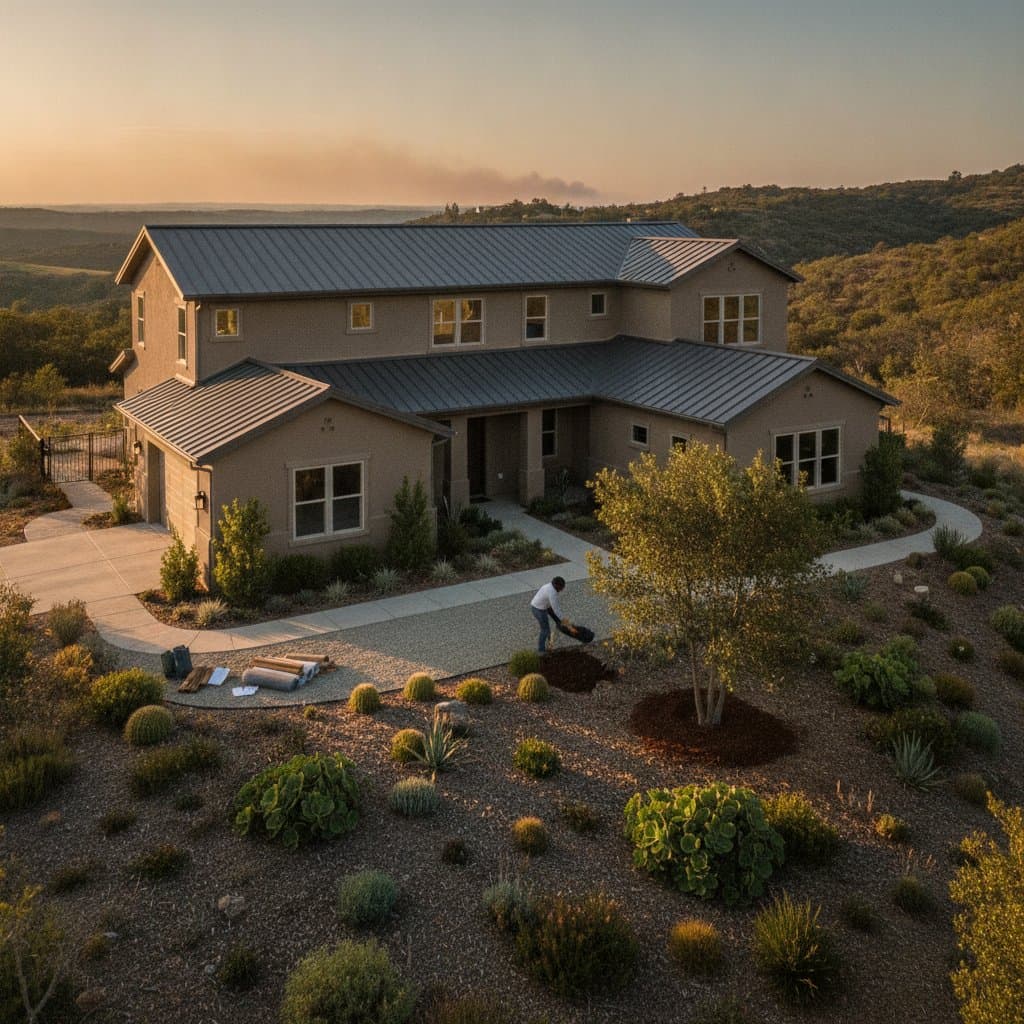
Property layout influences how fire moves near a home. Defensible space creates distance and fuel breaks even when ember-resistant materials are in place.
Zone 1: Zero to 5 Feet
- Keep this area completely non-combustible with gravel, concrete, or bare soil.
- Remove shrubs, mulch, and wood furniture.
- Store trash bins and firewood at least 30 feet from the house.
Zone 2: 5 to 30 Feet
- Trim trees so branches remain at least 10 feet from roofs and from each other.
- Mow grass regularly and clear dead vegetation.
- Install irrigation to maintain moist soil.
Zone 3: 30 to 100 Feet
- Thin trees to create spacing that slows fire spread.
- Maintain fire breaks such as driveways or gravel paths.
Professional defensible space services for initial clearing cost between 1500 and 5000 dollars depending on terrain and vegetation. Annual maintenance runs from 500 to 1200 dollars. Obtain three quotes from local contractors before starting work.
Maintenance Checklist for Ember Resistance
Inspect the property at least twice each year. Consistent upkeep preserves the effectiveness of all upgrades.
| Task | Frequency | Time Required | DIY Difficulty (1-5) | Typical Professional Cost |
|---|---|---|---|---|
| Clean gutters and downspouts | Twice yearly | 1 hour | 2 | 150 - 300 dollars |
| Clear roof debris | After windy conditions | 1 hour | 3 | 200 - 400 dollars |
| Trim vegetation within 30 feet | Quarterly | 2 hours | 2 | 100 - 250 dollars |
| Inspect vents and mesh screens | Annually | 30 minutes | 2 | 100 - 200 dollars |
| Reapply fire-rated sealant | Every few years | 2 hours | 3 | 300 - 500 dollars |
Money-Saving Strategies
Schedule upgrades in spring before peak contractor demand. Early booking often reduces labor costs by 10 to 15 percent. Bundle projects such as roof replacement and vent upgrades to lower mobilization fees. Apply for local wildfire mitigation grants or insurance rebates that can reach 5000 dollars. Finance qualifying work through low-interest loans designed for home resilience improvements.
Sustaining Long-Term Protection
An ember-resistant home protects occupants and supports higher resale value in high-risk areas. Buyers seek documented defenses against wildfire. Repeat the full checklist each spring. Inspect materials, replace damaged mesh, and clear vegetation before hot weather returns. Consistent attention maintains a reliable barrier against ember threats.