Key Takeaways
- A well-designed kitchen island can raise a home's resale value by as much as 15 percent when it matches the style and function of the space.
- Buyers gravitate toward islands that combine storage, seating, and statement design details such as waterfall edges or contrasting finishes.
- The best return on investment comes from balanced proportions, durable materials, and integrated lighting or electrical outlets.
Why Kitchen Islands Drive Resale Value
Short answer: Kitchen islands serve as a centerpiece for function and lifestyle, blending cooking, dining, and social space in one feature that appeals to a broad range of buyers.
Buyers expect a kitchen to function as an everyday hub rather than just a meal preparation zone. An island provides that central anchor, creating natural flow and a focal point that adds visual weight to the room. For resale purposes, it signals a modern, move-in-ready kitchen, which directly affects perceived value. Islands also support casual dining or work-from-home setups, both of which rank as major selling points.
Key Benefits
- Islands expand usable counter space and enhance traffic flow.
- They define open layouts visually without obstructing sight lines.
- Adding seating broadens appeal across various lifestyles.
- A well-proportioned island makes small kitchens appear larger and more efficient.
Features of Kitchen Islands That Maximize Return on Investment
Short answer: Mid-sized islands with integrated storage and seating deliver the highest value relative to cost.
An effective island avoids feeling crowded or undersized. Standard dimensions measure about 4 by 8 feet, providing ample space for preparation and gathering without dominating the kitchen. Features such as drawers, pull-out trash bins, and concealed outlets boost resale appeal by improving daily convenience.
Essential Features for Resale Value
| Feature | Benefit | Buyer Appeal Rating |
|---|---|---|
| Built-in storage | Reduces clutter | High |
| Bar seating for 3 to 4 | Adds social functionality | Very High |
| Durable surface (quartz or granite) | Offers long-lasting finish | Very High |
| Pendant or recessed lighting | Enhances ambiance | High |
| Contrasting base color | Provides design interest | Medium to High |
Buyers respond best to islands that appear intentional. A basic cabinet with a countertop extension often fails to impress, whereas a thoughtfully planned island with subtle details conveys a genuine upgrade.
Trending Designs for Optimal Resale Impact
Short answer: Contrasting colors, integrated appliances, and natural materials lead current trends that elevate resale value.
In modern home design, contrast defines zones in open layouts. Homeowners select islands in muted greens, charcoal, or soft clay tones to pair with lighter perimeter cabinetry. Wood accents, such as white oak or walnut stains, add warmth to white or gray kitchens.
Prominent Trends
-
Statement Islands
Islands styled as furniture pieces, with fluted panels or waterfall countertops, generate visual interest that shines in listing photographs. -
Mixed Materials
Pairing matte paint finishes with stone or butcher block tops creates depth. Buyers view this combination as custom rather than standard builder-grade. -
Integrated Appliances
Elements like wine fridges, microwave drawers, or under-counter refrigerators elevate the kitchen to a high-end level without extensive layout alterations. -
Smart Outlets and Lighting
USB ports, hidden charging drawers, and under-counter task lighting attract buyers who prioritize convenience.
These elements update the kitchen without a complete remodel, yielding higher returns than broader renovations.
Cost Analysis and Expected Returns
Short answer: Homeowners recover 60 to 80 percent of an island's investment at resale, based on quality and design.
Costs depend on materials and complexity. Prefabricated options begin at a few thousand dollars, while custom builds extend into five figures. Midrange choices balance craftsmanship, design quality, and practicality for optimal returns.
Cost and Return Overview
| Type | Estimated Cost Range | Average ROI |
|---|---|---|
| Prefabricated or modular | $2,500 to $5,000 | 60% |
| Semi-custom with storage and seating | $6,000 to $10,000 | 70% |
| Custom with stone top and built-ins | $10,000 to $18,000 | 75 to 80% |
The true value emerges in buyer perception. A striking island can enhance the overall kitchen appearance, even alongside original cabinets and flooring.
Design Pitfalls to Avoid
Short answer: Oversized islands, inadequate lighting, and mismatched finishes diminish resale value.
Buyers seek balance in kitchen design. An island that disrupts flow or blocks appliance access creates a cramped feel. Proper lighting prevents even stylish islands from appearing lackluster. Timeless materials outperform fleeting trends; incorporate subtle updates through color or hardware.
Frequent Errors
- Overcrowding the layout: Ensure at least 36 inches of clearance on all sides.
- Disregarding proportion: An oversized island shrinks the perceived kitchen size.
- Inconsistent finishes: Align countertop and cabinet tones with the surrounding space.
- Omitting outlets or seating: Functionality equals style in buyer evaluations.
Avoiding these issues preserves both aesthetics and value in the island project.
Styling Strategies for Buyer Attraction
Short answer: Incorporate layered lighting, minimal decorative accents, and visual symmetry.
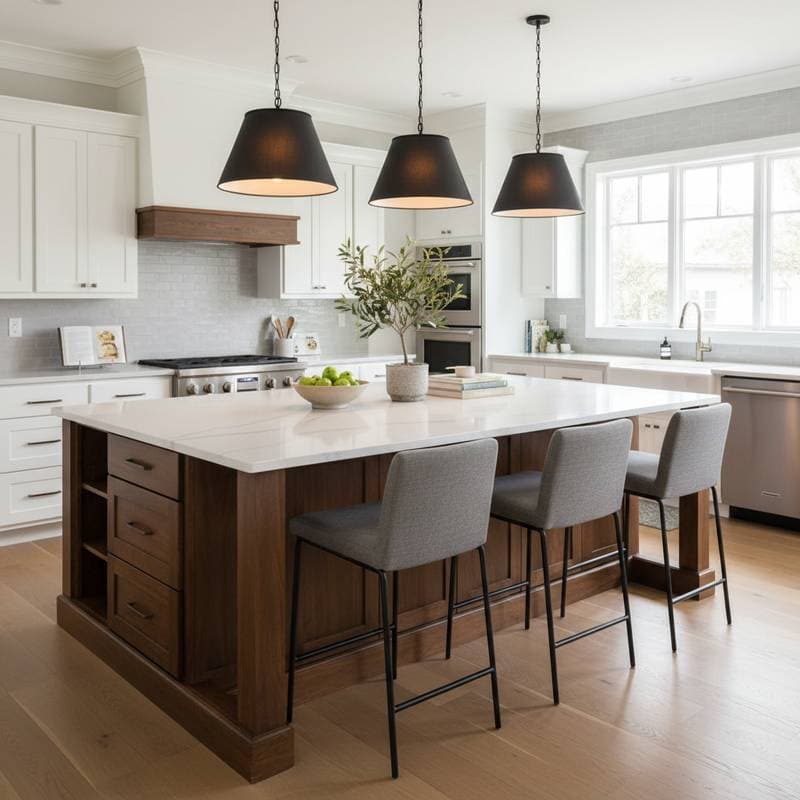
Effective styling allows buyers to envision daily use. Position stools neatly under the counter, add a vase with fresh greenery, and install warm pendant lights to foster an inviting atmosphere. Limit décor to emphasize the surface material and construction quality.
Practical Styling Tips
- Install pendant lights in a trio to establish rhythm and focus.
- Select contrasting stools that echo tones from adjacent finishes.
- Clear the surface of clutter to maximize the appearance of space.
- Introduce natural elements, such as a small plant or wooden bowl, for added warmth.
These adjustments require minimal expense yet significantly enhance the kitchen's spacious and functional impression during viewings.
Frequently Asked Questions
Does a kitchen island boost home resale value?
Yes. A carefully designed island can increase perceived value by up to 15 percent, particularly in open-plan homes where the kitchen serves as a focal area.
Does installing an island demand major remodeling?
Not necessarily. Prefabricated or modular islands install with limited disruption, provided adequate clearance exists.
Which countertop materials preserve value effectively?
Quartz and granite excel in durability and enduring style. Butcher block introduces warmth and suits smaller or secondary islands.
How to determine if a kitchen accommodates an island?
Provide at least 36 inches of walkway on all sides. If clearance falls short, opt for a mobile or narrow console-style alternative.
Integrating the Island into Daily Home Life
A kitchen island transcends trends to become an integral part of home functionality.
For sellers, it conveys thoughtful updates and contemporary appeal. For long-term residents, it offers practical convenience and enjoyment.
Prioritize timeless materials and adaptable layouts when planning for resale. A neutral stone top, painted base, and features like hidden outlets or soft-close drawers transform the addition into a enduring asset.
Ultimately, the kitchen island merges aesthetics with utility. It fosters connection during gatherings and provides tangible benefits at the time of sale.