Essential 2025 Red Flags for Spotting Unlicensed Contractors
Hiring the right contractor can determine the success of your home renovation. Whether the project involves a major kitchen remodel or a minor bathroom update, a licensed professional guarantees compliance with safety codes, quality standards, and legal requirements. Each year, homeowners suffer significant losses due to unlicensed contractors who cut corners, abandon projects midway, or produce substandard work. Recognizing warning signs before committing to a contract safeguards your home, finances, and overall well-being.
Key Facts
| Category | Details |
|---|---|
| Project Risk | High when hiring unlicensed contractors |
| Average Loss from Contractor Fraud | $2,000 to $10,000 or more |
| Verification Difficulty | Easy to moderate, depending on state licensing systems |
| DIY vs Pro Check | Always verify license status before paying any deposit |
| Best Practice | Request license proof, insurance certificates, and references |
Red Flags that Signal an Unlicensed Contractor
Identifying an unlicensed contractor demands careful observation and knowledge of typical deceptions. The signs listed below warrant immediate caution.
1. Absence of License Number on Marketing Materials
Legitimate contractors include their license number on all promotional items, such as business cards, websites, and vehicle wraps. The lack of this information, or reluctance to provide it, indicates a potential issue. Verify any provided number directly through your state licensing board prior to moving forward.
2. Insistence on Cash-Only Payments
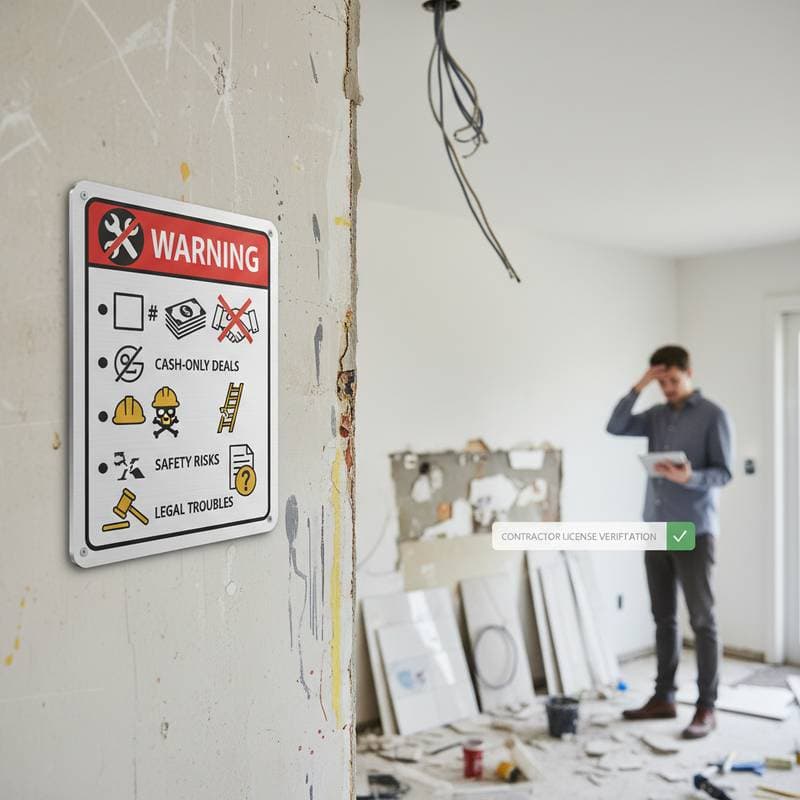
Cash transactions prove difficult to track. Licensed contractors generally accept checks, credit cards, or digital payments via secure platforms. Pressure for cash, often paired with a promised discount, suggests efforts to evade taxes or operate without a formal business structure.
3. Avoidance of Written Estimates or Contracts
A detailed written estimate clarifies the project scope, materials, and payment terms, benefiting both parties. Unlicensed operators frequently sidestep formal documentation to avoid responsibility. Dismissal of paperwork as unnecessary signals unreliability; proceed elsewhere in such cases.
4. Lack of Insurance or Bonding Documentation
Licensed contractors maintain liability insurance and workers compensation coverage. These protections shield homeowners from liability in cases of injury or property damage during the job. Without verifiable proof, you expose yourself to substantial legal and financial risks.
5. Bids that Appear Unreasonably Low
Attractive low prices draw attention, yet drastic underbidding often hides deficiencies. Unlicensed contractors reduce costs by bypassing permits, employing unqualified workers, or sourcing inferior materials. Obtain and compare at least three estimates from verified licensed experts to establish a realistic baseline.
6. Urgency to Commence Work Without Delay
Unlicensed contractors commonly employ high-pressure strategies, such as claiming surplus materials from prior jobs or insisting on immediate starts for special rates. Established professionals plan schedules thoughtfully and allow time for informed decisions. Resist any rush to commit.
7. Ignorance or Dismissal of Permit Requirements
Licensed contractors understand the specific permits needed for various tasks and local building codes. Unlicensed individuals may claim permits prove optional or propose handling them informally. Unauthorized work invites fines, inspection failures, and diminished property value upon resale.
8. Missing Physical Business Presence or Digital Footprint
Reputable contractors operate from established addresses with dedicated phone lines and professional websites. Unlicensed operators rely on personal contacts or informal social media, complicating accountability if disputes occur. Search for a verifiable business entity before engagement.
Hidden Costs Associated with Unlicensed Contractors
Initial savings from hiring unlicensed help often yield unforeseen expenses that emerge post-completion.
1. Building Code Violations and Inspection Failures
Unpermitted alterations frequently violate local regulations. Homeowners then face the burden of corrections or penalties, particularly during property sales.
2. Potential Safety Risks
Inadequate electrical installations, plumbing errors, or structural flaws endanger occupants. Licensed professionals adhere to rigorous safety protocols that prioritize health and security.
3. Absence of Warranties or Remediation Options
Defective work lacks enforceable guarantees, leaving no avenue for corrections. Licensed contractors face license revocation for failing to address issues, ensuring accountability.
4. Personal Financial Exposure
In the absence of insurance, property owners bear responsibility for on-site accidents. Even small mishaps can escalate into costly medical or litigation expenses.
Engaging Professionals for Credential Verification
For substantial undertakings like roofing, structural modifications, or comprehensive remodels, enlist an inspector or consultant to evaluate proposals and credentials. These specialists ensure alignment with legal and technical standards prior to project initiation. Such precautions avert substantial financial setbacks.
Homeowner and Expert Verification Methods
Certain verifications suit independent homeowner efforts, while others require professional input.
Homeowner-Led Verifications
- Validate license numbers through official online databases.
- Solicit copies of insurance policies.
- Examine recent customer feedback.
- Evaluate multiple detailed written proposals.
Expert-Led Verifications
- Analyze contract terms and project outlines.
- Monitor site adherence to standards.
- Oversee permit submissions.
- Confirm qualifications of any subcontractors.
Integrating these methods provides comprehensive safeguards against deception.
Immediate Actions Upon Suspecting an Unlicensed Contractor
Swift response minimizes damage if credentials appear questionable.
- Halt all further payments until verification completes.
- Compile records of interactions, transactions, and project progress.
- Submit a formal report to the state contractor licensing authority.
- Reach out to local consumer protection agencies for guidance on recourse.
- Seek legal counsel if funds have been lost or property harmed.
Strategies to Prevent Future Contractor Issues
Proactive measures prove more cost-effective than subsequent remedies.
- Secure a minimum of three detailed bids from licensed candidates.
- Limit initial deposits to 10 percent of the total or $1,000, whichever amount is smaller.
- Require a signed contract and approved permits before work commences.
- Conduct all discussions via documented channels.
- Withhold final payment until inspections confirm quality and satisfaction.
These practices establish a robust record for dispute resolution.
Securing Your Renovation Project
Selecting a licensed contractor delivers superior craftsmanship, lasting value, and tranquility throughout home improvements. Professionals anticipate requests for licensing and insurance details, viewing them as standard due diligence. Dedicate effort to these validations as essential project oversight.
Initiate your upcoming renovation by consulting your state licensing board online and collecting verified estimates from multiple sources. Inquire about each candidate's expertise, guarantees, and permitting procedures. Heed any intuitive concerns and explore alternatives. Informed decisions fortify your home from the planning stage onward.