Understanding Smart Locks and Insurance Discounts in 2025
Homeowners often seek cost-effective ways to enhance security without major renovations. Smart locks provide a practical solution that not only improves access control but also qualifies for insurance premium reductions. These devices demonstrate lower risk to insurers, leading to tangible savings on coverage costs.
The appeal lies in their integration of technology with everyday security needs. For instance, replacing traditional deadbolts with smart alternatives can verify compliance with insurer standards. This upgrade aligns with broader trends in home automation, making it a relevant choice for 2025.
Factors Driving Insurance Discounts for Smart Locks
Insurers assess premiums based on the likelihood of claims, particularly from burglaries. Properties equipped with verified smart security features, such as locks with remote monitoring, reduce this risk significantly. As a result, many providers offer discounts ranging from 2% to 10% upon installation verification.
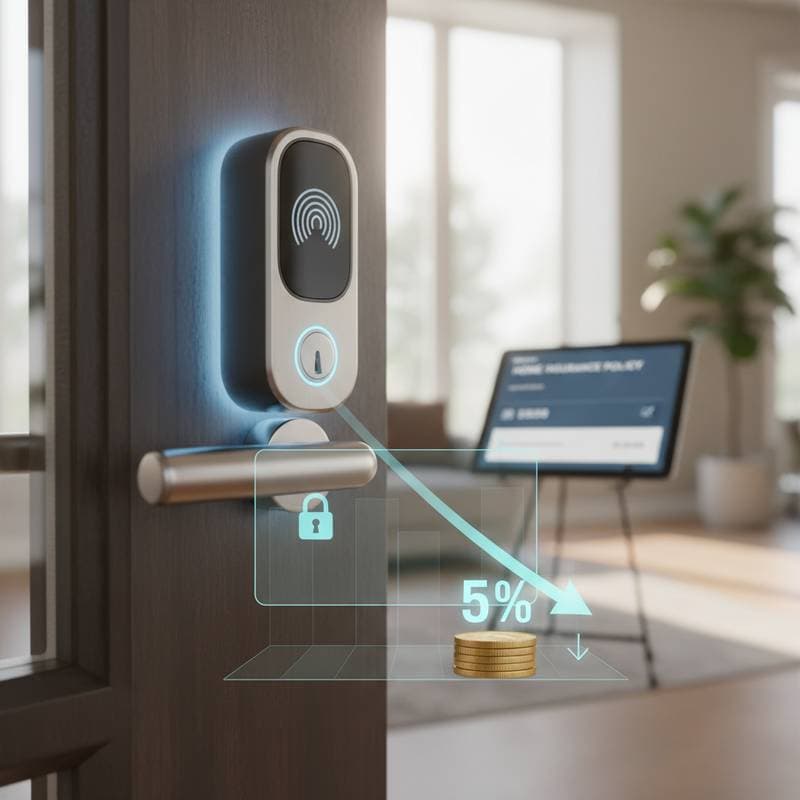
To qualify, homeowners must submit proof including model specifications and installation photos. In one documented case, a homeowner saw an annual premium decrease of 5% after upgrading to Wi-Fi-enabled locks. This adjustment offset initial costs within the first year and continued to provide value over time.
Providers vary in their criteria, so direct confirmation is essential. Some require integration with certified systems, while others accept standalone devices. Understanding these requirements ensures maximum discount eligibility.
Detailed Cost Analysis for Smart Lock Upgrades
Selecting the right smart lock involves balancing features with budget constraints. Basic models start at lower price points but offer limited functionality, while advanced options provide comprehensive security.
- Entry-Level Bluetooth Locks: Priced between $180 and $250 per unit, these connect via smartphone for keyless entry. They suit simple retrofits but lack remote capabilities.
- Wi-Fi Enabled Locks: Ranging from $250 to $400, these allow control from anywhere and send instant notifications. Ideal for primary entrances.
- Hub-Integrated Systems: Costing $400 to $600, these link with cameras and alarms for unified monitoring. Best for comprehensive home setups.
Installation adds to the total expense. Professional services typically charge $100 to $200 per door, influenced by location and complexity. In urban settings, costs may reach $600 to $700 per door due to higher labor rates, whereas rural areas often fall around $300.
Homeowners comfortable with basic tools can opt for self-installation on standard doors. This approach saves on labor but requires careful alignment to maintain security integrity.
Deciding Between DIY Installation and Professional Services
Assessing door compatibility is the first step in choosing an installation method. Standard deadbolts with pre-drilled holes simplify the process for DIY enthusiasts.
Consider DIY installation when the following conditions apply:
- The existing lock uses batteries and pairs easily with a mobile app.
- Wi-Fi or Bluetooth setup aligns with the home network.
- The homeowner possesses basic skills in app configuration and hardware mounting.
Professional assistance proves necessary in more complex scenarios. For example, hardwiring into an alarm system demands expertise to avoid disruptions. Similarly, warped door frames or insurer-mandated certifications require certified technicians.
Experts ensure proper calibration, including auto-lock timing, which supports insurance compliance. This step prevents common issues like intermittent connectivity or misalignment that could compromise discounts.
Optimal Timing and Sourcing Strategies
Demand for smart locks peaks during home renovation seasons, affecting availability and pricing. Late spring often brings sales as retailers phase out prior-year inventory, reducing costs by 10% to 20%.
Plan ahead for bundled projects, such as combining lock installation with electrical updates. Locksmiths and electricians book weeks in advance, so scheduling early avoids delays. Online retailers provide detailed compatibility guides to aid selection.
Regional suppliers may offer bundles with warranties, extending device lifespan to eight years or more. Monitoring stock levels ensures access to preferred models without backorders.
Maximizing Savings Through Integrated Security
Isolated smart locks yield modest discounts of 2% to 4%, but pairing them with complementary devices amplifies benefits. Connecting to cameras or sensors can elevate reductions to 10% or beyond, as insurers view the setup as a robust deterrent.
Contact the provider prior to purchase to verify qualifying brands and certifications. For a $1,800 annual premium, a 7% discount equates to $126 yearly. Over the lock's lifespan, this accumulates to approximately $1,000, excluding added conveniences like temporary access codes.
These features extend beyond finances, offering remote management for travel or guest visits. The combination of cost recovery and daily utility underscores the upgrade's value.
Addressing Security and Privacy in Smart Lock Deployments
Advanced features introduce digital risks alongside physical protections. Regular firmware updates and two-factor authentication safeguard against unauthorized access. Secure home networks with robust passwords to protect connected devices.
Limit code sharing and monitor activity logs for anomalies. For outdoor applications, select weather-resistant models rated for temperature extremes and moisture. Failure to do so may invalidate warranties or insurer approvals.
Integration with hubs requires encrypted connections to prevent breaches. These precautions maintain the system's reliability and support ongoing discount qualifications.
Calculating Return on Investment and Property Enhancement
Smart locks contribute to both immediate savings and long-term asset value. Real estate professionals highlight connected security as a key attractor, potentially recouping 50% of costs upon sale.
The upgrade enhances marketability through modern appeal and verified safety. Daily benefits include effortless control and reduced worry, fostering a sense of security. This holistic return makes the investment strategic for homeowners.
Steps to Implement Your Smart Lock Upgrade
Begin by evaluating the main entry door for compatibility and insurer discount potential. Select a model meeting certification standards, then gather installation documentation.
Proceed with installation, either independently or through a professional, ensuring all features operate correctly. Submit verification to the insurer promptly to activate savings.
From practical application, the remote access capability transforms routine tasks into seamless experiences. While premium reductions provide financial incentive, the core advantage remains elevated protection and convenience for sustained peace of mind.