Understanding ROI in Kitchen Remodels
Kitchen renovations remain one of the most impactful home improvements for increasing property value. According to industry data, the return on investment varies by project scope. Consider these ranges for 2025 projects:
- Minor remodels, which focus on updates like new countertops and basic appliances, typically yield 70 to 80 percent ROI.
- Mid-range remodels, involving cabinet refacing and mid-tier fixtures, deliver 65 to 75 percent ROI.
- High-end remodels, featuring custom designs and premium materials, achieve 50 to 65 percent ROI.
These figures highlight that targeted changes often outperform lavish overhauls. Projects emphasizing energy efficiency or enhanced flow, such as opening walls to create seamless living spaces, consistently generate higher returns than surface-level cosmetic tweaks. In my experience selling a previous home, the kitchen proved pivotal. Buyers highlighted the thoughtful storage arrangement and ample lighting, noting how these elements made the area feel immediately welcoming and functional.
Key Upgrades for Maximum Payoff
To achieve strong ROI, prioritize upgrades that blend practicality with enduring appeal. Focus on elements that address common pain points like inefficiency and clutter while incorporating 2025 trends such as sustainable materials and integrated technology.
Energy-Efficient Appliances
Investing in appliances certified for energy savings tops the list for cost recovery. Replace outdated refrigerators, dishwashers, and ovens with models that carry Energy Star ratings. These units reduce utility bills by up to 20 percent annually and appeal to eco-conscious buyers. For instance, induction cooktops offer precise control and faster cooking times, justifying their higher upfront cost of around $1,500 to $3,000 through long-term savings and modern allure. Pair this with low-flow faucets, which cut water usage without sacrificing performance, adding value at a fraction of the price.
Optimized Storage Solutions
Smart storage transforms cramped kitchens into efficient hubs. Install pull-out pantry shelves, corner carousel units, and soft-close drawers to maximize every inch. These features, costing $500 to $2,000 depending on scale, improve daily usability and impress during home tours. In 2025, integrate modular systems with built-in charging stations for devices, blending form and function. Such additions not only streamline meal preparation but also boost perceived space, contributing to a 10 to 15 percent uplift in resale offers.
Enhanced Lighting and Fixtures
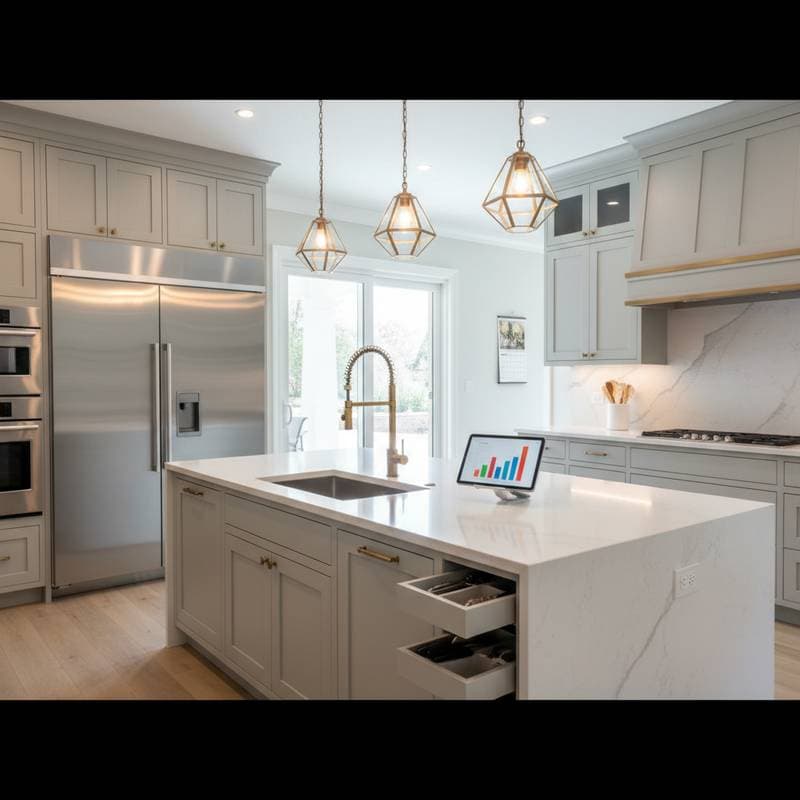
Proper illumination elevates both aesthetics and safety. Layer under-cabinet LED strips with recessed ceiling lights and pendant fixtures over islands for a balanced glow. This setup, budgeted at $800 to $2,500, enhances task visibility and creates ambiance. Opt for dimmable options to accommodate various moods, a detail that buyers in my past sale praised for making the space versatile. Timeless finishes like brushed nickel or matte black ensure longevity, avoiding dated trends that diminish ROI.
Flow and Layout Improvements
Removing non-load-bearing walls to open the kitchen to adjacent rooms ranks high for impact. This change, priced from $5,000 to $15,000, fosters a contemporary open-concept feel that suits family gatherings and entertaining. Ensure compliance with building codes by consulting professionals early. The result extends usable space without major square footage additions, often recouping costs through faster sales and higher bids.
Planning Your 2025 Kitchen Project
Setting Goals and Budget
Start by defining your objectives: enhance comfort for long-term living, prepare for resale, or combine both. Assess current pain points through a walkthrough, noting areas like poor ventilation or inadequate counter space. Establish a realistic budget, allocating 20 to 30 percent for contingencies. Factor in 2025 material trends, such as quartz countertops over granite for durability and lower maintenance.
Sourcing and Quotes
Obtain at least three detailed quotes from licensed contractors, requesting breakdowns of labor, materials, and timelines. Specify preferences for sustainable sourcing to align with rising demand. Visit local showrooms to select cabinets and appliances, confirming availability amid potential supply delays. Track expenses in a digital spreadsheet, categorizing items for easy adjustments if costs fluctuate due to market shifts.
DIY Versus Professional Decisions
Evaluate tasks based on skill level. Simple updates like painting cabinets or installing hardware suit DIY efforts, saving 20 to 40 percent on labor. However, electrical work, plumbing, or structural changes demand professional expertise to avoid costly errors and ensure warranties. Balance these choices to stay within budget while achieving professional results.
Securing Long-Term Benefits
Every upgrade should contribute to energy conservation, spatial efficiency, or everyday convenience. Select durable materials like bamboo flooring or recycled glass tiles that withstand wear and reflect current values. By focusing on these principles, your kitchen evolves into a valuable asset that supports lifestyle needs and financial goals. Homeowners who implement such strategies often report quicker sales and greater satisfaction, turning renovations into worthwhile investments.