Mid-article CTA: Find licensed professionals in your area.
Room-by-Room DIY Hacks That Deliver Real Value
Explore practical, economical enhancements tailored for novice homeowners. These suggestions enhance livability, promote energy savings, and increase market appeal, all without demanding trade certifications.
1. Kitchen Refresh
Budget: $1,000 to $4,000
DIY Level: 3 out of 5
Timeline: 2 to 4 weeks
Apply a high-quality bonding primer followed by satin enamel paint to cabinet surfaces. Materials for this transformation cost approximately $150.
Update drawer pulls and cabinet knobs to achieve a contemporary look, with expenses typically under $100.
Install LED pendant lights in place of outdated fluorescent units. Budget $200 to $400 based on selected designs.
Opt for peel-and-stick backsplash tiles as a temporary, low-commitment solution, priced between $50 and $150.
Such targeted kitchen improvements can elevate home value by as much as 10 percent, particularly when executed with a unified aesthetic and meticulous finish.
2. Bathroom Upgrade
Budget: $800 to $2,500
DIY Level: 4 out of 5
Timeline: 1 to 3 weeks
Select a prefabricated vanity top for straightforward installation, available starting at $250.
Mount a fresh faucet and mirror, combining for a total cost under $300.
Renew grout lines or apply fresh caulk to revitalize the appearance, achievable for less than $100.
Refrain from attempting concealed plumbing repairs unless fully accessible. Undetected leaks pose significant financial risks.
3. Living Room Revamp
Budget: $600 to $2,000
DIY Level: 2 out of 5
Timeline: 1 to 2 weeks
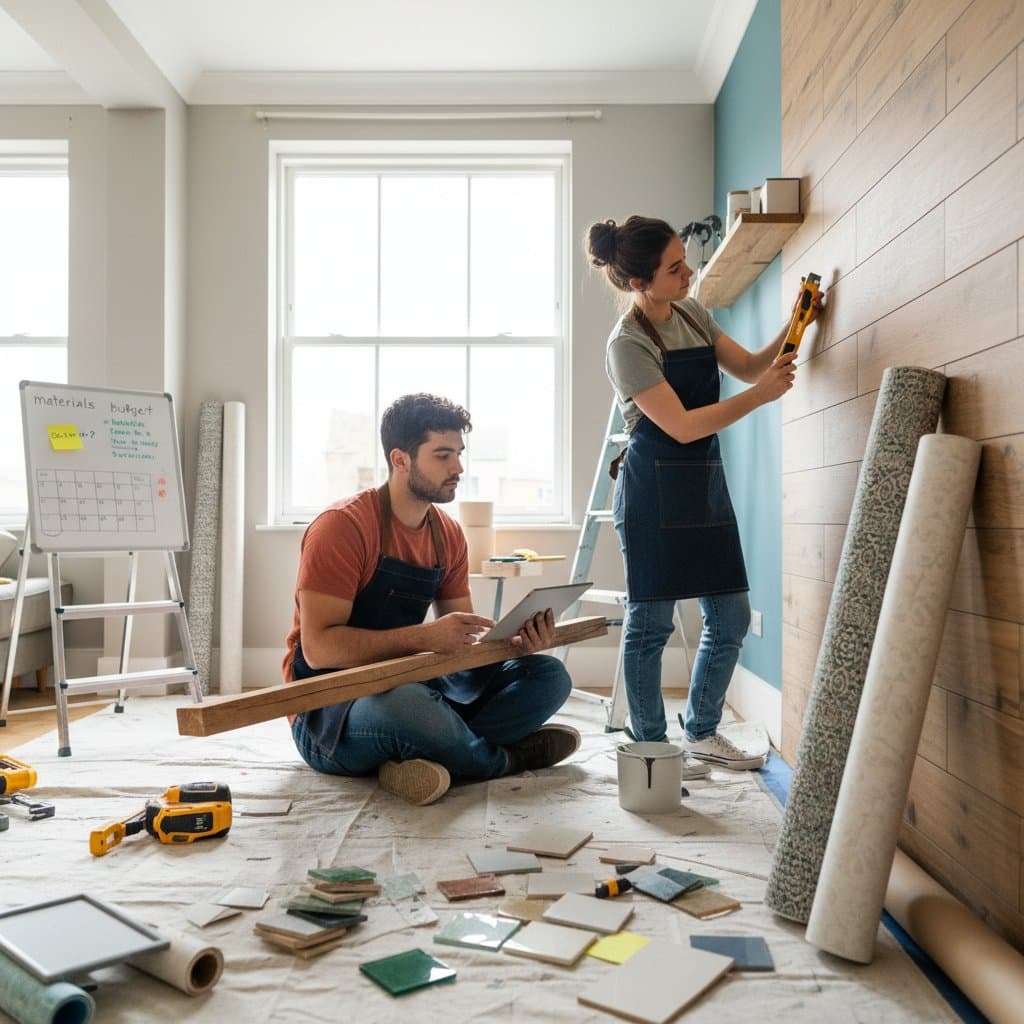
Create an accent wall using paint or removable wallpaper to infuse character, at a cost below $150.
Lay floating vinyl plank flooring, which runs about $3 per square foot when self-installed.
Incorporate floor lamps and dimmer switches to adjust ambiance economically.
These changes foster a more inviting atmosphere and contribute to higher energy efficiency.
4. Curb Appeal Boost
Budget: $400 to $1,200
DIY Level: 3 out of 5
Timeline: 1 week
Coat the front door with weather-resistant exterior paint; a single quart suffices for around $40.
Construct planter boxes from scrap wood or acquire ready-made versions for under $100.
Update house numbers and the mailbox to modernize the facade, with total outlay below $75.
Exterior enhancements create an immediate positive impression and can add thousands to perceived property worth upon resale.
Stretching Every Dollar: Hidden Savings Opportunities
Strategic planning uncovers substantial efficiencies, turning modest investments into lasting gains.
Practical Savings Hacks:
- Source materials from secondhand outlets like Habitat ReStores or community marketplaces, where quality fixtures often appear at reduced prices.
- Leverage utility company rebates for installing energy-efficient devices, which can offset costs significantly.
- Collaborate with friends on projects to share tools and exchange skills, thereby minimizing individual expenditures.
- Monitor outlays using a spreadsheet or dedicated application to maintain control and prevent gradual overruns.
In one personal renovation effort, repurposing a vintage dresser as a bathroom vanity yielded savings of nearly $1,000. Simple sanding and repainting transformed it into a bespoke piece.
Making It Happen
Commence with a single room and a single objective to build confidence. Avoid overhauling the entire residence simultaneously.
Prioritize modifications that enhance everyday functionality, such as superior illumination, pristine surfaces, or optimized storage solutions.
Action Steps:
- Develop a comprehensive budget and schedule.
- Assemble necessary tools and supplies in advance.
- Review instructional videos from reputable channels, avoiding unverified online content.
- Dedicate effort to preparation phases, including sanding, priming, and precise measurements.
- Acknowledge progress at each milestone to sustain motivation.
Each endeavor imparts valuable lessons. Thorough preparation minimizes disruptions and maximizes satisfaction.
Professional CTA: Get three free quotes from local contractors.
Sustaining Your Home Improvements
Preserve the fruits of your labor through routine care and proactive measures. Regular cleaning of painted surfaces and sealed floors extends their durability.
Schedule annual inspections for DIY elements like lighting and adhesives to catch wear early. This vigilance safeguards investments and maintains elevated home value over time.
Incorporate sustainable practices, such as using low-VOC paints in future projects, to ensure long-term health and environmental benefits. Consistent upkeep transforms initial upgrades into enduring assets.