Key Takeaways
- Strategic kitchen layouts elevate resale value beyond other interior modifications.
- Homebuyers prioritize seamless functionality, radiant surfaces, and communal areas that simplify meal preparation.
- Open-concept, U-shaped, and galley configurations achieve superior returns when executed with intentional balance.
Highlights
- Leading Layouts: Open-concept, U-shaped, and galley kitchens
- Return Spectrum: Competently implemented renovations recover 70 to 90 percent of expenses
- Core Design Elements: Circulation patterns, storage solutions, illumination, and proportional aesthetics
- Emerging Trends: Concealed appliances, embedded lighting systems, and adaptable central islands
Essential Kitchen Layouts for Optimal Returns
1. Open-Concept Kitchen
Quick Overview: Open configurations dominate for value enhancement as they expand perceived space, amplify brightness, and foster social interaction.
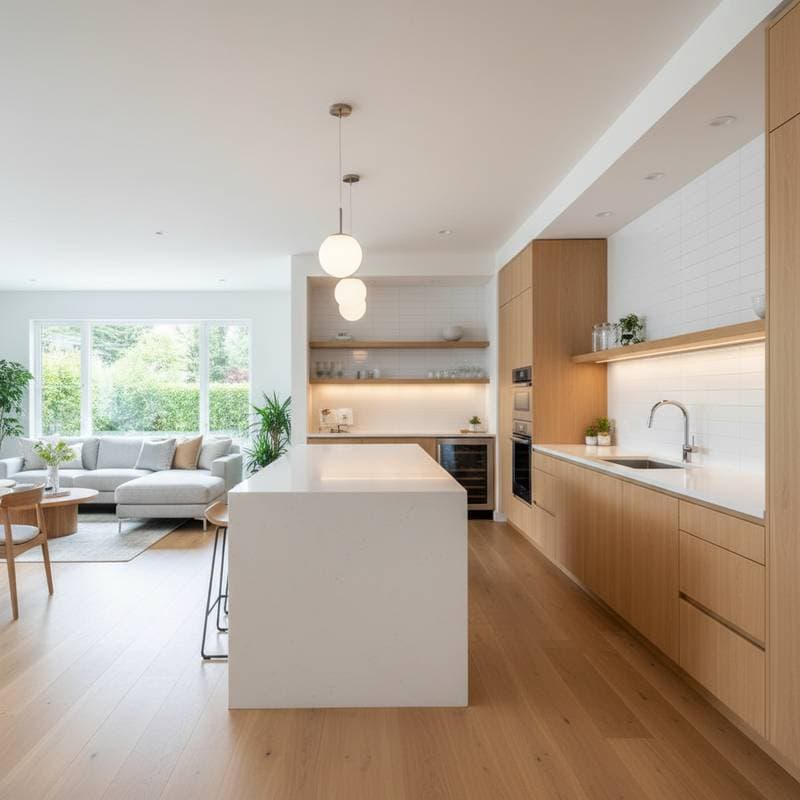
An open-concept kitchen integrates directly with living or dining areas, eliminating barriers for uninterrupted connectivity. This design promotes dialogue during meal preparation and distributes natural illumination evenly. Homebuyers value the expansive sensation and communal vibe, particularly in compact residences.
Advantages:
- Establishes fluid movement from preparation to gathering spaces
- Supports adaptable arrangement of seating and decor
- Enhances daylight penetration and unobstructed views
Considerations:
- Culinary aromas and sounds propagate without containment
- Demands precise demarcation to prevent visual disarray
Return Perspective: Properties featuring open kitchens typically attract quicker offers. Partial barrier elimination alone can substantially elevate the sense of usable area.
2. U-Shaped Kitchen
Quick Overview: U-shaped designs provide versatile efficiency, securing robust returns by optimizing workspace and containment in moderately sized environments.
A U-shaped layout arranges cabinetry and surfaces along three contiguous walls, creating a enclosed yet accessible workstation. This format suits households with one or two active cooks, offering centralized access to essentials. It balances seclusion for tasks with potential for oversight into adjacent rooms.
Advantages:
- Delivers extensive countertop area for multitasking
- Maximizes vertical and horizontal storage opportunities
- Accommodates optional central features like a modest island for added utility
Considerations:
- Enclosed form may constrain traffic in high-occupancy scenarios
- Benefits from strategic openings or lighter palettes to mitigate confinement
Return Perspective: U-shaped renovations often recoup costs effectively due to inherent productivity. Incorporating durable, neutral elements ensures broad buyer compatibility and sustained marketability.
3. Galley Kitchen
Quick Overview: Galley configurations offer compact proficiency, generating reliable returns through streamlined movement and resourceful storage.
The galley setup features parallel cabinet lines defining a linear pathway, perfect for constrained footprints in apartments or modest homes. It emphasizes the work triangle principle, positioning sink, stove, and refrigerator for minimal steps. This layout prioritizes performance over extravagance.
Advantages:
- Streamlines single-user operations with direct access
- Simplifies renovations using conventional cabinet dimensions
- Facilitates enhancements like targeted lighting for a polished, contemporary appearance
Considerations:
- Restricts simultaneous activity for multiple participants
- Necessitates pale hues or glossy materials to counteract narrowness
Return Perspective: Galley updates with refined surfaces and illumination deliver exceptional value per area, as initial investments remain modest while functionality impresses discerning buyers.
Impact of Design Decisions on Returns
The foundational layout establishes potential, yet selections in materials, organization, and illumination finalize the economic outcome. Effective renovations harmonize immediate allure with enduring quality.
Primary Value Enhancers:
- Cabinetry: Opt for Shaker or slab-front styles in subdued shades for perpetual relevance.
- Countertops: Select quartz for its resilience and effortless upkeep.
- Lighting: Implement multi-tiered systems, including under-cabinet strips, to evoke a sophisticated ambiance.
- Backsplashes: Choose subway patterns or oversized tiles with sheen to illuminate compact zones.
Steer Clear of Excessive Customization:
Prospective owners seek versatile palettes. Configurations adaptable to diverse aesthetics extend market viability. Pronounced personal tastes risk narrowing the buyer pool.
Investment Guidelines for Peak Returns
Achieving optimal returns requires aligning expenditures with local market norms. Extravagant upgrades in average locales diminish yields, just as minimal efforts in premium settings underperform.
Cost Projections:
| Renovation Scope | Approximate Expense | Anticipated Recovery |
|---|---|---|
| Basic Refresh (repainting, fixtures, tile refresh) | $5,000–$15,000 | 70–85% |
| Moderate Overhaul (cabinet replacement, surface renewal, appliance integration) | $20,000–$50,000 | 75–90% |
| Comprehensive Transformation (structural shifts, utility relocations, luxury accents) | $60,000+ | 65–80% |
Moderate overhauls generally optimize cost-to-value ratios, particularly when layout tweaks expand perceived efficiency and scale.
Frequently Asked Questions on Kitchen Layout Returns
1. Does wall removal invariably elevate property worth?
Wall elimination does not guarantee gains. While open formats attract many, others favor partitioned areas. Structural changes that erode storage often offset benefits.
2. Does every island addition enhance returns?
Placement determines success. Ill-proportioned or obstructive islands disrupt navigation. Compact versions with integrated seating or compartments reliably contribute style and utility.
3. Justify premium appliances for resale purposes?
Quality resonates, though prestige brands yield diminishing returns. Uniform mid-tier selections in excellent condition outperform isolated high-end items for broader appeal.
4. How does illumination upgrading affect valuation?
Illumination shapes initial perceptions profoundly. Multi-level setups accentuating task areas render modest kitchens more spacious and aligned with current preferences.
5. Does cabinet refinishing produce tangible returns?
Affirmative, when executed properly. Applying fresh, luminous neutrals revitalizes outdated setups at minimal cost compared to full substitutions.
Sustaining Kitchen Value Over Time
Post-renovation, the investment yields ongoing advantages in daily routines, from routine brewing to shared meals. Preserve surface integrity through regular cleaning, address sealant wear promptly, and renew coatings as required to maintain peak condition and prolonged worth.