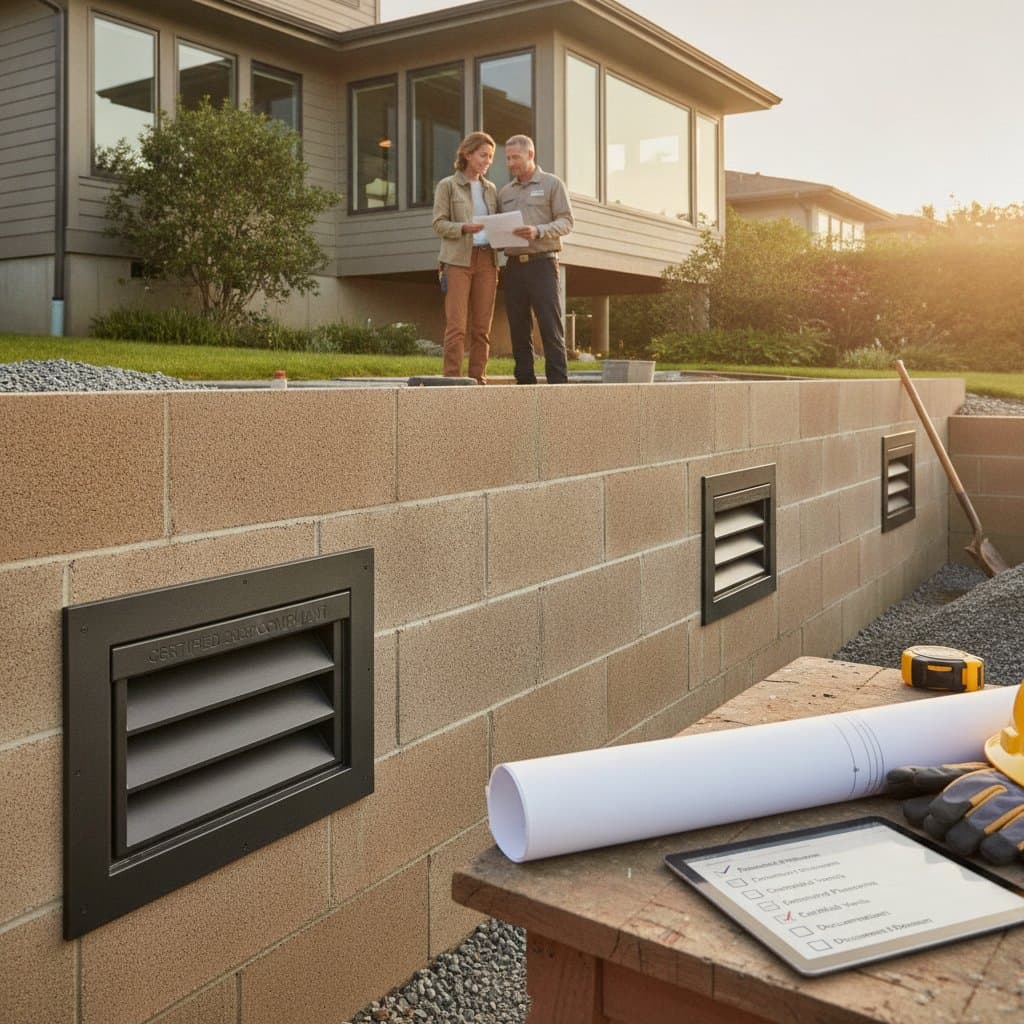
FEMA 2025 Flood Vents: Essential Updates for Wet-Proofing
Home renovation initiatives throughout the United States face escalating expenses beyond inflationary pressures. Stricter floodplain regulations, particularly FEMA's recent flood vent modifications, alter the methods by which property owners safeguard their foundations. These standards prioritize property integrity and insurance qualifications, yet they introduce complex technical and financial elements that demand careful consideration from every homeowner.
The Significance of FEMA's Flood Vent Modifications
FEMA's current directives redefine compliant flood vents through a focus on automatic equalization. Vents must permit floodwater to flow into and out of crawlspaces or basements without human intervention. This mechanism mitigates structural stress during flooding, preventing common issues such as wall fractures or foundation collapses.
Measurement protocols for vent openings have also evolved. Earlier guidelines permitted calculations based on the total number of openings. Current rules, however, mandate evaluation of the net open area exclusively, disregarding obstructions like screens or louvers that impede water flow. Installations from previous years may fail to comply under these criteria, despite prior apparent adequacy.
During a basement overhaul in my residence, an inspector identified my existing stainless steel vents as non-conforming due to insufficient venting ratios. The replacement process exceeded initial budget projections, yet it resulted in reduced flood insurance premiums and enhanced security.
Cost Implications of Compliance
Adhering to the new standards often elevates upfront costs. Basic flood vent units range from $150 to $300 each, depending on material durability, such as engineered plastic or galvanized steel. For a typical 1,000-square-foot crawlspace, compliance might necessitate eight to ten vents, pushing material expenses to $1,200 to $3,000.
Installation adds further layers. Retrofitting existing structures involves labor fees of $200 to $500 per vent, particularly when masonry alterations are required. Professional assessments for flood zone certification can contribute an additional $500 to $1,000. Overall, full compliance projects frequently total $3,000 to $8,000, varying by home size and location.
These investments yield long-term advantages. Eligible properties qualify for National Flood Insurance Program discounts of up to 40 percent on premiums, potentially saving $1,000 annually for high-risk areas. Moreover, compliant homes demonstrate 10 to 15 percent higher resale values in flood-prone markets.
Decision Framework: DIY Installation or Professional Expertise
Certain aspects of flood vent projects suit individual efforts, including initial measurements for vent positioning or sealing perimeter gaps. However, full installation typically demands precise masonry work and official flood zone verification. Errors in execution risk invalidating compliance and inflating insurance obligations rather than alleviating them.
Opt for a DIY approach when the following conditions apply:
- Crawlspace walls consist of wood or concrete block with easy access.
- Pre-existing openings exist for straightforward retrofitting.
- Proficiency with masonry tools is assured, alongside adherence to safety protocols.
Engage a licensed contractor under these circumstances:
- Residence falls within a mapped floodplain.
- Vents necessitate incisions into concrete foundations or load-bearing elements.
- Formal documentation is essential for FEMA or National Flood Insurance Program adherence.
Safety advisory: Refrain from modifying structural walls absent expert evaluation. Incorrect vent positioning endangers foundation stability.
Distinguishing Wet-Proofing from Dry-Proofing
Homeowners frequently conflate wet-proofing and dry-proofing, yet this distinction proves vital for regulatory adherence. Wet-proofing facilitates controlled floodwater passage through enclosed spaces, thereby alleviating pressure on building components. Flood vents constitute the cornerstone of this methodology.
Dry-proofing, by contrast, employs impermeable barriers to exclude water entirely, a technique reserved for non-residential buildings. For basements or crawlspaces integrated into habitable zones, wet-proofing represents the sole FEMA-endorsed strategy. Disregarding this differentiation invites claim rejections following flood incidents.
Wet-proofing extends beyond vents to include sump pumps and drainage grading. Effective systems channel water efficiently, minimizing interior damage. Homeowners in moderate-risk zones benefit from combining these elements for comprehensive resilience.
Ongoing Maintenance for Flood Vents
Installed flood vents demand routine attention to preserve functionality. Perform inspections biannually to detect debris accumulation, pest intrusions, or material degradation. Utilize mild detergent and water for cleansing, ensuring unobstructed operation.
Follow this maintenance protocol:
- Examine vent apertures in spring and autumn seasons.
- Clear sediment or foliage promptly after significant precipitation.
- Verify smooth movement of automatic mechanisms, such as floats or louvers.
- Repair fissures in adjacent masonry with appropriate sealants.
Neglect in these areas can impair equalization, heightening flood vulnerability. Annual professional reviews, costing $200 to $400, provide thorough validations for insurance purposes.
Steps to Achieve FEMA Compliance
Residences in flood-vulnerable zones require alignment with FEMA's updated flood vent protocols as a mandatory measure. This commitment constitutes a prudent allocation that averts extensive repair expenditures and secures insurance efficiencies. Initiate the process by assessing existing vents relative to net open area specifications.
Consult local building codes for zone-specific nuances. Gather measurements of enclosed area square footage to determine required vent quantities, typically one square inch per square foot. Select vents certified under the International Code Council standard for assured performance.
By implementing these updates, homeowners fortify their properties against escalating flood threats while optimizing financial protections. Proactive compliance transforms potential liabilities into enduring assets.